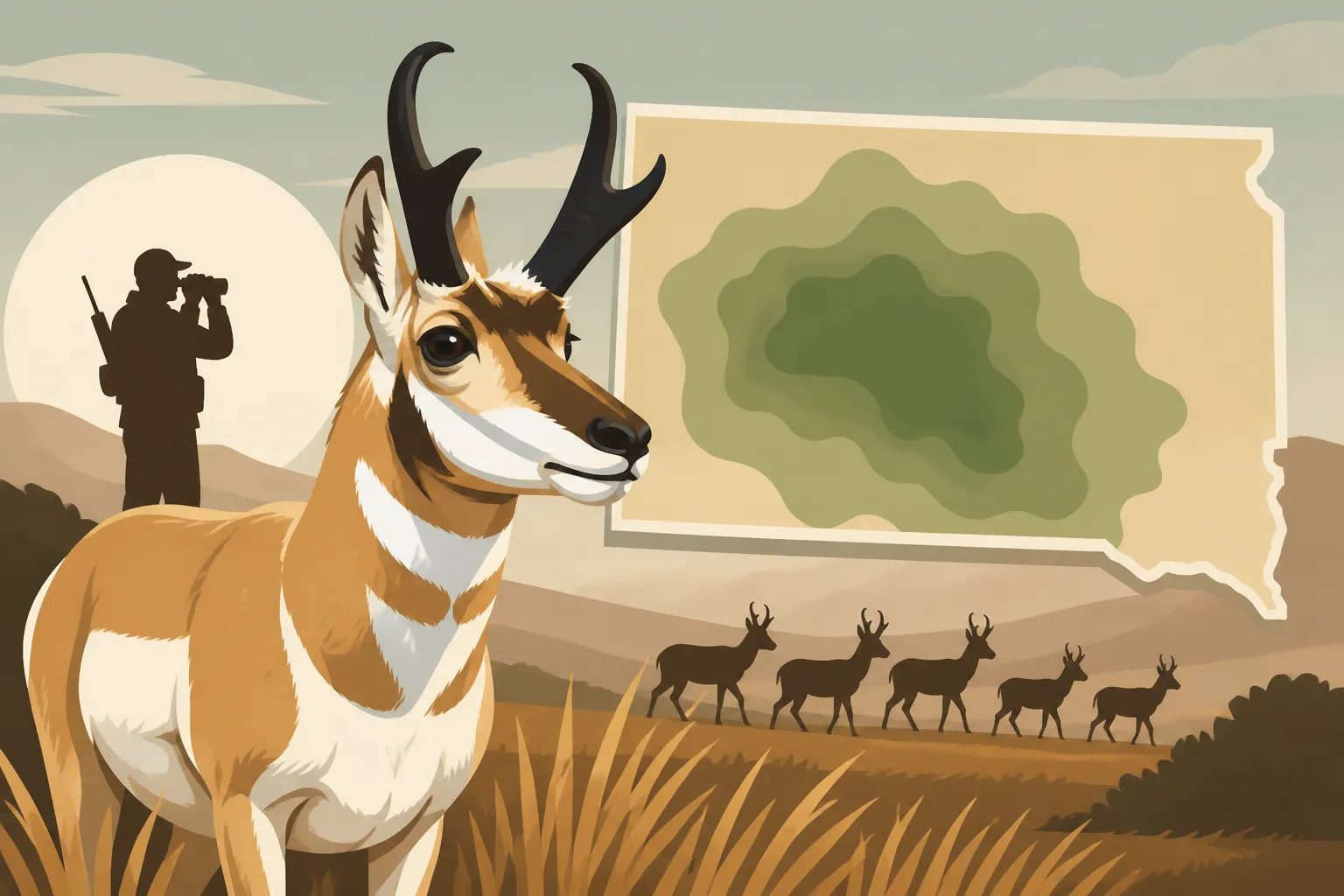
South Dakota Pronghorn Population Estimate
When you're dreaming of chasing pronghorn across the wide-open expanse of West River South Dakota, one of the first questions that pops into your head is often, "Just how many of these incredible animals are out there?" It’s a fair question, driven by the desire to understand your chances, plan your hunt, and get a sense of the health of the herd. But let's be honest, getting a definitive, rock-solid number for the South Dakota pronghorn population isn't as simple as checking a speedometer. These creatures are built for speed and vast distances, making them a real challenge to count precisely. This guide will walk you through the complexities of estimating pronghorn numbers, how South Dakota manages this task, and what it all means for you, the hunter, trying to connect with these prairie ghosts.
The Elusive Nature of Pronghorn Population Counts
Trying to get an accurate count of pronghorn in South Dakota is a bit like trying to count individual blades of grass in a pasture – it’s incredibly difficult, if not impossible, to get a precise, real-time figure. Unlike some other big game species that might stick to timbered areas or have more predictable movement patterns, pronghorn are built for the wide-open prairie. They cover immense distances with ease, and their incredible eyesight means they often see you long before you see them. This mobility and their preference for vast, unencumbered landscapes present significant challenges for wildlife biologists trying to pin down exact numbers.
Why Pronghorn Are So Hard to Count
Think about the sheer scale of the landscape these animals inhabit. From the rolling grasslands of the Buffalo Gap National Grassland to the vast, sage-dotted prairies near the Cheyenne River, pronghorn roam huge areas. They don't linger in one spot for long, and their incredible speed means they can disappear over a distant ridge in minutes. This makes ground surveys incredibly inefficient. Imagine trying to drive a truck across miles of rough prairie, spotting animals, and trying to avoid double-counting as they bound away. It's an exercise in frustration more than precise data collection.
Furthermore, pronghorn often form large, fluid herds, especially outside of the rut. These groups can merge, split, and move with the weather or available forage, making static counts unreliable. You might count 50 animals in one basin, only for them to join another group of 30 an hour later and move five miles away. This constant flux means that any snapshot count is just that – a snapshot – and not necessarily indicative of the broader population dynamics. The environmental conditions also play a huge role; visibility can be impacted by heat shimmer, blizzards, or even heavy fog, making consistent observation a real headache.
The Difference Between a Count and an Estimate
It’s crucial to understand that wildlife agencies almost always talk about "population estimates" rather than "population counts" for free-ranging species like pronghorn. A count implies an exact number, something you might get if you had every animal in a corral. An estimate, on the other hand, is a scientific approximation based on various methodologies designed to give the most accurate figure possible, given the logistical constraints.
Wildlife biologists use statistical models, sampling techniques, and established observation methods to arrive at these estimates. They're not just guessing; they're applying rigorous scientific principles to imperfect data. The goal is to understand population trends – whether numbers are going up, down, or remaining stable – rather than to provide a precise number that would be outdated the moment it's published. This distinction is vital for hunters, as it helps manage expectations. You won't find a live ticker of pronghorn numbers, but you can find reliable trend data that helps you understand the health of the herd and the likely success of your hunting efforts in a given year. Understanding these estimates also helps inform crucial decisions about tags and seasons, which are designed to keep herd health in mind.
How South Dakota Game, Fish and Parks Estimates Pronghorn Numbers
Given the challenges, the South Dakota Game, Fish and Parks (GFP) employs a combination of methods to gather the data needed for their pronghorn population estimates. They understand the landscape and the animals, and they've developed strategies to get the most reliable information possible. It's a complex, multi-faceted approach that considers various factors unique to the state's prairie environment.
Aerial Surveys and Transects
One of the most effective ways to survey fast-moving, wide-ranging animals like pronghorn across extensive, open terrain is through aerial surveys. Biologists and trained observers fly specific, predetermined routes called transects over designated management units, usually in a fixed-wing aircraft or helicopter. These flights are typically conducted at a consistent altitude and speed, allowing observers to systematically scan the ground within a set band on either side of the aircraft.
During these flights, observers record every pronghorn they see, noting herd size, composition (bucks, does, fawns), and location. Because they can cover vast areas much faster than ground crews, aerial surveys provide a more comprehensive snapshot of distribution and density. However, even aerial surveys have their limitations. Factors like weather, visibility, snow cover (which can make animals stand out or blend in depending on conditions), and even the animals' behavior on a given day can affect the accuracy of the observations. For instance, if pronghorn are bedded down in deep coulees, they might be missed. Despite these challenges, aerial surveys remain a cornerstone of big game population monitoring in South Dakota and are essential for tracking South Dakota Pronghorn Population Estimate.
Ground Observations and Hunter Harvest Data
While aerial surveys provide a broad overview, ground observations offer a more detailed look at specific areas and can help corroborate aerial data. GFP staff, sometimes aided by volunteers or even informed landowners, might conduct ground counts in smaller, more accessible units. This often involves driving roads or glassing from vantage points, focusing on areas known for high pronghorn concentrations. These observations contribute to a richer understanding of local densities and herd characteristics, such as the crucial buck-to-doe ratios and fawn recruitment.
Perhaps one of the most valuable long-term data sets comes directly from hunters themselves: the hunter harvest report. When hunters successfully harvest a pronghorn, they are required to report their kill to the GFP. This harvest data, collected over many years, provides vital information on the number of animals taken, the age and sex of harvested animals, and the geographical distribution of successful hunts. This isn't a direct population count, but it's an important index that, when combined with survey data, helps biologists understand population trends, hunting pressure, and the overall health of the herd. If harvest numbers are consistently high with healthy age structures, it suggests a robust population, while declining harvest numbers or changes in age/sex ratios can signal potential issues.
Integrating Data for a Comprehensive Picture
The key to a reliable pronghorn population estimate lies in integrating all these different data points. The GFP doesn't just look at one set of numbers; they combine aerial survey results, ground observations, and hunter harvest data with statistical models to create a holistic picture of the pronghorn population. They factor in variables like estimated survey efficiency, the proportion of land surveyed versus not surveyed, and historical trends. This multi-layered approach allows them to triangulate a more accurate and robust estimate, even acknowledging the inherent challenges.
Tools and platforms like GoHunt can be invaluable for hunters looking to access and interpret some of this publicly available data. While GoHunt itself doesn't generate the GFP's official estimates, it often compiles and presents state wildlife agency data in a user-friendly format, allowing hunters to research specific units, understand past draw odds, and get a better sense of Pronghorn Numbers Across South Dakota within those units. This can be a huge help when you're trying to decide where to apply for a tag or where to focus your scouting efforts.
What Influences South Dakota's Pronghorn Population Fluctuations
Pronghorn populations are far from static; they ebb and flow in response to a complex interplay of environmental factors and human influences. Understanding these dynamics is crucial for both wildlife managers striving for sustainable populations and hunters hoping for successful seasons. South Dakota's climate and prairie ecosystem present unique challenges and opportunities for these incredible animals.
Weather Extremes: Drought and Harsh Winters
South Dakota is no stranger to extreme weather, and these conditions are arguably the biggest drivers of pronghorn population fluctuations. Drought, especially in West River country, can significantly impact pronghorn. Less rainfall means less forage—both in quantity and quality—which directly affects the health and reproductive success of the does. Fawns born in drought years may have lower survival rates, leading to a dip in recruitment and potentially a smaller population in subsequent years. Water sources also become critical during dry spells, forcing animals to concentrate, which can increase vulnerability to disease or predation.
Conversely, harsh winters with deep snow and prolonged cold can be devastating. Pronghorn are built for speed, not for navigating deep drifts. Heavy snow cover makes it incredibly difficult for them to access forage, leading to starvation. Severe blizzards can cause significant mortality, particularly among fawns and older animals. While pronghorn are resilient, major winter kill events can set back a population for several years. We've seen periods where Pronghorn Losses in Severe Winters have significantly impacted herd numbers, requiring careful management adjustments to aid recovery.
Habitat Health and Connectivity
The quality and availability of habitat are fundamental to a healthy pronghorn population. Pronghorn thrive in open grasslands and sagebrush communities, where their incredible eyesight is an advantage. However, habitat is constantly changing due. Agricultural conversion, urban sprawl, and even the natural progression of plant communities can reduce or fragment suitable pronghorn range. Fences, while necessary for livestock management, can also be a significant barrier for pronghorn, who prefer to crawl under rather than jump over obstacles. This can impede their natural movements, including seasonal migrations, and limit access to vital resources like water or winter forage.
Conservation efforts focused on maintaining and enhancing open prairie habitats are vital. Programs that encourage landowners to manage for wildlife, implement wildlife-friendly fencing, or restore native grasslands contribute directly to pronghorn well-being. A connected landscape allows pronghorn the freedom to roam, find the best forage, and escape harsh conditions, which is essential for their long-term survival. Understanding how the habitat influences where pronghorn live helps explain some of the patterns GFP observes in their Aerial Surveys on the South Dakota Prairie.
Disease, Predation, and Human Factors
Like all wildlife, pronghorn are susceptible to diseases, though widespread outbreaks that decimate populations are relatively rare. However, localized disease events or parasites can contribute to mortality, especially in stressed populations. Predation, primarily from coyotes, can impact fawn survival, though healthy adult pronghorn are generally too fast for most predators. In areas with high coyote densities, fawn recruitment might be slightly suppressed, but it's rarely the primary driver of large-scale population decline.
Human factors, beyond habitat loss, also play a role. Hunting, when managed responsibly, is a critical tool for maintaining healthy populations. The GFP sets harvest quotas and issues tags based on population estimates and management goals, ensuring that hunting pressure is sustainable. Too much pressure could lead to declines, while too little could allow populations to overgrow their food supply, leading to mass die-offs during harsh conditions. Poaching, though hopefully rare, can also impact local populations. It's a constant balancing act between nature's whims and careful human stewardship to keep these prairie speedsters thriving across South Dakota.
Interpreting Pronghorn Data for Your Hunt
So, you've got a grasp on how South Dakota estimates its pronghorn population and what makes those numbers fluctuate. But what does all that mean for you when you're planning your next hunt? Interpreting this data goes beyond just looking at a raw number; it’s about understanding trends, unit-specific details, and how it all translates into your on-the-ground experience.
Understanding Trends, Not Just Numbers
When the South Dakota Game, Fish and Parks releases its pronghorn population estimate or specific unit recommendations, don't get hung up on the exact digit. Instead, focus on the trend. Is the population stable, increasing, or decreasing? Are buck-to-doe ratios healthy? Is fawn recruitment looking good? These trends are far more important than a single number because they tell you about the overall health and trajectory of the herd. For example, if fawn recruitment has been low for a couple of years, it might indicate that the population will be slightly lower, or that there might be fewer young bucks available in a few seasons.
Conversely, a few years of mild winters and good moisture can lead to booming fawn crops and quickly recovering populations. This often translates into more tags being available or better success rates for hunters. You can often find this trend data broken down by hunting unit, which is incredibly useful. This unit-specific information is usually available on the GFP website, and it's something many serious hunters use, often cross-referencing with other tools like GoHunt, which can help visualize this data alongside mapping capabilities for Spot-and-Stalk Antelope on Open Prairie.
How Estimates Influence Tag Allocations
The direct link between population estimates and your hunt is in tag allocations. The GFP uses these population figures, along with harvest data and management objectives, to determine how many licenses to issue for each unit. If an area's pronghorn population is robust and healthy, more tags might be available. If numbers are low, perhaps due to a severe winter, the GFP might reduce tag numbers to allow the herd to recover. This is a crucial management tool to ensure sustainability and quality hunting opportunities for the future.
This is particularly relevant for non-residents who often face stricter quotas and higher demand. Understanding the population trends in specific units can help you make informed decisions when applying for your South Dakota Antelope Season and Draw applications. For instance, if you see a unit where the population has consistently recovered well after a dip, it might be a good long-term unit to focus your preference points on, increasing your chances of drawing an Either-Sex Versus Buck-Only Antelope Tags in the future.
Practical Tips for Hunters Using Population Data
Beyond draw odds, population data can inform your scouting and hunting strategy. If estimates indicate a higher density of pronghorn in a particular area, it might mean you'll see more animals on your hunt, though perhaps not necessarily bigger animals. Conversely, a lower density might mean you'll have to work harder to locate game.
Here are a few practical tips:
- Consult GFP Reports: Always start with the official South Dakota GFP reports for the most current data. They usually provide unit-by-unit breakdowns of population trends, buck-to-doe ratios, and fawn recruitment.
- Analyze Draw Odds: Combine population data with historical draw odds. If a unit consistently has high draw odds despite a healthy population, it might be less pressured. If draw odds are always low, it suggests high demand, which can sometimes correspond with higher animal quality or accessibility.
- Look for Habitat Indicators: Cross-reference population data with satellite imagery. Areas with strong pronghorn populations usually have vast, unbroken prairie, good water access, and scattered sagebrush. Tools like GoHunt's mapping features are great for this, allowing you to visualize terrain and potential game locations where you might be Glassing Grids on Open Breaks.
- Consider Winter Severity: Pay attention to news and reports about previous winter severity. A particularly harsh winter can depress populations, and it might take a season or two for numbers to rebound. This knowledge can temper your expectations for the upcoming season.
Ultimately, while no single number can perfectly capture the dynamic world of South Dakota's pronghorn, understanding the estimation process and the factors that influence these resilient animals will make you a more informed and potentially more successful hunter.
Disclaimer
This article is for general informational purposes only and does not constitute professional advice. Laws, prices and regulations vary by location and change over time. Consult a qualified professional for guidance on your specific situation.