EHD and South Dakota Deer Die-Offs
It’s a heart-wrenching sight no hunter ever wants to encounter: finding a deer, whether a majestic buck or a healthy doe, fallen victim to a mysterious illness. For those of us who cherish South Dakota's incredible deer hunting opportunities, the phrase "EHD die-off" can send a shiver down the spine. This guide will walk you through understanding Epizootic Hemorrhagic Disease (EHD), how it impacts our beloved deer populations, and what you, as a responsible hunter, can do when it strikes.
Understanding Epizootic Hemorrhagic Disease (EHD)
EHD isn't just a random occurrence; it's a specific, viral disease that primarily affects white-tailed deer, though it can sometimes impact mule deer as well. When you hear about significant deer die-offs, especially in late summer or early fall in our region, EHD is often the culprit. It's a natural, albeit devastating, part of the ecosystem, and understanding its mechanisms is the first step toward managing our expectations and supporting wildlife management efforts.
What Exactly is EHD?
At its core, EHD is caused by a virus belonging to the genus Orbivirus. There are several strains, and while some are more virulent than others, the outcome for infected deer can be severe. The virus damages the deer's blood vessels, leading to hemorrhages (bleeding), swelling, and fever. Imagine having a severe flu, but instead of just feeling miserable, your body's circulatory system begins to fail. It's a rapid and often fatal disease for deer that haven't developed immunity.
Deer that contract EHD can experience a range of symptoms, from mild to acute. In severe cases, the damage to blood vessels can be so extensive that it leads to internal bleeding, organ failure, and a quick death. What makes it particularly difficult is that it can spread quickly through a local population once conditions are right, creating the "die-off" events we sometimes observe.
How EHD Spreads in South Dakota Deer
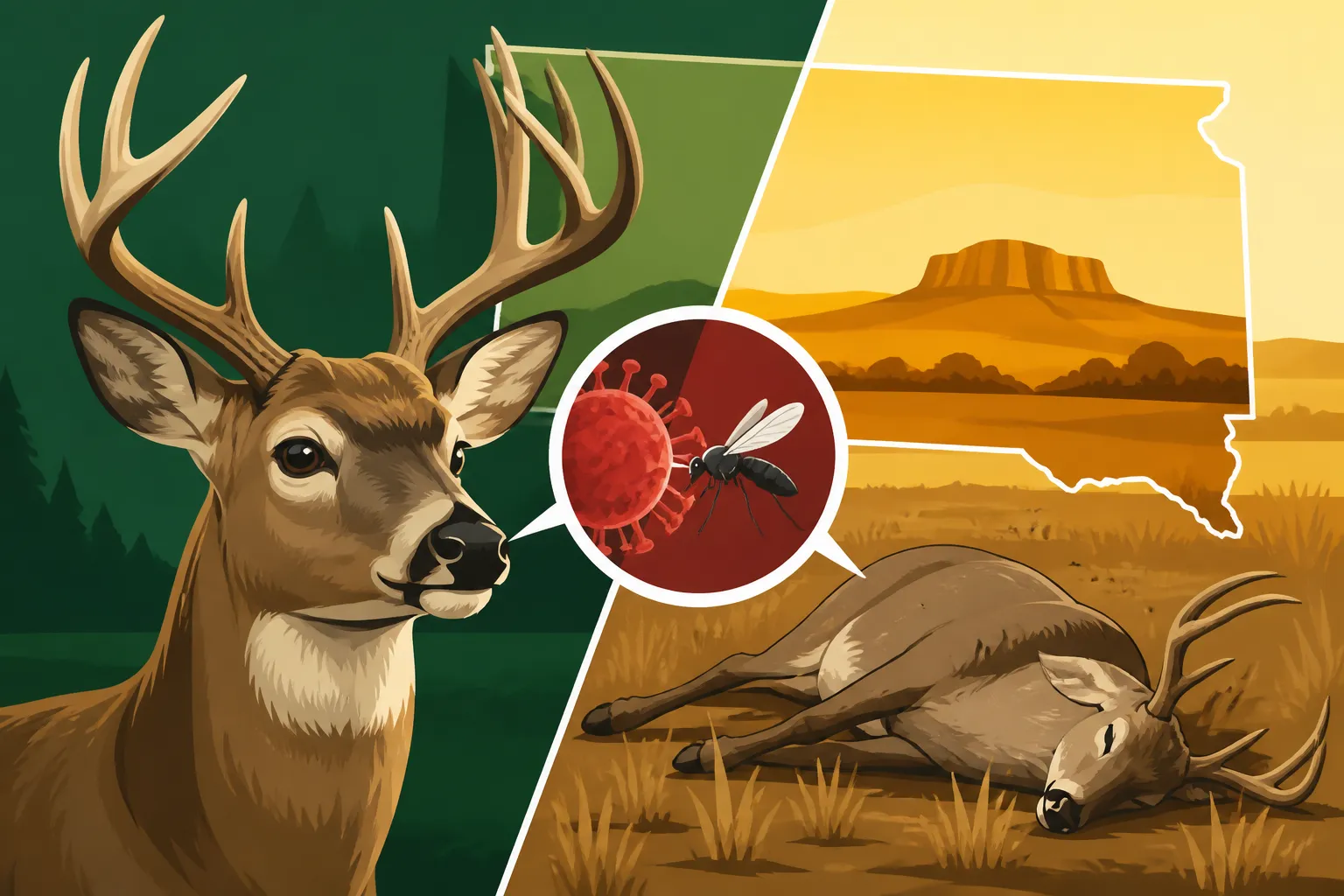
EHD isn't spread directly from deer to deer. Instead, it's transmitted by tiny biting insects called midges, often referred to as "no-see-ums" or "gnats." These aren't your typical mosquitoes, but rather minute flies that breed in muddy areas around ponds, creeks, and cattle tanks. When an infected midge bites a deer, it transmits the virus. Then, when that midge bites another deer, or when a midge picks up the virus from an infected deer and bites another, the cycle continues.
The timing of EHD outbreaks is closely tied to the midge population and environmental conditions. We typically see EHD cases peak in late summer and early fall in South Dakota, usually from August through October. Why then? Because that's when midge populations are at their highest, especially after periods of drought that cause water levels to recede, creating those ideal muddy breeding grounds. The first hard frost of the year is usually what brings an end to an EHD outbreak, as it kills off the midge population.
The Impact on South Dakota's Deer Herds
The impact of EHD on our deer populations can be truly staggering, especially for the majestic South Dakota White-Tailed Deer Across South Dakota and sometimes even the Mule Deer on the West River Breaks. A significant die-off can occur in localized areas, sometimes reducing local herd numbers by 20-50% or even more in severe events. This can be incredibly frustrating for hunters who have been watching a specific buck or an area for years. One season, deer might be abundant, and the next, after an EHD outbreak, the woods can seem eerily quiet.
While frustrating, it's important to remember that these events are cyclical. Deer populations are incredibly resilient. Even after a severe die-off, if conditions are favorable (good fawn recruitment, mild winters), populations can rebound surprisingly quickly within a few years. However, it can significantly alter hunter success in the short term and sometimes necessitates adjustments to hunting seasons or tag allocations by wildlife managers to allow for recovery. Understanding these fluctuations is part of being a long-term deer hunter in a state like ours.
Recognizing EHD Symptoms and Reporting Sightings
Spotting a sick deer can be distressing, but recognizing the signs of EHD is crucial. Your observations in the field play a vital role in helping the South Dakota Game, Fish and Parks (GFP) monitor the disease and understand its spread. Don't underestimate the value of your eyes and ears out there.
Visible Signs of EHD in Deer
Deer suffering from EHD often exhibit a range of symptoms, though sometimes the first sign is simply finding a deceased animal. For those still alive but infected, you might notice them appearing weak, disoriented, or unusually tame. They might be drooling excessively, have swelling around the head, neck, tongue, or eyelids. Their hooves might look cracked or sloughing off, though this is often seen in deer that survive the initial infection but are left with lasting damage.
One very common and tell-tale sign is a deer seeking out water sources. The fever associated with EHD makes them incredibly thirsty, so you might find them in or very near creeks, ponds, or even mud puddles. If you're out scouting, perhaps using a tool like GoHunt to analyze land features for Glassing South Dakota Breaks at First Light, and you spot a deer acting strangely near a water source, it's worth taking note. The key is any behavior that seems "off" or indicates extreme discomfort.
Why Your Observation Matters
Every single observation helps build a clearer picture of the disease's prevalence and geographic spread. When hunters report sick or dead deer, it allows GFP to map out affected areas, assess the severity of an outbreak, and predict potential impacts on future hunting seasons. This data is invaluable for making informed wildlife management decisions. Without hunter participation, it's much harder for the state to gauge the true scope of a disease event.
Think of it as contributing to a larger ecological puzzle. You might only see one or two instances, but when combined with reports from dozens or hundreds of other hunters across the state, it forms a comprehensive dataset. This information can influence everything from South Dakota Deer Licence Types by Region to localized harvest limits in subsequent years. Even if you only see a single suspicious animal, reporting it contributes to the collective knowledge base.
How to Report Suspected EHD Cases
Reporting a suspected EHD case is straightforward and really does make a difference. If you come across a sick or deceased deer that you suspect died from EHD, the best thing to do is contact your nearest South Dakota Game, Fish and Parks office or a local conservation officer. They will ask you for details such as the exact location (GPS coordinates are incredibly helpful), the date and time of the sighting, the number of animals observed, and any visible symptoms or conditions of the carcass.
You generally won't be asked to handle the animal yourself. The GFP staff will determine if a field investigation is necessary, which might involve taking samples for lab testing to confirm the disease. You can find contact information for GFP offices and wardens on the official South Dakota Game, Fish and Parks website. Make it a point to store that contact information in your phone, perhaps even alongside your First Aid Kit for a Prairie Hunt, so you're ready if the situation arises. Remember, the sooner you report, the better for disease monitoring efforts.
Managing Deer Herds in the Face of EHD
EHD is a harsh reality for deer populations, but it's also a part of a larger natural cycle. While it can be disheartening to witness, deer herds often show remarkable resilience. Understanding the long-term dynamics and what role hunters play in managing these fluctuations is key.
Natural Cycles and Herd Resilience
Deer populations, particularly the robust South Dakota Whitetail Hunting in River Bottoms herds, are accustomed to natural fluctuations. While EHD can cause dramatic short-term dips in numbers, populations usually have a strong capacity to bounce back. This recovery is largely dependent on factors like habitat quality, subsequent winter severity, and fawn recruitment rates. A good spring and summer with plenty of forage and mild weather can help does recover and successfully raise fawns, quickly rebuilding numbers.
Deer that survive an EHD infection develop an immunity to that specific strain of the virus, making them resistant to future infections from the same strain. This means that after an initial outbreak, the surviving deer contribute to a more immune population. It's a natural selection process, tough as it may be to watch. Wildlife biologists meticulously track these trends, often using data from sources like the Reading a South Dakota Harvest Report to gauge the health and size of various deer populations across the state.
Hunter Strategies During and After Outbreaks
For hunters, an EHD outbreak means adjusting expectations and tactics. In the immediate aftermath, hunting success might naturally be lower in affected areas simply due to fewer deer being present. It might mean shifting your focus to areas that were less impacted, perhaps higher elevations where midges are less prevalent, or areas with less standing water. This is where diligent scouting, using mapping tools like GoHunt, can really pay off, helping you identify pockets of healthy deer.
In the years following a severe die-off, hunters might be encouraged to harvest more antlerless deer in unaffected areas to help balance populations, or conversely, regulations might be tightened in hard-hit zones to allow for recovery. It's crucial to stay informed about GFP’s annual harvest reports and any specific unit recommendations. Sometimes, reducing pressure on surviving deer, especially antlered bucks, can aid in quicker recovery of age structure within the herd.
Long-Term Outlook for South Dakota Deer
Despite the challenges posed by EHD, the long-term outlook for South Dakota White-Tailed Deer Across South Dakota and Mule Deer on the West River Breaks remains strong. The state's diverse habitats, from the rich river bottoms to the expansive prairie breaks, provide excellent conditions for deer to thrive. While EHD will continue to be a factor, it's not a new threat; deer have evolved with it for a long time.
Ongoing research into EHD and other wildlife diseases, coupled with proactive management strategies by GFP, helps mitigate its impact. By supporting conservation efforts and staying engaged with wildlife agencies, hunters play a critical role in ensuring the health and abundance of South Dakota's deer for generations to come. This includes participating in South Dakota Wildlife Disease Monitoring and adhering to carcass transport rules to prevent the spread of other diseases like CWD.
Here's a quick overview of EHD symptoms and what to look for:
| Symptom Category | Specific Observations |
|---|---|
| Behavioral Changes | Appears weak, lethargic, disoriented, unusually tame, unresponsive to human presence. |
| Physical Signs | Excessive drooling, swelling of head, neck, tongue, eyelids. Bloody discharge. |
| Body Condition | Ribs may be visible, sunken flanks, generally emaciated appearance (in chronic cases). |
| Seeking Water | Often found in or near water sources (creeks, ponds, mud puddles) due to high fever. |
| Carcass Condition | Carcasses often found near water. May show signs of hemorrhage (bleeding) internally. |
| Hoof Damage | Cracked or sloughing hooves (in deer that survive the acute phase and recover). |
Disclaimer
This article is for general informational purposes only and does not constitute professional advice. Laws, prices and regulations vary by location and change over time. Consult a qualified professional for guidance on your specific situation.