Rooster to Hen Ratios in South Dakota
It's incredibly frustrating when you hear whispers about the pheasant population, wondering if there will be enough roosters to make your hunt worthwhile. One of the key indicators wildlife biologists and seasoned hunters often discuss is the rooster-to-hen ratio. This guide will dive deep into what these ratios mean for South Dakota pheasants, why they matter, how they're assessed, and what you, as a hunter, can infer from them about the health of the bird population.
Understanding Rooster to Hen Ratios
When we talk about pheasant populations, especially in a place like South Dakota, the "rooster to hen ratio" is a really important concept, even if it sounds a bit technical. It's not just some number; it's a window into the health and future of our beloved pheasants.
What the Ratio Actually Means
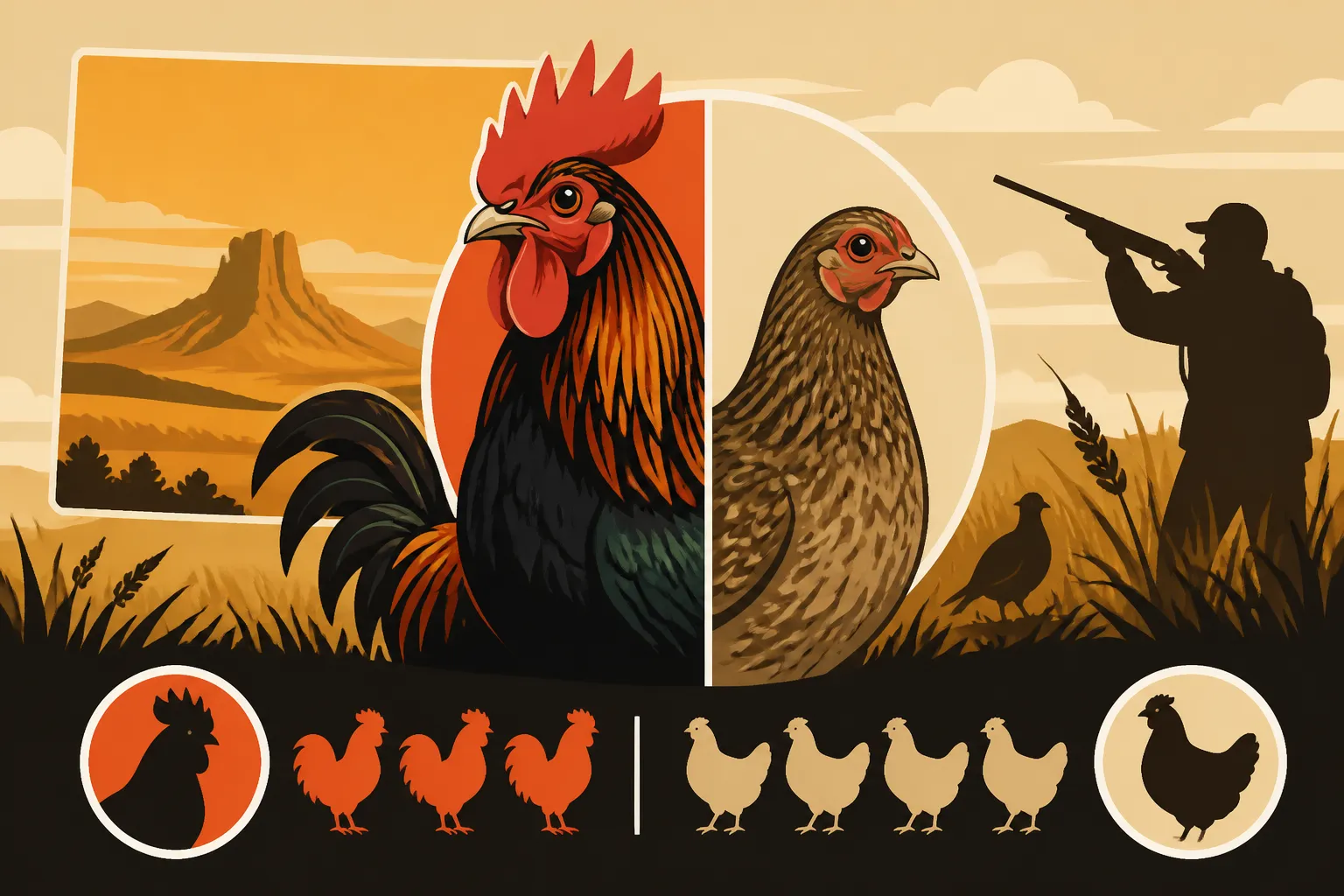
Simply put, the rooster to hen ratio is the number of roosters observed for every 100 hens in a given area. So, if a report says the ratio is 25:100, that means for every 100 female pheasants, there are 25 male pheasants. Why is this specific measure so crucial? Well, pheasants are polygamous, meaning one rooster can breed with multiple hens. This biological fact is at the heart of why South Dakota's pheasant hunting regulations allow only the harvest of roosters. Our goal is to protect the breeding stock (the hens) so they can reproduce successfully each spring.
A healthy ratio ensures that there are enough roosters to breed with all the hens without an excess of males competing unnecessarily or, conversely, a shortage that leaves some hens unbred. It's a delicate balance that directly impacts the number of chicks produced in the spring and, ultimately, the size of the pheasant population you'll find come fall. It’s a core principle behind why South Dakota is often called the "Pheasant Capital," as it effectively manages its resource.
The Ideal Balance for Pheasant Populations
So, what's considered an "ideal" or "healthy" ratio? There isn't one perfect number that fits every year or every landscape, but generally, wildlife managers look for a post-hunting season ratio that ensures adequate breeding capacity. Many studies suggest that a ratio of around 15-30 roosters per 100 hens is quite good for maintaining a robust population. If the ratio is much lower, say 5-10 roosters per 100 hens, it might indicate very high hunting pressure on roosters, or perhaps poor survival for males over the winter. This could theoretically impact reproductive success, though pheasants are quite resilient.
On the flip side, a ratio that's too high – for instance, 50 or more roosters per 100 hens – might mean hunting pressure has been very light, or that hens had a tough winter or poor nesting success, leading to fewer overall birds, including fewer hens. While more roosters might sound great for hunters, it's not necessarily indicative of a booming population if the hen numbers are low. The trick is finding that sweet spot where enough roosters survive the hunting season to breed effectively without an overabundance that suggests other population issues. Understanding this balance is part of the deep dive you'll find when researching areas, often through tools like GoHunt, which compiles various data points for hunters.
How South Dakota Monitors Pheasant Ratios (Historically and Currently)
Knowing the importance of these ratios is one thing, but how does South Dakota actually keep tabs on them? It's a question many hunters ponder, especially when planning their trips.
The Role of Post-Season Surveys
Historically, South Dakota has relied on various surveys to estimate pheasant populations, including brood counts in the summer that focused on total bird numbers. While those famous roadside pheasant brood surveys are no longer conducted in the same way, the state still gathers data to monitor population trends. Rooster to hen ratios are often inferred or estimated through various methods, including spring roadside counts of visible birds, or through hunter harvest surveys that track the number of roosters taken. The challenge, of course, is that pheasants are not always cooperative, and getting truly accurate numbers across vast landscapes like South Dakota's prairies is a monumental task.
The state's wildlife management efforts are constantly evolving, as seen in the decision to discontinue the traditional brood survey methodology. For a deeper understanding of this shift, you might want to read about Why the Brood Count Was Discontinued. These changes reflect the difficulty and cost of gathering truly representative data across the entire state, leading to a focus on other indices and localised observations.
Hunter Observations and Local Knowledge
While state-level data can provide broad trends, often the most current and accurate information on rooster to hen ratios comes from those who spend the most time in the field: the hunters themselves, and especially local outfitters and guides. These folks are out there day after day during the season, walking the same fields, pushing the same cover, and seeing the birds firsthand. They notice if roosters are abundant or scarce, if the flushes are primarily hens, or if there's a good mix.
Outfitters often keep detailed records and develop their own informal methods of tracking these trends on their leased or owned ground. Their success depends on knowing the bird numbers, and that includes paying attention to the breeding potential revealed by these ratios. For hunters planning a DIY trip, paying attention to post-season reports from other hunters, engaging in forums, or using scouting tools like GoHunt can provide anecdotal evidence that helps paint a picture of local bird populations. It's all about gathering as much intelligence as possible before you even set foot on the prairie.
Factors Influencing South Dakota's Rooster to Hen Ratios
Pheasant populations are dynamic, and their ratios don't just happen by chance. A multitude of environmental and human-induced factors constantly nudge these numbers one way or another.
Hunting Pressure and Harvest Rates
One of the most direct influences on the rooster to hen ratio is, naturally, hunting pressure. Since only roosters can be legally harvested in South Dakota, a successful hunting season with a high harvest of roosters will naturally reduce the number of males relative to hens. This is exactly what the management strategy aims for: to utilize the "surplus" of roosters without impacting the breeding potential. However, if hunting pressure is exceptionally high in a specific area year after year, it could lead to very low rooster numbers. Conversely, areas with lighter pressure might show a higher number of roosters relative to hens.
It's a testament to the resilience of pheasants that even with intense hunting pressure, they tend to bounce back, largely because those hens are protected. The legal shooting hours for pheasants, for instance, are set with conservation in mind, influencing how many birds hunters can pursue daily. For insights on managing hunting areas, consider reading up on Hunting Pressure Patterns on Walk-In Areas.
Winter Severity and Habitat Quality
Winter is perhaps the biggest natural arbiter of pheasant survival. A brutal South Dakota winter, especially one with prolonged deep snow and extreme cold, can decimate pheasant populations. Hens, often less robust than rouesters, and all birds, especially those without adequate cover, are vulnerable. If a severe winter disproportionately affects hen survival, the ratio might appear higher (more roosters per hen) not because roosters are thriving, but because fewer hens made it through. Conversely, if a mild winter allows many birds to survive, the ratio might remain more balanced. This connection between winter conditions and bird survival is why we often discuss Hard Winters and South Dakota Hen Survival.
Habitat quality plays a massive role here, too. Dense cattail sloughs, robust shelterbelts, and ample CRP (Conservation Reserve Program) acres provide critical thermal cover and protection from predators, helping birds weather those harsh months. When we lose this vital cover, as has happened in some parts of the state with changes to agricultural practices, pheasant numbers can suffer, and so can the ratios.
Spring Nesting Success and Chick Survival
The spring nesting season is the bedrock of future pheasant populations. Favorable weather conditions during nesting—meaning not too much cold, wet, or hail—are crucial for hens to successfully lay and hatch clutches. If the spring is wet and cold, or if there's significant disturbance to nesting cover, nesting success can plummet. This directly impacts the number of young birds, both roosters and hens, entering the fall population.
Similarly, the survival of those young chicks through their vulnerable early weeks is paramount. Predation, disease, and adverse weather can all take a toll. Good spring conditions lead to high "chick recruitment," meaning a strong new cohort of birds. If nesting is poor, fewer young hens will join the breeding population, and fewer young roosters will be available for hunters, potentially skewing the ratios in the coming years. You can learn more about this by exploring content like Spring Rain and Pheasant Nesting Success.
What Hunters Can Infer from Rooster to Hen Ratios
For the observant hunter, understanding rooster to hen ratios, even if only anecdotally, can offer valuable insights into local pheasant populations and inform hunting strategies.
Interpreting High and Low Ratios
Let's break down what different ratios might suggest:
| Ratio (Roosters:100 Hens) | Interpretation | Potential Hunting Implications |
|---|---|---|
| Less than 15 | Low rooster numbers relative to hens. Could indicate high hunting pressure or poor rooster survival. | You might have to work harder to find roosters. Concentrate efforts on areas with better cover or less pressure. Birds could be warier. |
| 15-30 | Generally considered a healthy, balanced ratio for breeding and sustainable hunting. | Good prospects. Expect a reasonable number of roosters. Focus on finding good cover, knowing that birds are likely present. |
| More than 30 | High rooster numbers relative to hens. Could mean lower hunting pressure, good rooster survival, or lower hen numbers/poor hen survival. | You might see more roosters, but investigate if hen numbers are also healthy. If hen numbers are low, the overall population might still be down despite many visible roosters. |
It's important to remember that state-wide or even county-wide ratios are broad strokes. Localized conditions can vary wildly. A specific field might have fantastic habitat and a great ratio, while a mile down the road, another spot might have poor cover and fewer birds. This is where personal scouting and local knowledge really shine. Using mapping tools like GoHunt can help you analyze habitat features down to the parcel level, which can give you a leg up in anticipating where birds might be holding, regardless of broader ratio estimates.
Using Ratios for Hunting Strategy
While you might not get precise, real-time rooster to hen ratios for every patch of ground you hunt, understanding the concept can still guide your strategy. If you've been in an area for a few days and are seeing mostly hens, or very few birds overall, it might be a sign that the local rooster population is low. This could mean it’s time to move to a different area, perhaps one with different habitat or known for less hunting pressure.
Conversely, if you're consistently seeing a healthy mix of roosters and hens, or more roosters than expected, it suggests a robust local population, and you might want to spend more time exploring that specific type of cover. For example, if you observe many young roosters, it indicates good overall chick production from the previous spring. This kind of observation helps you assess the quality of the hunting in real-time. Knowing what makes a good spot to walk, such as Walking Speed That Holds Roosters, becomes even more valuable when you're making these on-the-ground assessments. Ultimately, while ratios are a big picture tool, they empower you to be a more informed and effective pheasant hunter in the field.
Disclaimer
This article is for general informational purposes only and does not constitute professional advice. Laws, prices and regulations vary by location and change over time. Consult a qualified professional for guidance on your specific situation.