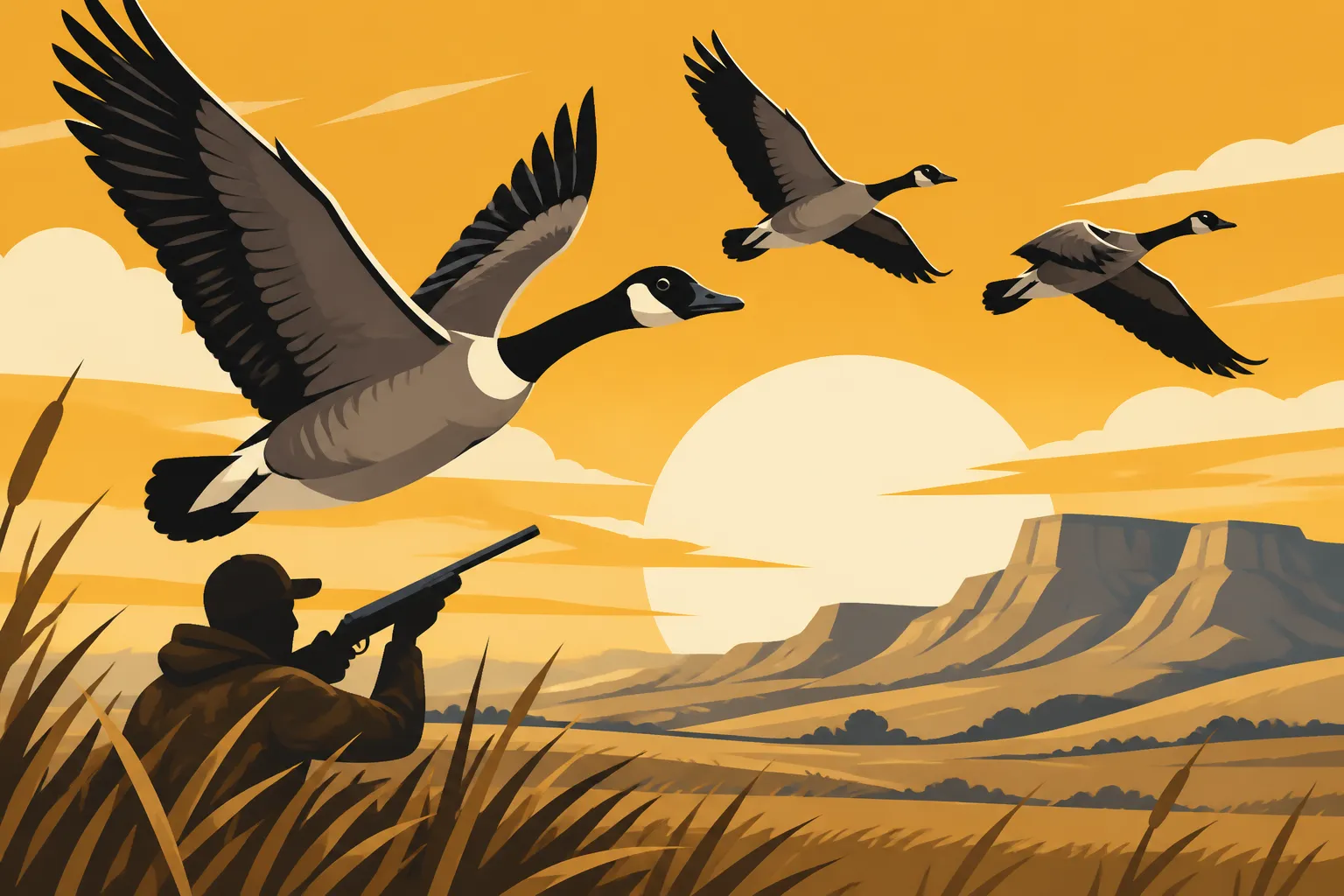
Canada Geese in South Dakota
The honking call of Canada geese overhead is an iconic sound of autumn and winter across South Dakota, signalling not just the change of seasons but also incredible hunting opportunities. Yet, for many hunters, especially those new to waterfowling or visiting the state, figuring out the nuances of goose hunting in South Dakota can feel like trying to solve a complex puzzle. From understanding their shifting patterns to navigating the specific season dates and regulations, it’s easy to feel overwhelmed. This guide is designed to cut through that confusion, offering a deep dive into everything you need to know about chasing Canada geese in the Coyote State, helping you understand their habits, the rules of the game, and effective strategies for a successful hunt.
The Unmistakable Presence of Canada Geese in South Dakota
South Dakota is a waterfowl hunter's paradise, and a huge part of that reputation is thanks to the Canada goose. These magnificent birds have an unmistakable presence, whether you're hearing their distant calls from a roost lake or watching a flock lock up over your decoys in a cut cornfield. But their prevalence isn't just a happy accident; it's a story of ecological success, adaptation, and smart wildlife management.
Historical Context and Population Growth
It wasn't always this way. While various subspecies of Canada geese have always been part of the North American landscape, the population dynamics have shifted dramatically over the decades. In the mid-20th century, some populations were actually in decline due to overhunting and habitat loss. However, with concerted conservation efforts, including habitat restoration and regulated hunting seasons, Canada geese made a remarkable comeback. South Dakota, with its abundant water, vast agricultural lands, and relatively low human population density in many areas, proved to be an ideal environment for them.
Today, South Dakota supports both resident Canada goose populations and hosts millions of migratory birds that pass through the Central Flyway. Resident geese, often larger subspecies, have learned to thrive in close proximity to human activity, nesting in parks, golf courses, and along reservoirs. These birds stick around year-round, offering early-season opportunities. The true spectacle, however, begins when migratory flocks start pouring into the state, bringing with them a torrent of honkers from Canada and the northern prairies, replenishing the hunting grounds and presenting new challenges and rewards for hunters. This blend of resident and migratory populations ensures a strong and varied goose hunting season for hunters seeking to bag these impressive birds.
Factors Contributing to Their Success
Several factors have combined to create this goose haven in South Dakota. Firstly, the state’s agricultural landscape provides an irresistible buffet. Vast fields of corn, soybeans, and winter wheat offer high-energy food sources that geese absolutely need to fuel their long migrations and maintain condition through the colder months. These fields become prime feeding grounds, attracting thousands of birds daily. Secondly, the abundance of water, from the Missouri River reservoirs like Lake Oahe and Lake Sharpe to countless prairie potholes and stock dams, offers safe roosting and resting areas. These water bodies, especially the larger ones, provide sanctuaries where geese can escape pressure and conserve energy.
Finally, and perhaps most crucially, is the effective management by wildlife agencies. Habitat projects, wetland conservation, and carefully structured hunting seasons ensure that populations remain healthy and sustainable. Refuges and protected areas offer critical staging grounds, further concentrating birds and distributing them across the landscape as they move to and from feeding areas. This interconnected network of food, water, and safe zones creates a perfect ecosystem for Canada geese to flourish, drawing them to South Dakota year after year. Hunters often find themselves using tools like GoHunt to research these prime habitats and understand the seasonal movements of these birds, gaining an edge in their scouting efforts.
Population Distribution Across the State
Canada geese aren't evenly spread across South Dakota; their distribution largely follows key habitat features. The eastern part of the state, particularly the Glacial Lakes Region, is a major magnet for migratory birds due to its dense concentration of prairie potholes and agricultural fields. Counties like Spink, Brown, and Clark are renowned for their incredible waterfowl numbers, offering some of the most consistent goose hunting in the nation. This region's landscape is dotted with small wetlands and surrounded by crop fields, providing a perfect balance of roosting and feeding opportunities.
Further west, the Missouri River corridor acts as a superhighway for migrating geese. The large reservoirs—Oahe, Sharpe, Francis Case, and Lewis and Clark—provide immense expanses of open water, drawing thousands of birds looking for safe overnight roosts. From these massive water bodies, geese will fan out daily into the surrounding crop fields, especially those within a few miles of the river. Even the more arid West River country, with its stock dams and river breaks, supports significant resident populations and attracts migrating birds, particularly in areas near irrigated fields or larger water sources. Understanding these general patterns is the first step in successful scouting and deciding where to focus your efforts.
Understanding Canada Goose Behavior and Habitat
To successfully hunt Canada geese, you need to think like a goose. Understanding their daily routines, preferred habitats, and migration patterns is paramount. These birds are creatures of habit, and while they can be pressured into changing their ways, they generally stick to predictable routines dictated by food, water, and safety.
Daily Routines: Feeding, Roosting, and Resting
Canada geese typically follow a fairly consistent daily schedule, especially during the peak of migration. Their day usually begins at first light when they leave their roosting areas, which are often large, open bodies of water like reservoirs, lakes, or large prairie potholes. From these safe havens, they'll fly, often in large V-formations, to their feeding grounds. These feeding grounds are almost exclusively agricultural fields, particularly cut corn, winter wheat, or sometimes alfalfa. They'll spend several hours feeding, replenishing energy reserves crucial for survival and migration.
After their morning feed, many geese will return to a loafing area—often a smaller pond, a secluded part of a lake, or even a large pasture where they can rest, digest their food, and preen. This midday period can be slower for hunting, though some birds may make multiple feeding trips. As afternoon approaches, they'll often return to the feeding fields for another round, or sometimes just head straight back to their main roost as dusk settles. This consistent cycle means hunters have prime opportunities at dawn and dusk, and sometimes a solid midday hunt if they can intercept birds moving between feeding and loafing zones.
Preferred Habitats in South Dakota
South Dakota offers an abundance of the habitats Canada geese crave. For roosting, they seek out large, open water bodies that provide security from predators. The vast stretches of the Missouri River reservoirs are undeniably top-tier roosting spots. Imagine thousands of geese covering the water, feeling safe from coyotes and other threats. Smaller, but equally important, are the myriad Decoy Spreads on a Prairie Pothole that dot the eastern landscape. These smaller wetlands, when large enough, can also hold significant numbers of geese overnight.
For feeding, it's all about the crops. Cut cornfields are perhaps the most iconic and sought-after feeding grounds. The waste grain left behind after harvest provides an incredibly rich, high-calorie food source. Winter wheat and rye fields are also very attractive, offering tender greens. Geese are often drawn to areas where they can easily see approaching threats, preferring fields with good visibility. Understanding these preferences helps hunters predict where geese will want to be and where to set up their spreads. Scouting for actively used fields, marked by droppings and scattered feathers, is far more effective than just guessing.
Migration Patterns and Timing
South Dakota's Canada goose hunting is heavily influenced by migration. While resident geese provide opportunities throughout the season, the truly massive numbers arrive with the migrations. The early part of the season, often starting in early September, primarily targets these local populations. As October progresses and temperatures begin to drop further north, the first waves of migratory geese begin to arrive. These birds, often from Manitoba, Saskatchewan, and North Dakota, bring new life to the hunting grounds, and their arrival often signals a significant increase in overall bird numbers.
The peak of the migration typically occurs from late October through November, when large numbers of geese funnel through the state. This is when hunters can experience truly epic days, especially when weather conditions push birds south. However, geese are smart, and they often hold in areas with abundant food and open water for as long as possible. A mild winter can see large numbers of geese remain in South Dakota well into December or even January, taking advantage of open water on the Missouri River and readily available food. Conversely, a severe cold snap or heavy snow can push birds further south quickly. Keeping an eye on weather forecasts, both locally and hundreds of miles to the north, is a critical part of predicting goose movements. The GoHunt platform can be invaluable for tracking these broader weather trends and their potential impact on migration.
Key South Dakota Goose Hunting Seasons and Regulations
Navigating the various seasons and regulations for Canada geese in South Dakota can be a bit tricky, but it's absolutely essential for a legal and ethical hunt. The state strategically structures its seasons to manage both resident and migratory populations, offering different opportunities throughout the fall and winter.
Early Canada Goose Season Tactics
South Dakota offers an "Early Canada Goose Season," typically beginning in early September. This season is specifically designed to reduce the state's growing resident Canada goose population, which can sometimes cause nuisance issues in urban and agricultural areas. The bag limits during this period are often more generous than the regular season, reflecting the management goal. This is an excellent opportunity for hunters to get out early, often in warmer weather, before the main migratory push begins.
Hunting during this early season usually focuses on local birds that are still establishing their daily patterns. They might be found feeding in harvested small grain fields, loafing on smaller ponds, or using municipal park ponds. Because these birds haven't faced intense hunting pressure for months, they can sometimes be less wary than their late-season counterparts, offering fantastic decoying opportunities. However, hunters still need to be mindful of state-specific rules regarding shooting hours, methods of take, and South Dakota Early Canada Goose Dates that are in effect. Always consult the current year's hunting handbook for the precise dates and regulations before heading out.
Regular Season Dates and Bag Limits
The main "Regular" Canada goose season in South Dakota generally kicks off in late September or early October and extends through the winter, often into February, with some splits and zone differences. The state is divided into different zones (e.g., East River, West River, Missouri River) each with slightly different opening and closing dates and bag limits. These zones are designed to account for varying bird concentrations and migration patterns across the state. For instance, the Missouri River zone might have specific rules due to the immense number of geese it holds.
Bag limits during the regular season are typically lower than the early season, reflecting a more conservative approach to managing the combined resident and migratory populations. Hunters might find daily limits varying, and possession limits are also in place to prevent overharvest. It's crucial to know which zone you are hunting in and to check the South Dakota Game, Fish and Parks (GFP) website or the annual hunting handbook for the most up-to-date and accurate information on South Dakota Waterfowl Season Dates and their corresponding bag and possession limits. Failing to do so can quickly turn a fun hunt into a costly violation.
Licensing, Stamps, and HIP Registration
Before you even think about stepping foot in a goose blind, you need to ensure all your paperwork is in order. Hunting Canada geese in South Dakota requires a few specific items:
- South Dakota Hunting License: For non-residents, this is typically the South Dakota Nonresident Small Game Licence Price or a combination license. Residents will have their own specific license.
- Federal Duck Stamp: This is a federal requirement for all waterfowl hunters aged 16 and older. It's a physical stamp that must be signed across its face and carried with you.
- South Dakota Habitat Stamp: The state requires a South Dakota Habitat Stamp Requirements for all hunters over the age of 16 pursuing small game, including waterfowl.
- HIP Registration: The Harvest Information Program (HIP) is a federal requirement. All migratory bird hunters (doves, ducks, geese, coots, snipe, rails) must register with HIP annually in each state they hunt. It's a quick, free registration that helps wildlife agencies gather vital harvest data.
It's imperative to purchase all necessary licenses and stamps and complete HIP registration before you go afield. Digital versions of some licenses are available, but always check the specifics for the current year. Having all your documentation in order not only keeps you legal but also contributes directly to waterfowl conservation efforts, ensuring healthy populations for future generations of hunters.
Effective Hunting Strategies for South Dakota Canadas
Successfully hunting Canada geese in South Dakota involves more than just having the right gear; it demands an understanding of tactics, patience, and adaptability. These birds are intelligent and wary, especially after they've been hunted for a few weeks, so employing smart strategies is key.
Field Hunting Geese in South Dakota Cut Corn
Field hunting in cut corn is arguably the most classic and productive method for Canada geese in South Dakota. Geese absolutely love waste grain, and a freshly cut cornfield is like an all-you-can-eat buffet. The key to success here lies in thorough scouting. You need to identify a field where geese are actively feeding, not just flying over. Look for droppings, scattered feathers, and disturbed corn stalks. Tools like GoHunt can assist in E-Scouting Walk-In Areas Before the Season, though nothing beats boots on the ground for finding fresh sign. Once you've found an active field, obtaining permission from the landowner is paramount if it's private ground.
Setting up your decoy spread is critical. A realistic spread mimicking a feeding flock, with some sentry birds standing tall, is usually most effective. Full-body decoys offer the best realism, but a mix of shells and silhouettes can also work, especially if you deploy a large number of them. Concealment is equally important. Layout blinds are the go-to choice for hunters, allowing you to hide completely flat in the field. Position your blinds downwind of your main spread, allowing geese to finish into the wind over your decoys. Calling also plays a huge role; realistic calling can convince hesitant birds to commit to your spread, pulling them in for those close-range shots.
Decoying Over Water and Jump Shooting
While field hunting gets a lot of attention, decoying geese over water, especially smaller prairie potholes or stock dams, can be incredibly effective, particularly during the early and late seasons. Geese will use these smaller water bodies for roosting, loafing, and even feeding on aquatic vegetation. Scouting here involves identifying water bodies that show signs of recent goose activity, like droppings along the shoreline.
Setting up decoys on water means deploying floating decoys, often in a loose family group, creating a natural-looking cluster. You might also place a few full-body decoys on the shoreline if the bank allows. Concealment can be trickier near water; natural vegetation, portable panel blinds, or even a well-placed boat blind can work. A common strategy when targeting geese on water is to set up before first light, catching birds as they arrive from their roosts or as they come in for a midday loaf. If the geese are using smaller, more isolated water bodies, jump shooting can be an option, but it requires stealth and knowing the terrain. This typically means approaching the water body cautiously, using topography to your advantage, and surprising the birds. It's often a less consistent method but can be exciting when executed correctly.
Jump Shooting and Pass Shooting Opportunities
Beyond structured decoy spreads, jump shooting and pass shooting offer alternative ways to hunt Canada geese in South Dakota. Jump shooting, as mentioned, involves actively seeking out birds on smaller water bodies or along river edges. This method demands a keen eye for reading terrain and extreme stealth. It's often done solo or with a small partner, quietly approaching a stock dam or a bend in a creek where geese might be loafing, hoping to get within shotgun range before they flush. Success often hinges on using draws, creek beds, or tall grass for cover as you make your approach.
Pass shooting, on the other hand, involves positioning yourself along known flight paths, such as between major roosting areas and feeding fields. This often means finding a strategic point, like a break in a tree line, a prominent hill, or a field edge that birds consistently fly over. Unlike decoying, you're not trying to bring birds down to you; you're intercepting them as they move. This method requires excellent lead judgment and often longer shots, so knowing your shotgun and ammunition's capabilities is crucial. For this style of hunting, remember to follow all South Dakota Road Hunting Laws and ensure you are on legal ground and maintaining a safe distance from roads and buildings. Both jump shooting and pass shooting can add a different dimension to your goose hunting experience, especially when birds become decoy-shy.
Gear and Equipment for South Dakota Goose Hunters
Having the right gear is non-negotiable for South Dakota goose hunting. The elements can be harsh, geese are tough birds, and proper equipment enhances both your comfort and your success rate. Investing in quality gear pays off in the long run.
Shotguns, Ammunition, and Choke Choices
For Canada geese, a 12-gauge shotgun is the standard, though some hunters opt for 10-gauge for its increased payload. A 3-inch or 3.5-inch chamber is highly recommended to handle magnum loads, giving you more pellets downrange and increased range. Semi-automatic or pump-action shotguns are preferred for quick follow-up shots. You don't need a fancy, high-dollar shotgun, but reliability is key.
Ammunition choice is paramount. Steel shot is legally required for all waterfowl hunting, and for Canada geese, larger shot sizes are generally preferred due to the bird's robust size and dense feathers. BB, BBB, or T shot are common choices. Load velocity also plays a role; high-velocity loads deliver more energy. When it comes to chokes, a modified or improved modified choke is a good all-around choice for decoying geese, offering a good balance of pattern density and spread at typical shooting distances. If you anticipate longer pass-shooting opportunities, a full choke might be warranted, but remember that tighter patterns require more precise aiming. Always pattern your shotgun with your chosen ammunition and choke before the season to understand its effective range and pattern density.
Decoys and Spreads
Decoys are the heart of successful goose hunting. The market offers a wide range of options, each with pros and cons:
- Full-Body Decoys: These offer the most realistic look and movement, especially with motion stakes. They are bulky and expensive but incredibly effective.
- Shell Decoys: Lighter and more portable than full bodies, they offer a 3D profile at a lower cost.
- Silhouettes: The most portable and affordable option, silhouettes create the illusion of a large flock, especially when combined with other types.
- Rotary Decoys: Spinning wing decoys aren't typically used for geese, but sometimes a flapping "flyer" decoy can add realism to a spread.
A large spread is generally more effective for geese, often ranging from a few dozen to several hundred decoys. The more decoys, the more visual attraction for high-flying birds. A common spread pattern involves creating a loose "J" or "U" shape, leaving a landing zone (the "kill hole") upwind of your blinds. This forces geese to commit and finish over your shooting zone. Consider adding movement to your spread with flags, motion stakes, or even a few goose "flappers" to mimic active birds.
Blinds, Clothing, and Weather Preparedness
South Dakota weather can be notoriously unpredictable, especially during the hunting season. From warm, sunny early fall days to bitter, wind-whipped blizzards in late season, you need to be prepared for everything. Laying out on stubble fields or sitting on frozen ground in a blind means you'll be exposed to the elements for hours, making warm, waterproof clothing essential.
- Blinds: Layout blinds are crucial for field hunting. They provide excellent concealment and surprisingly good protection from wind and cold. Ensure your blind is adequately brushed in with natural vegetation from the field you're hunting to blend in seamlessly. For water hunts, boat blinds, panel blinds, or natural vegetation can provide concealment.
- Clothing: Layering is key. Start with moisture-wicking base layers, add insulating mid-layers (fleece, down), and finish with a waterproof and windproof outer shell in camouflage patterns appropriate for your environment (e.g., cornfield patterns, marsh patterns). Don't forget a warm hat, gloves or mittens, and insulated, waterproof boots. You'll often be walking through mud, snow, or even shallow water, so durable footwear is vital.
- Comfort Items: A hot thermos of coffee or soup can be a game-changer on a frigid morning. Hand warmers and toe warmers are also highly recommended. Remember that even on seemingly mild days, sitting still for hours in the wind can lead to a significant drop in body temperature.
Conservation and Management of South Dakota's Goose Population
The incredible Canada goose hunting opportunities in South Dakota don't happen by accident; they are the result of dedicated conservation efforts and thoughtful wildlife management. Hunters, through their license fees and excise taxes on equipment, play a direct and vital role in funding these programs.
Balancing Hunter Opportunity and Population Health
Wildlife managers in South Dakota, primarily through the Game, Fish and Parks (GFP) department, face the complex task of balancing hunter opportunity with the long-term health and sustainability of the Canada goose population. This means setting appropriate season lengths, bag limits, and zone specific regulations. For example, the early Canada goose season targets resident birds to mitigate local impacts, while the regular season is carefully managed to ensure overall migratory populations remain robust.
Data from hunter surveys, banding studies, and aerial population counts are constantly analyzed to inform these decisions. This scientific approach ensures that harvest levels are sustainable and that goose populations can continue to thrive. It’s a dynamic process, with regulations sometimes adjusting year to year based on current population estimates and breeding success. Hunters contribute significantly to this data collection through mandatory reporting like HIP registration, making them active partners in conservation.
Habitat Improvement and Wetland Programs
One of the most critical aspects of Canada goose conservation is habitat. Geese need healthy wetlands for nesting, loafing, and roosting, and productive agricultural lands for food. South Dakota has been a leader in programs aimed at protecting and enhancing these vital habitats. The state's renowned Walk-In Area program, for instance, provides public hunting access while often securing crucial wetland and grassland habitat on private lands. This ensures that birds have places to go, even as land use changes.
Federal programs like the Conservation Reserve Program (CRP) have also been instrumental, paying landowners to convert marginal cropland back into grasslands, which provide nesting cover and reduce runoff into wetlands. Organizations like Ducks Unlimited and Delta Waterfowl also invest heavily in wetland restoration and creation throughout the prairie pothole region, which directly benefits goose populations. Hunters directly support these initiatives through the purchase of the South Dakota Habitat Stamp Requirements and the Federal Duck Stamp, both of which fund wetland acquisition and habitat development.
The Role of Hunters in Conservation
It's impossible to talk about waterfowl conservation without acknowledging the indispensable role of hunters. Hunters are often the most passionate advocates for healthy wildlife populations and pristine natural spaces. Every time a hunter purchases a license, a federal duck stamp, or hunting equipment, a portion of that money goes directly into conservation funds. These funds are used for land acquisition, habitat restoration, wildlife research, and enforcement of wildlife laws.
Beyond financial contributions, hunters are also the eyes and ears on the ground. They report unusual wildlife activity, participate in banding programs, and adhere to regulations designed to protect the resource. Ethical hunting practices, such as ensuring quick, humane kills and retrieving all downed birds, are also part of this conservation ethic. By educating themselves, following regulations, and actively participating in conservation, South Dakota's goose hunters ensure that the tradition of chasing these majestic birds will endure for generations to come. The passion for the hunt fuels the drive to protect the very wildlife we pursue.
Disclaimer
This article is for general informational purposes only and does not constitute professional advice. Laws, prices and regulations vary by location and change over time. Consult a qualified professional for guidance on your specific situation.