Black Hills and Custer State Park Deer
Hunting deer in South Dakota often conjures images of endless prairie and cornfields, but the Black Hills offer a completely different, rugged experience. Navigating the unique draw systems, understanding the specific regulations, and preparing for the mountainous terrain can feel overwhelming for even seasoned hunters. This comprehensive guide will break down everything you need to know about pursuing both whitetail and mule deer in the beautiful, challenging landscapes of the Black Hills and the highly sought-after Custer State Park.
Understanding the Black Hills Ecosystem and Deer Populations
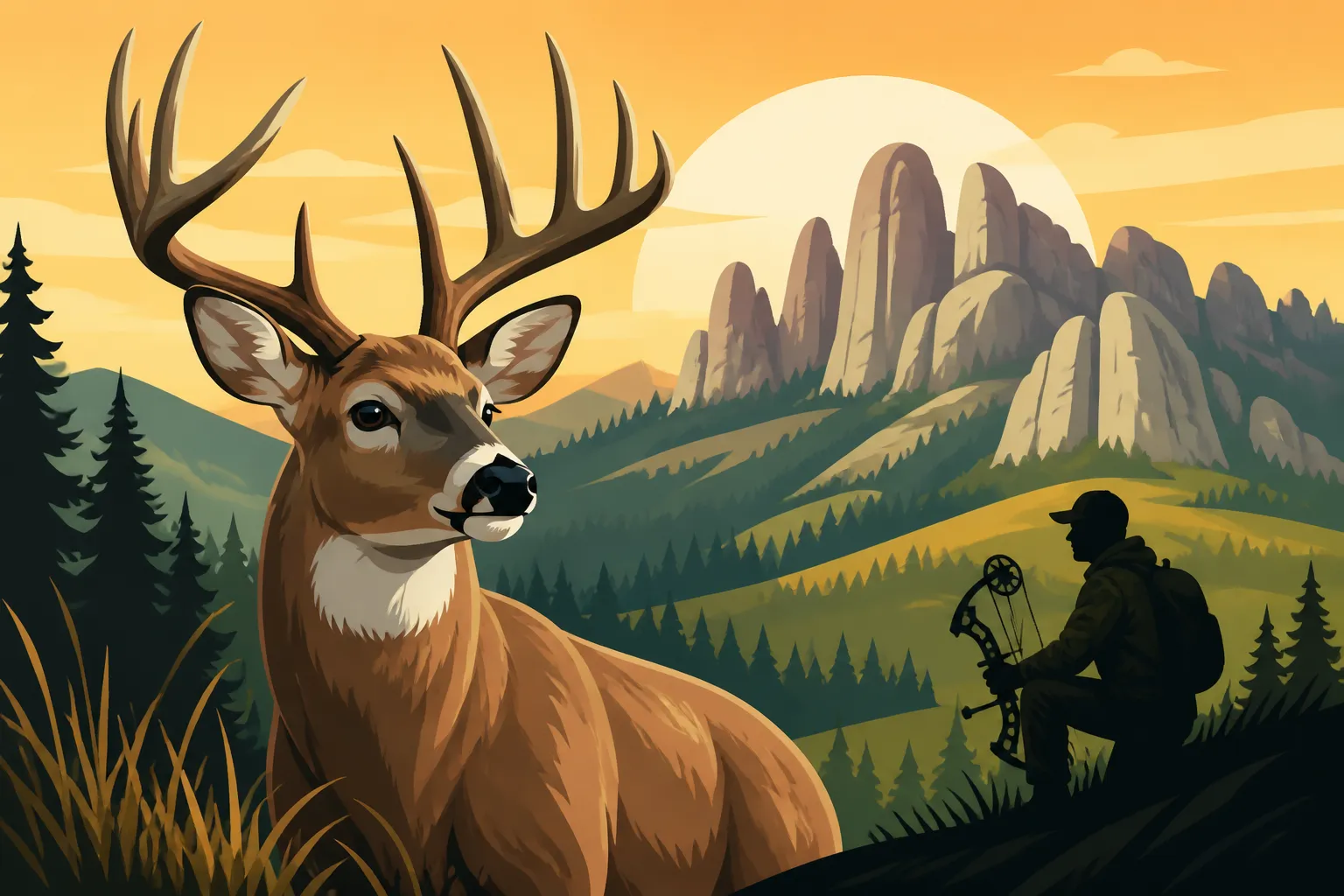
The Black Hills stand as an isolated mountain range rising from the Great Plains, creating a truly unique hunting environment within South Dakota. This ecosystem, primarily covered in Ponderosa pine forests, steep canyons, and rocky outcroppings, supports healthy populations of both white-tailed deer and mule deer, each requiring different hunting strategies.
The Varied Habitat of the Black Hills
Unlike the vast open spaces of the West River prairie, the Black Hills are characterized by dense timber, deep draws, and dramatic elevation changes. Ponderosa pine dominates much of the landscape, interspersed with aspen, birch, and oak stands, especially in higher elevations and along drainages. This varied habitat provides excellent cover, browse, and thermal protection for deer throughout the year. Hunters often find themselves navigating steep slopes and thick undergrowth, making physically demanding hunts the norm. Understanding how deer utilize these different cover types, from bedding in dense pines to feeding on oak flats, is crucial. For those accustomed to prairie hunts, the transition to dense timber requires a significant shift in approach. It’s a world away from South Dakota Whitetail Hunting in River Bottoms, requiring different skills and gear.
Mule Deer Versus Whitetail in the Hills
While both species inhabit the Black Hills, their preferred niches and behaviors often differ. White-tailed deer are more commonly found in the lower elevations, river bottoms, and agricultural fringes surrounding the Black Hills, though they extend well into the timbered hills. They are often associated with thicker brush and riparian areas, relying on concealment and quick escapes. Mule deer, on the other hand, typically prefer the more open, rugged ridges, rocky slopes, and scattered timber of the higher elevations within the central and western Black Hills. They are known for their distinctive "pronking" gait and their tendency to hold tight or use terrain to escape, rather than simply running through dense cover. Distinguishing between the two can sometimes be challenging, especially in transitional zones, but paying attention to their ears, tail, and body shape, even at a distance, is key.
Deer Population Dynamics and Trends
The deer populations in the Black Hills, much like elsewhere, are influenced by habitat quality, winter severity, and disease. The South Dakota Game, Fish and Parks (GFP) manages these populations through limited tag allocations, aiming to balance hunter opportunity with herd health. While specific population numbers fluctuate year to year, the Black Hills typically offer consistent hunting opportunities for both whitetail and mule deer. Hunters should stay informed about the latest GFP reports and forecasts, which often provide insights into winter survival rates, fawn recruitment, and overall herd health. Long-term trends often show stable or slightly increasing populations, making it a reliable destination for deer hunters. It's vital to recognize that heavy winter snows and prolonged cold spells can impact Mule Deer Fawn Recruitment in Dry Years and overall herd health, particularly for mule deer.
Navigating South Dakota's Draw System for Black Hills Deer
Acquiring a deer tag for the Black Hills requires navigating South Dakota's draw system, which can be a bit of a maze for new applicants. Unlike some general over-the-counter tags available in other parts of the state for small game, big game tags, especially for the Black Hills, are primarily allocated through a lottery drawing.
Understanding Preference Points and Draw Odds
South Dakota uses a hybrid preference and bonus point system for its big game draws, including Black Hills deer. Non-residents, in particular, often find themselves needing to accumulate preference points to increase their odds of drawing a desirable tag. A preference point essentially gives you a higher priority in subsequent draws. You can purchase a preference point during a specific application period even if you don't apply for a tag, saving it for a future year. Knowing the typical draw odds for specific Black Hills units and weapon types is critical for making informed application choices. Websites and services like GoHunt offer valuable insights into historical draw data and unit statistics, helping hunters strategize their point accumulation and tag applications effectively. Understanding South Dakota Preference Points Explained is a foundational step in this process.
Application Process and Deadlines
The application period for Black Hills deer typically opens in late spring or early summer, with specific deadlines varying year to year. It's crucial to mark these dates on your calendar. Applications are submitted online through the South Dakota GFP website. During the application process, you'll select your preferred unit, weapon type (archery, muzzleloader, or rifle), and specify whether you're applying for an antlered (buck) or antlerless (doe) tag. Most hunters apply for an antlered tag first, as these are generally more competitive. If you're applying as a non-resident, be aware that there are specific quotas set aside, and certain units or tag types may be resident-only. Always double-check the current year's hunting handbook for the most accurate and up-to-date information on deadlines and regulations.
Understanding Unit Boundaries
The Black Hills are divided into specific deer hunting units, each with its own tag quotas and regulations. Familiarizing yourself with these unit boundaries is paramount. You can find detailed maps on the GFP website and often overlaid on digital mapping platforms like onX Hunt. Incorrectly identifying your hunting unit or unknowingly crossing into an unauthorized unit can lead to serious legal consequences. Pay close attention to unit numbers (e.g., 401L for specific Black Hills units) when applying and always confirm your location in the field. Some units might be primarily public land, while others are a mosaic of public and private ownership, impacting your scouting and access plans. Understanding the nuances of South Dakota Deer Licence Types by Region can help clarify which tags apply to which areas.
Specific Regulations and Seasons in the Black Hills
Hunting in the Black Hills has its own set of rules and season structures that differ significantly from prairie deer hunting. These regulations are designed to manage the unique deer populations and hunting pressure in this distinct ecological zone.
Archery, Muzzleloader, and Rifle Seasons
South Dakota offers separate seasons for archery, muzzleloader, and rifle hunters in the Black Hills, providing diverse opportunities. The archery season is typically the longest, starting in early fall and often extending well into the rifle season, allowing for extensive bowhunting opportunities. The muzzleloader season usually falls after the primary rifle season, offering a late-season challenge when deer may be focused on finding winter browse. The rifle season, often the most popular, usually opens in early to mid-November, coinciding with the peak of the whitetail rut and pre-rut mule deer activity. Each weapon type has specific legal requirements, such as minimum draw weights for bows, specific bullet types for muzzleloaders, and rifle caliber restrictions. Always consult the current hunting handbook for precise dates and weapon specifications.
Antlerless Versus Antlered Tags
Hunters can apply for either antlered (buck) or antlerless (doe) tags in the Black Hills, with antlered tags generally being more difficult to draw, especially for non-residents. Antlerless tags are often available to help manage herd numbers and can provide an excellent opportunity for meat hunters or those looking to gain experience in the Black Hills. Successfully drawing an antlered tag is the goal for many, offering the chance to pursue a mature buck in the rugged hills. It's important to understand the specific definitions of "antlered" and "antlerless" deer in South Dakota regulations (e.g., often a buck must have at least one antler three inches long). Planning whether you're targeting a trophy or simply venison can influence your application strategy and improve your chances of success.
Weapon Restrictions and Legalities
Beyond the general season structure, there are specific legalities regarding weapon use in the Black Hills. For instance, some areas may have restrictions on certain firearms or ammunition types. Generally, high-powered rifles are the norm for deer hunting in the Black Hills, capable of ethical shots at varying distances in timbered and open terrain. Blaze orange requirements are mandatory during specific firearm seasons for hunter safety. It’s also important to be aware of regulations regarding loaded firearms in vehicles and ATVs on public lands, as many forest roads are open to motorized travel but still have strict safety rules. When scouting the Black Hills National Forest Hunting, these regulations are even more critical, ensuring you understand where you can and cannot use motorized vehicles to access hunting grounds. Hunters should always carry a copy of the current hunting regulations and be thoroughly familiar with them to avoid any unintentional violations.
Custer State Park: A Special Draw Opportunity
Custer State Park, nestled within the Black Hills, offers a truly unique and highly sought-after deer hunting experience that operates under its own distinct set of rules and a separate draw system. This is not your typical public land hunt; it’s a managed hunt designed to control game populations within the park.
The Custer State Park Draw Process
Unlike the general Black Hills deer units, tags for Custer State Park are incredibly limited and highly competitive. The park manages its deer, elk, and bison populations through annual draw hunts, which are often considered once-in-a-lifetime opportunities. The application process is separate from the standard Black Hills draw and usually has its own specific deadlines, which tend to be earlier in the year. While preference points might not apply in the same way, applying consistently over several years is often necessary to even have a chance. Non-residents can apply, but the odds are significantly steeper due to the limited number of available tags. Many hunters find the research from platforms like GoHunt invaluable in understanding the historical application success rates and strategizing for these low-odds draws. For those interested in elk, the South Dakota Elk Draw and Units also has specific rules to navigate.
Hunt Types and Success Rates
Custer State Park offers different hunt types, usually categorized by weapon (archery or firearm) and specific units within the park. These hunts are meticulously planned and managed by park staff, often with a focus on specific population control goals for both mule deer and whitetails. Success rates for Custer State Park hunts are generally very high if you draw a tag, primarily because of the robust deer populations within the park and the structured nature of the hunt. However, the true challenge lies in drawing the tag itself. Hunters who are successful in the draw are typically provided with detailed information packages, including maps, access points, and specific rules of engagement within the park, which differ significantly from general public land. These are often trophy-quality hunts due to limited pressure and abundant resources.
Rules and Considerations for Park Hunts
Hunting within Custer State Park comes with a stringent set of rules designed to preserve the park's unique environment and visitor experience. These rules often include specific access restrictions (e.g., no off-road vehicle use, designated parking areas), strict harvest reporting requirements, and limitations on scouting or pre-hunt activities. Hunters must be prepared to follow all instructions from park staff to the letter. Due to the high visibility of game and the presence of other park users (even during hunting season, some areas may still see hikers or wildlife watchers), shot placement and ethical hunting practices are paramount. It's also worth noting that Custer State Park has significant populations of bison and elk, and hunters must be absolutely certain of their target identification. The experience of hunting inside Custer State Park is truly unlike any other in South Dakota.
Planning Your Black Hills Deer Hunt
A successful Black Hills deer hunt requires thorough planning, from virtual scouting to understanding the terrain and weather. The challenging landscape demands more preparation than an average prairie hunt.
E-Scouting and On-the-Ground Reconnaissance
Before you even set foot in the Black Hills, extensive e-scouting is a must. Utilize tools like Google Earth, onX Hunt, and the South Dakota Public Hunting Atlas to identify potential hunting units, locate public land boundaries, analyze terrain features, and pinpoint areas of dense cover, water sources, and potential feeding grounds. Look for areas with a good mix of timber, openings, and elevation changes that deer might use for bedding, feeding, and travel corridors. Once you're on the ground, dedicate time to reconnaissance without a weapon, if possible. This allows you to walk potential travel routes, examine fresh sign, and verify the access points identified during e-scouting. Physical scouting helps you understand the difficulty of traversing the terrain, which maps sometimes understate. For similar challenges, exploring Hunting Elk on Steep Black Hills Ridges can offer useful insights into navigating tough terrain.
Finding Public Access and Land Boundaries
The Black Hills offer substantial public hunting opportunities, primarily within the Black Hills National Forest. However, navigating the patchwork of public and private land can be tricky. Always carry reliable maps, preferably digital ones like onX Hunt, which clearly show property lines and land ownership. These apps can prevent accidental trespassing and help you maximize your time on legal hunting ground. In addition to National Forest lands, there are often smaller parcels of Bureau of Land Management (BLM) land and South Dakota Game Production Areas (GPAs) that can provide good access. Pay close attention to gates, posted signs, and access roads. Some roads may be closed seasonally, so check Black Hills Forest Motor Vehicle Use Maps for the most current information. Always be respectful of private landowners and their property, even if you are only adjacent to it.
Considerations for Weather and Terrain
The Black Hills weather can be unpredictable, especially during the fall hunting seasons. Expect significant temperature swings, from mild autumn days to sudden snowstorms and freezing rain. Layering your clothing is essential to adapt to changing conditions and to prevent hypothermia, which can be a real risk in the mountains. Footwear is equally critical; durable, waterproof, and supportive boots are a must for navigating steep, rocky, and potentially snowy terrain. The physical demands of hunting in the Black Hills should not be underestimated. Hunters should be in good physical condition, capable of hiking several miles a day over varied and often challenging ground. Carrying a sturdy backpack with water, snacks, a first-aid kit, and emergency supplies is non-negotiable.
Essential Gear and Tactics for Mountain Deer
Hunting in the Black Hills demands specific gear and refined tactics that cater to its rugged, timbered environment, a far cry from the open prairie.
Rifle and Optics Selection
For rifle hunters, a flat-shooting cartridge capable of handling shots from close timber to longer-range open-ridge crossings is ideal. Calibers like .270 Win, .30-06, .308 Win, or 6.5 Creedmoor are popular and effective choices. Pair your rifle with quality optics that perform well in low light, as deer activity often peaks at dawn and dusk. A variable power scope (e.g., 3-9x or 4-12x) offers versatility for both timber and longer shots. Additionally, good binoculars (10×42 or 12×50) are essential for glassing distant slopes and spotting deer in dense cover. A rangefinder is also invaluable for confirming distances in the varied terrain. Practicing your shooting from different positions (prone, kneeling, standing) will prepare you for the diverse shot opportunities the Black Hills might present. For more on ensuring your rifle is ready for the terrain, consider our insights on Rifle Setup for South Dakota Open Country, though the Black Hills present unique challenges.
Layering for Black Hills Conditions
Successful Black Hills hunters know the importance of a versatile clothing system. The key is layering:
- Base Layer: Wicks moisture away from your body, preventing chills.
- Mid-Layer: Provides insulation. Fleece or down jackets work well.
- Outer Layer: Offers protection from wind, rain, and snow. It should be waterproof and breathable.
Avoid cotton, as it retains moisture and loses insulating properties when wet. Choose wool or synthetic materials. Don't forget a warm hat, gloves, and durable, insulated, waterproof boots. Early mornings can be frigid, but midday hikes can warm you up quickly, so being able to shed or add layers is crucial for comfort and safety. Checking the forecast daily and packing accordingly is a non-negotiable step.
Still-Hunting and Glassing Strategies
Still-hunting is often a highly effective tactic in the Black Hills, particularly in dense timber. This involves moving slowly and deliberately, taking a few steps, then pausing for several minutes to scan for movement, listen for sounds, and pick apart cover. Deer often rely on their ears and nose, so moving into the wind is always a good strategy. Look for deer signs like rubs, scrapes, and tracks to identify high-traffic areas.
While less common than in truly open country, strategic glassing can also pay off, especially on more open ridges, canyon rims, or clear-cuts. Find a vantage point that offers a broad view and systematically scan with your binoculars, paying close attention to shadows, changes in texture, and horizontal lines that might indicate a bedded deer. Remember, patience is your greatest asset in either scenario. Many of these tactics can be adapted from those used when pursuing larger game, as detailed in Black Hills Elk Hunting Tactics.
| Feature | General Black Hills Deer Hunt (Draw) | Custer State Park Deer Hunt (Special Draw) |
|---|---|---|
| Primary Access | Black Hills National Forest (Public) | Custer State Park (Managed Hunts) |
| Competition | High (preference points help) | Extremely High (very limited tags) |
| Season Length | Archery: Long; Rifle: ~2 weeks; Muzzleloader: ~1 week | Shorter, specific dates for each hunt type |
| Tag Types | Antlered, Antlerless (unit-specific) | Antlered or Antlerless (hunt-specific) |
| Success Rate | Varies by hunter skill & unit | High if tag drawn (due to management) |
| Regulations | SD GFP general deer regulations | SD GFP + Custer State Park specific rules |
| Scouting | Extensive pre-season necessary | Often restricted to hunt days/pre-briefing |
| Physical Demands | High (steep, timbered terrain) | High (similar terrain) |
Disclaimer
The information provided in this guide is for general informational purposes only and is subject to change. Hunting regulations, season dates, and draw procedures are set by the South Dakota Department of Game, Fish and Parks (GFP) and can be modified annually. Always consult the official South Dakota GFP website and the current year's hunting handbook for the most accurate and up-to-date information before planning or embarking on any hunting trip.