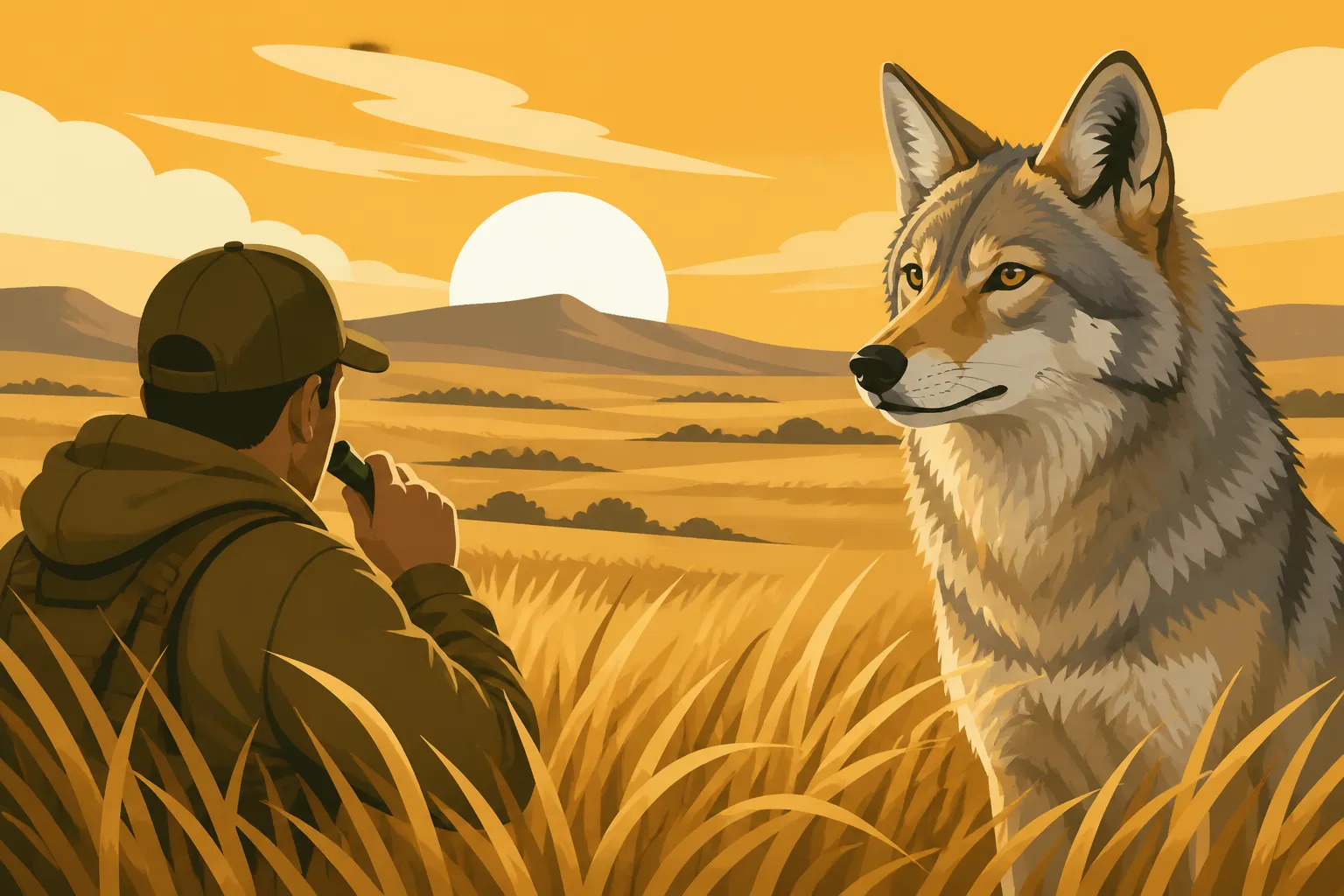
Calling Coyotes on South Dakota Grassland
Coyotes on South Dakota’s vast grasslands present a unique challenge for even the most seasoned predator hunter. The sheer expanse of the prairie, coupled with the cunning nature of these animals, can leave you feeling frustrated as they seem to materialize and vanish like ghosts. This guide will dive deep into the tactics and gear necessary to successfully call coyotes in the wide-open country of South Dakota, turning those elusive encounters into memorable hunts.
Understanding the South Dakota Grassland Environment and Coyote Behavior
Hunting coyotes effectively on the South Dakota prairie means more than just knowing how to blow a call. It requires a profound understanding of the landscape itself and how the coyotes living there navigate and exploit it. This isn't timber hunting, where dense cover dictates movement; this is a game of sight, scent, and subtle topography.
The Unique Challenges of Wide-Open Spaces
The most striking feature of South Dakota's grasslands is, well, the grass. Miles and miles of it, often interrupted only by occasional draws, sparse shelterbelts, or a lonely farmstead. This vastness creates distinct challenges for hunters. For one, concealment is incredibly difficult. You don't have thick timber or dense brush to hide your approach or your setup. Every rise, every small dip in the terrain becomes crucial. What might seem like a minor undulation on a map can be the only thing breaking up your silhouette.
Furthermore, the wind is a constant, often relentless, factor out here. It's not just a minor annoyance; it's a primary force that dictates everything from how sound carries to how a coyote uses its nose. A strong crosswind can make it impossible for a coyote to pinpoint the source of a call, or worse, carry your scent directly to them, sending them packing before you even see them. Conversely, a steady wind can be your best friend, allowing you to approach from a direction that puts your scent far behind you, giving you an advantage. The sheer distances involved also mean shots can be long, testing both your marksmanship and your equipment.
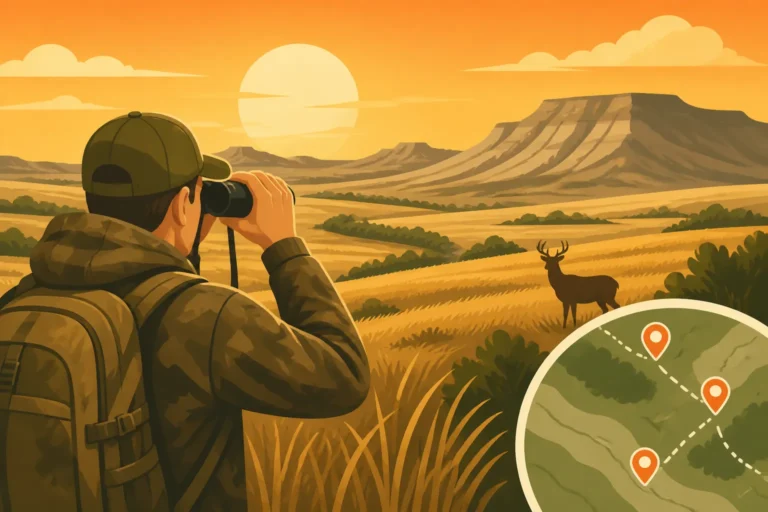
Think about a typical situation: you've spotted a likely area from a distant hilltop, perhaps using your binoculars to scan for potential bedding areas or travel corridors. The challenge then becomes how to get within effective calling range without being seen, heard, or smelled by an animal that constantly has its guard up. It's a game of inches and precise movements, often over hundreds of yards of seemingly featureless ground.
Coyote Patterns in Grassland Habitats
Coyotes thrive on the prairie because it provides an abundant food source, even if it looks sparse to us. Their diet is incredibly varied, ranging from voles and mice that scurry through the grass, to larger prey like jackrabbits, cottontails, and even deer fawns during the spring. In areas bordering agricultural fields, they'll also take advantage of waste grain or target pheasants and other ground-nesting birds. Understanding these food sources helps you predict where coyotes might concentrate their efforts. For example, fresh hayfields, areas with high rodent populations, or sheltered draws where rabbits might bed are all prime locations.
Their behavior is highly seasonal, too. During the late winter and early spring, coyotes are often paired up and preparing for denning. This period can make them incredibly responsive to howls, especially challenge howls, as they are highly territorial. Once pups are on the ground, typically late spring through summer, female coyotes can be very responsive to pup distress calls, driven by a strong maternal instinct to protect their young. As fall approaches and pups start dispersing, these younger, less experienced coyotes might be more prone to mistakes, making them easier to call in.
Travel corridors are critical on the prairie. Coyotes rarely traverse wide-open fields in a straight line if they can help it. Instead, they'll utilize draws, fence lines, tree rows, or even slight changes in elevation to move with some level of cover or efficiency. They're masters of using the contours of the land to their advantage, often appearing seemingly out of nowhere by staying just below the horizon. Understanding this natural tendency allows you to set up your stand in a way that intercepts their likely travel paths or places you where they expect the "prey" to be. While coyotes are often most active at dawn and dusk, they can be called throughout the day, particularly on overcast or cooler days when they might be more willing to move. On particularly harsh winter days, they might even be more active during midday, seeking out an easy meal without expending too much energy.
Essential Gear for Grassland Coyote Calling
Success on the prairie often boils down to preparation, and that includes having the right tools for the job. The equipment you choose for calling coyotes in South Dakota’s vast grasslands needs to address the challenges of long distances, extreme visibility, and the cunning nature of your quarry.
Calls: Electronic Versus Hand Calls
When it comes to calls, hunters often fall into two camps: electronic or hand calls. Each has its distinct advantages and disadvantages on the prairie. Electronic calls, like those from companies such as Foxpro or Primos, offer incredible versatility. You can cycle through dozens of sounds, from various rabbit and bird distress calls to coyote howls and barks, all at the push of a button. The volume capabilities of e-callers are also a huge asset in the wide-open expanse, allowing you to project sound over long distances to attract coyotes that might be hundreds of yards, or even a mile, away. Plus, the ability to place the e-caller away from your position, perhaps 50-100 yards out, can draw the coyote's attention away from you, giving you more flexibility for a shot. The main drawbacks are the initial cost, the need for batteries (always carry spares!), and the fact that they can sometimes sound less "organic" than a skillfully used hand call.
Hand calls, on the other hand, demand a bit more skill but offer a level of realism and adaptability that electronic calls sometimes lack. Whether you prefer open-reed calls for their versatility in mimicking a wide range of distress sounds or closed-reed calls for their consistency, the human element allows for nuanced changes in tone, pitch, and volume that can make a call sound incredibly lifelike. They're also lightweight, require no batteries, and are virtually indestructible. However, projecting sound over great distances with a hand call can be tiring, and it requires significant practice to master the various calls. Many experienced callers find success by combining both: using an e-caller for the initial, long-range draw, and then switching to a hand call for the final, soft coaxing once the coyote is within sight and range. This blend allows you to leverage the best of both worlds.
Optics and Concealment for Open Terrain
Optics are not a luxury; they are a necessity for hunting coyotes on the prairie. High-quality binoculars, at least 10×42, are your most important scouting tool. Before you even think about setting up a stand, you should spend a significant amount of time glassing the surrounding terrain. This isn't just about spotting coyotes; it’s about identifying potential travel routes, subtle depressions where they might approach unseen, and even other hunters or livestock that could spoil your stand. Once you're set up, continue to glass constantly, not just for the approaching coyote, but for any movement or changes in the landscape. A good spotting scope can also be invaluable for identifying coyotes at extreme distances, allowing you to gauge their direction of travel and plan your approach more effectively.
Concealment in open country is equally vital. Forget the idea of hiding behind a massive oak tree; those don't exist in most of South Dakota's grasslands. Instead, you'll be relying on low-profile ground blinds, natural dips in the terrain, or even just sparse vegetation. A good camouflage pattern that blends with the dominant color of the season—whether it's the golden-brown of late fall grass or the stark white of a winter snowscape—is crucial. Many hunters opt for a full ghillie suit, which excels at breaking up the human outline and blending into natural surroundings. Remember, coyotes have incredible eyesight, and even the slightest glint of sunlight off your face or rifle scope can send them bolting. Using a face mask, gloves, and covering every exposed piece of skin is not overkill; it's essential.
Finally, consider your shooting platform. In open country, shots can be long and require extreme stability. Bipods attached to your rifle or, even better, shooting sticks (tripods or monopods) are highly recommended. These provide a solid rest whether you're shooting from a prone, kneeling, or seated position, significantly increasing your accuracy on those challenging prairie shots. When scouting prospective hunting areas, remember that tools like GoHunt can be incredibly useful for identifying public land boundaries and topographical features that might offer natural concealment or advantageous glassing positions. They can help you visualize the terrain before you even step foot on it.
Strategic Setups and Approach on the Prairie
Once you've got your gear sorted, the next crucial step is mastering the art of the setup and approach. In South Dakota's open grasslands, this is often what separates a successful hunt from an empty stand. Coyotes will bust you visually or by scent long before they commit to a call if your strategy isn't sound.
Reading the Wind and Terrain for Optimal Positions
If there's one golden rule in predator calling, especially on the prairie, it's this: always play the wind. Coyotes rely heavily on their sense of smell, and they will almost always try to circle downwind of a call to confirm what they're hearing before committing. This means your setup must ensure your scent cone is blowing away from where you expect the coyote to approach. Ideally, you want to set up with the wind directly in your face or at a slight crosswind. This forces the coyote to approach from a direction where your scent isn't being carried, or at least makes them work harder to get downwind. This strategy of managing your scent is paramount when coyote calling on South Dakota grassland.
Beyond the wind, understanding the subtle contours of the terrain is vital. What looks flat from a distance is rarely truly flat. There are always slight rises, shallow coulees, and subtle draws. These features can be your best friend or your worst enemy. Position yourself on a slight rise that offers a good vantage point, but not so high that you're silhouetted against the sky. Use coulees or draws for your approach, allowing you to move undetected until you reach your calling stand. Think about where a coyote might travel: they'll often follow the natural contours of the land for cover. If you set up with good visibility of a draw, you're placing yourself in a prime position to intercept an approaching animal.
Your entry and exit routes are also critically important. Avoid driving right up to your chosen calling spot. Park your vehicle well away, out of sight, and walk the rest of the way. This minimizes disturbance and prevents coyotes from associating vehicles with danger. Approach your stand slowly, quietly, and using any available cover. Remember, the goal is to be a ghost until it's time to call. A well-planned approach can make all the difference, especially in areas with little natural cover. For instance, carefully navigating a series of low hills or staying in the bottom of a shallow ditch can provide enough concealment to get into position without alerting any resident coyotes.
Working Against the Sky: Concealment in Flat Country
The biggest challenge in open grassland is the lack of vertical cover. You can't just lean against a tree and disappear. Instead, you have to become part of the landscape, using every available advantage, no matter how small. This often means working against the sky. When you position yourself, try to avoid being on top of a hill or even on the horizon line. A coyote approaching from a distance will easily spot your silhouette against the open sky. Instead, position yourself just below the crest of a rise, or on the backside of a small knoll, allowing the ground itself to break up your outline. Even a sparse patch of taller grass or a low-lying shrub can offer enough visual disruption to make you less obvious.
Many successful prairie hunters employ a prone position, especially when calling in very flat country. Lying flat on the ground reduces your profile dramatically. However, this also limits your field of view and your ability to quickly adjust for a shot. For this reason, many opt for a seated position with a small ground blind, or by utilizing natural depressions. If you're using a ground blind, ensure it's low profile and blends perfectly with the surroundings. You want to disappear, not stand out. Don't underestimate the power of stillness. Any movement in the open, even a slight adjustment of your rifle, can be seen by a keen-eyed coyote at a surprisingly long distance.
Patience is also key. Once you're in position, sit still for several minutes before making your first call. Let the environment settle, and allow yourself to become one with the landscape. This also gives any coyotes that might have been spooked during your approach a chance to relax. The prairie demands a commitment to extreme stealth and absolute stillness. It's a game of wits where the coyote often has the home-field advantage due to its natural camouflage and keen senses. Learning to effectively use your shooting sticks and bipods on the prairie is also crucial here, as it provides that rock-solid stability when you’re forced to take an uncomfortable shot from a low profile.
Effective Calling Sequences for South Dakota Coyotes
Calling coyotes is both an art and a science. It's about understanding the sounds that trigger their instincts and then delivering those sounds in a believable sequence. On the wide-open South Dakota grasslands, your calls need to carry, yet also sound authentic enough to draw in a wary predator.
Distress Sounds and How to Vary Them
Distress sounds are the bread and butter of coyote calling. The sound of an injured or dying prey animal taps directly into a coyote's instinct for an easy meal. Rabbit distress calls, particularly cottontail or jackrabbit, are classic go-to options and often the first sound a new caller learns. They are universally recognized by coyotes. When starting a stand, begin with soft, intermittent distress sounds, almost as if the animal is just beginning to struggle. After a minute or two, increase the volume and intensity, mimicking a more desperate struggle. Then, importantly, vary the pitch and duration of your squalls, never making it sound too robotic or repetitive. Think of a real rabbit's erratic squeals.
Beyond rabbits, don't be afraid to experiment with other distress sounds. Fawn distress calls can be incredibly effective, particularly during the spring and early summer when fawns are vulnerable. Pheasant or crow distress calls can also work wonders, especially in areas where these birds are prevalent, signaling an easy meal to a passing coyote. If you’re hunting near agricultural fields, even something like a mouse squeak might draw in a curious coyote. The key is variety and realism. Don't just blast one sound at full volume for five minutes straight. Instead, use short bursts, long wails, and periods of silence, allowing the coyote time to pinpoint the sound and start its approach.
The "pause" is arguably as important as the call itself. After a series of distress sounds, hold completely silent for 30 seconds to a minute, or even longer. This is when the coyote is most likely to commit, thinking the struggling animal might be giving up. It's also when they'll often be looking for movement. The silence gives them confidence to close the distance. Resist the urge to call too frequently; let the sounds sink in and give the coyote time to react. Often, the coyote will come in during the quiet moments, trying to sneak in unnoticed.
Using Howls and Barks to Locate and Challenge
While distress calls bring coyotes in for a meal, howls and barks appeal to their social and territorial instincts. Locator howls are fantastic tools for identifying if coyotes are in the area before you even commit to a full stand. A single, drawn-out howl at dawn or dusk, or even during midday in colder weather, can often elicit a response from a nearby coyote. They'll often respond with their own howls or barks, giving away their general location. Just remember, not every coyote will howl back, so a lack of response doesn't mean the area is devoid of them.
Once you know coyotes are present, or if you want to be more aggressive, challenge howls can be very effective. These are typically more aggressive, shorter howls, often followed by barks or even growls. This type of calling mimics an intruder coyote entering another pack's territory, often provoking a territorial response from the dominant males. This can be especially potent during the breeding and denning seasons. When using challenge howls, be ready, as the response can sometimes be very quick and direct.
Pup distress calls are another powerful social call, particularly during the late spring and early summer when pups are in or around the den. The sound of a distressed pup can draw in protective parent coyotes, especially the female, who will come in fiercely to protect her young. This can be an excellent tactic for calling in older, warier coyotes who might ignore a simple rabbit distress. Finally, using howls or barks can also serve a practical purpose during a stand: to stop a moving coyote. If a coyote is trotting past, slightly out of range, a sharp "woof" or a quick howl can often stop them in their tracks for just long enough to get a shot. It acts as a mental brake, causing them to pause and assess the sudden sound.
Troubleshooting Common Calling Mistakes and Advanced Tactics
Even the most experienced predator hunters face challenges. Coyotes on the South Dakota prairie are incredibly adaptable and can quickly become educated to common calling tactics. Knowing how to react when things don't go as planned, and employing some advanced strategies, can significantly boost your success rate.
When Coyotes Hang Up or Circle Wide
It's a frustratingly common scenario: you've made a great call, a coyote appears, but then it stops just out of comfortable shooting range, or worse, begins to circle far downwind. This is the dreaded "hang-up." The coyote is wary, assessing the situation, trying to use its keen senses to confirm what it's hearing before committing. When a coyote hangs up, don't immediately give up or blast another loud call. Often, a very soft, subtle whimper or a series of pup distress sounds can be just enough to coax it those last few yards. Sometimes, a quick, barely perceptible flash of a motion decoy can draw its eye, distracting it long enough for you to adjust your shot or for it to take one more step.
The wide circle is another classic prairie maneuver. The coyote is attempting to get directly downwind of your position to catch your scent. You know it's coming, but how do you react when you're caught flat-footed? Firstly, always be prepared for it in your setup. If possible, choose a setup with some open shooting lanes or a slight rise in the direction you anticipate a downwind circle. Having a hunting partner can be invaluable here. While one person calls and covers the primary approach, the other can be positioned to cover the anticipated downwind flank. This allows you to effectively cut off the coyote's escape or investigative route.
Never assume a hung-up or circling coyote is a lost cause. Many times, a coyote that seems to be leaving will often loop back around after a few minutes, driven by curiosity or hunger. Stay absolutely still, maintain your concealment, and be patient. A subtle shift in calling strategy or simply waiting it out can often turn a seemingly busted stand into a successful one. Remember, you've spent valuable time getting to this spot, so don't give up on the first sign of a reluctant coyote. For navigating these vast areas and planning where a coyote might circle, e-scouting tools are indispensable. E-Scouting Walk-In Areas Before the Season can help you predict these scenarios.
Decoys and Partner Hunting Strategies
Motion decoys can be game-changers, especially in the open expanses of South Dakota. A spinning wing decoy, or one that mimics a flapping bird or wiggling rabbit, creates visual realism that complements your auditory calls. The key is strategic placement. Position your decoy out in front of your calling position, typically 50-100 yards, and slightly to the side of where you expect the coyote to approach. This draws the coyote's attention away from your actual hiding spot, allowing you to move subtly for a shot. The visual stimulus can often be enough to make a wary coyote commit, overriding some of its natural caution. Just ensure your decoy setup is quiet and doesn't create any unnatural sounds that might spook an approaching animal.
Partner hunting significantly increases your odds, especially on the prairie where multiple angles of approach are common. With two hunters, you can cover different shooting lanes, particularly the crucial downwind side. One hunter can focus on calling and covering the primary approach, while the other acts as a dedicated shooter, prepared to intercept a circling coyote. This coordinated effort creates a much wider "kill zone" and greatly reduces the chances of a coyote getting downwind undetected. Effective communication, often through subtle hand signals, is paramount between partners.
For coordinating these partner hunts, mapping tools like GoHunt are excellent. You can pre-plan your approach routes, identify where each hunter will set up, and mark anticipated coyote travel corridors. This ensures both hunters are on the same page and maximize their coverage without compromising safety. Additionally, considering your Rifle Choice for West River Mule Deer might also influence what you carry for coyotes, as shot distances can often be similar across the open landscapes.
| Feature | Electronic Calls | Hand Calls |
|---|---|---|
| Sound Variety | Vast (dozens, customizable) | Limited (depends on caller's skill) |
| Volume Control | High, easily adjustable, long range projection | Moderate, requires practice, limited long range |
| Realism | Good, but can sound repetitive | Excellent, highly nuanced with skill |
| Ease of Use | Beginner-friendly, push-button | Requires significant practice and skill |
| Hands-Free | Yes (with remote placement) | No, requires holding and blowing |
| Power Source | Batteries (critical to carry spares) | None (always ready) |
| Cost | High initial investment | Low initial investment |
| Durability | Can be sensitive to elements/drops | Very durable, simple construction |
| Best Use | Long-range attraction, hands-free operation | Close-in finesse, varied realism, backup |
Disclaimer
Always ensure you are aware of and adhere to all South Dakota hunting regulations, licensing requirements, and landowner permissions before heading afield. Safety should be your top priority, including responsible firearm handling and awareness of your surroundings.