Wind Calls on Long Prairie Shots
There’s almost nothing more frustrating for a hunter than making what feels like a perfect shot, only to watch your bullet sail off target because of an unseen gust or misjudged crosswind. Out here on the vast, open expanses of the South Dakota prairie, wind isn't just a factor; it's often the dominant force, turning what should be a straightforward shot into a complex calculation. This guide is here to help you unravel the mysteries of prairie wind, equipping you with the knowledge and practical strategies to make confident, accurate long-range shots, even when the wind tries its best to throw you off.
Understanding the Unpredictable Nature of Prairie Wind
The South Dakota prairie is notorious for its relentless and often unpredictable winds. What might feel like a gentle breeze at your shooting position can be a roaring crosswind 300 yards downrange, or vice-versa. Understanding the nuances of how wind behaves in this unique environment is the first critical step toward mastering long-range shooting. It’s not just about speed; it’s about direction, consistency, and how the terrain manipulates it.
Microclimates and Terrain Effects
One of the biggest frustrations on the prairie is how quickly the wind can change its mind or direction within a small area. You might be tucked into a shallow coulee, feeling barely a whisper, while your target on the opposing ridge is getting hammered by a stiff crosswind. This phenomenon is due to what we call "microclimates" created by subtle changes in topography. A slight rise, a hidden dip, even a solitary shelterbelt can significantly alter wind patterns.
For instance, when hunting West River Mule Deer in South Dakota, you'll encounter countless draws and breaks. Wind will often get funneled through these natural channels, accelerating and becoming more turbulent. Conversely, a large, flat expanse might offer a more consistent crosswind, but the sheer distance means even small errors are amplified. It’s a constant chess match, trying to predict where the wind will be strongest or most erratic. Before a hunt, taking the time to scout the terrain, perhaps even using a mapping application like GoHunt, can help you visualize these channels and potential wind traps. Understanding how a coulee might direct airflow when you're Using Terrain to Close on a Mule Deer is just as important as knowing the deer's likely escape routes.
Gusts Versus Constant Wind
Another critical distinction on the prairie is between a constant, steady breeze and those brutal, confidence-shaking gusts. A constant wind, even a strong one, is often easier to correct for. You can measure it, apply a holdover or dial a correction, and expect a relatively consistent bullet flight. The challenge comes with gusts – sudden, violent spikes in wind speed that can appear out of nowhere and then vanish just as quickly.
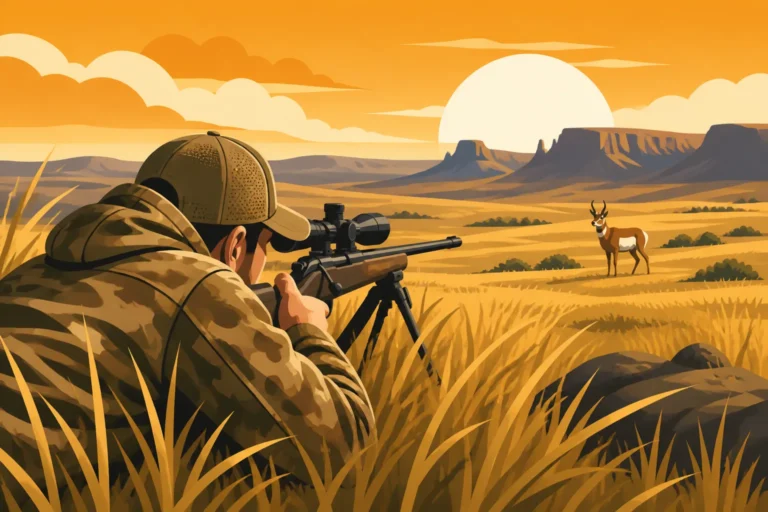
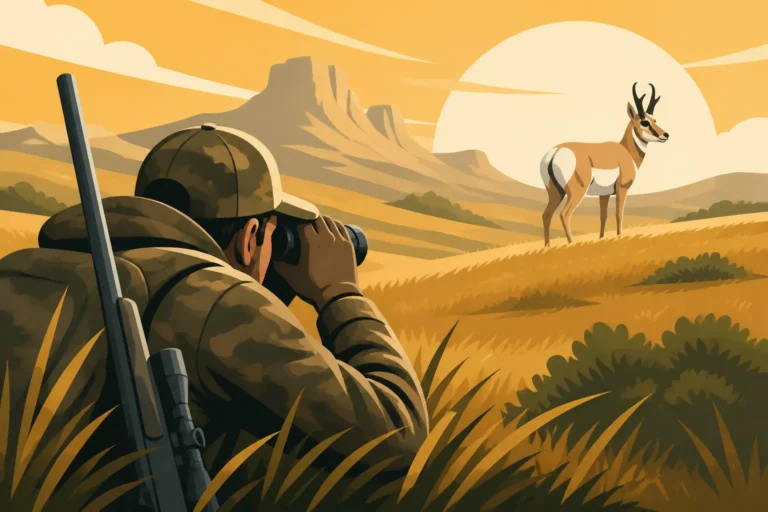
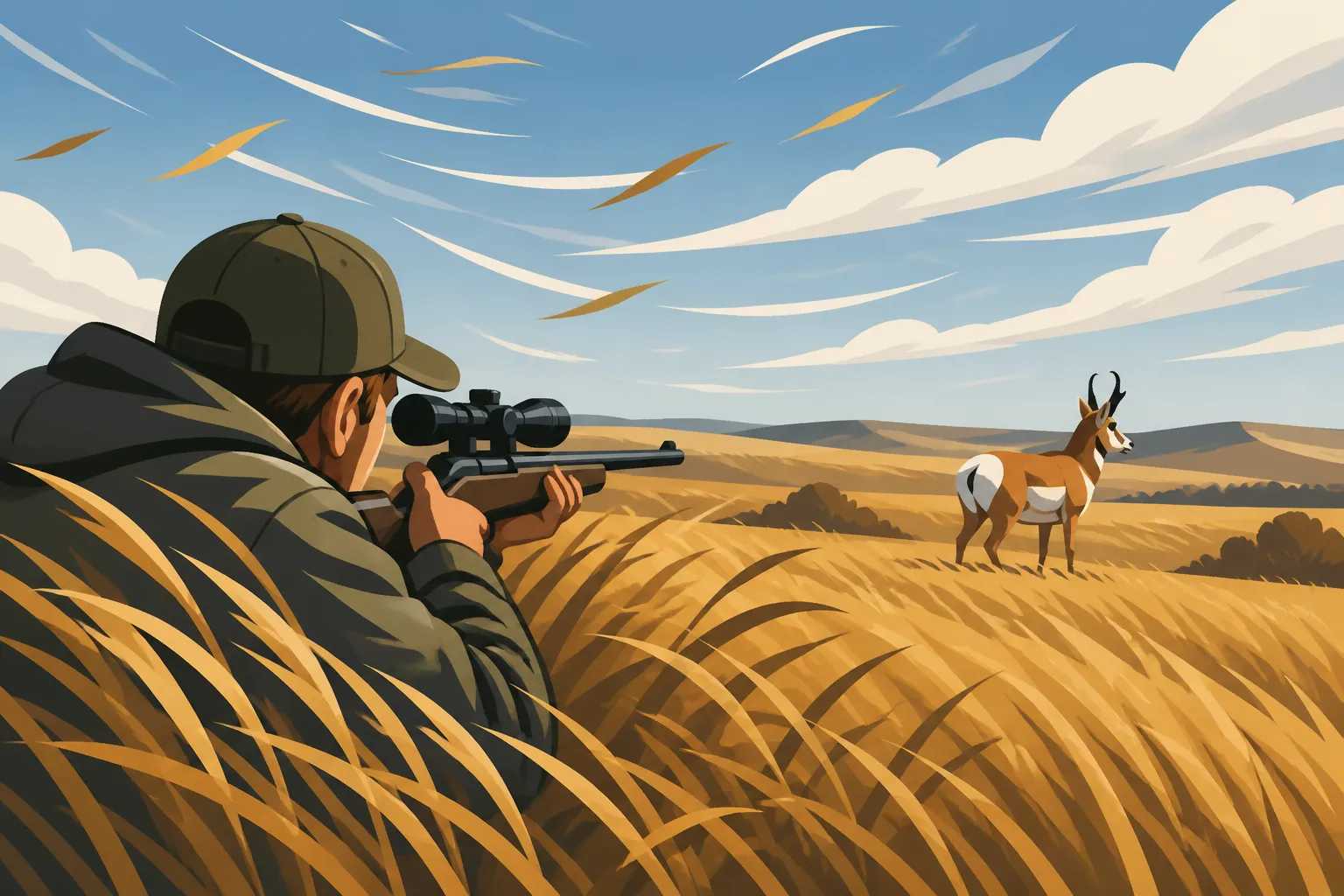
These gusts are the bane of long-range shooters, especially when hunting species like pronghorn on open ground. You might have your target perfectly settled in your crosshairs, waiting for a lull, only for a gust to rip through just as you break the shot. The key here isn't just about reading the wind right now, but trying to anticipate its behavior. Are the gusts cyclical? Do they peak and then die down? Often, on the prairie, they feel entirely random. This requires immense patience and a readiness to abort a shot if the conditions aren't right. It's often better to wait an extra five minutes for a more stable window than to rush a shot and risk a wounding hit or a complete miss.
Essential Tools for Accurate Wind Calls
While your eyes and experience are invaluable, modern tools can significantly improve your ability to make precise wind calls, especially when stretching out the distance on the expansive South Dakota landscape. Relying solely on your gut feeling can lead to heartbreaking misses. Incorporating technology into your routine is not cheating; it’s simply being prepared.
Kestrel and Other Anemometers
A portable weather meter, often referred to as a Kestrel (a popular brand), is arguably the single most important piece of gear for long-range prairie shooting. These devices provide real-time data on wind speed, temperature, barometric pressure, and even humidity – all factors that influence bullet flight. The true value isn't just knowing the wind speed at your location, but understanding how that data integrates with your ballistic calculations.
When you're Reading Wind at Four Hundred Yards, a Kestrel helps quantify what your senses are telling you. You might see the grass bending gently, but a Kestrel can tell you if that's a 5 mph breeze or a 10 mph sustained wind with 15 mph gusts. This level of precision is crucial for antelope hunting, where shots can easily stretch beyond 300 yards across wide-open sagebrush flats. Knowing the actual wind speed at your position allows you to feed accurate data into your ballistic solver, dramatically increasing the odds of a successful hit. Without it, you’re often just guessing, and guesswork rarely ends well on the prairie.
Ballistic Calculators and Apps
Gone are the days when hunters relied solely on memorized dope cards. Today’s ballistic calculators, whether dedicated devices or smartphone apps, are incredibly powerful tools. They take inputs like bullet type, muzzle velocity, scope height, and crucial environmental factors like wind speed, temperature, and atmospheric pressure to provide precise holdovers or turret adjustments. Many of these apps integrate directly with Kestrel devices, streamlining the process even further.
When combined with accurate rangefinding across open ground, a ballistic app becomes your digital spotter. For example, if you're trying to figure out your drop and drift for a mule deer across a wide-open flat, an app can calculate precisely how many inches your bullet will drift with a 10 mph crosswind at 450 yards. This is invaluable information when seconds count. Popular options like Kestrel's own Link apps, Applied Ballistics, or even the integrated solvers in some rangefinding binoculars, can transform your shooting accuracy. Make sure to input your actual bullet data and verify your muzzle velocity with a chronograph; generic data will only get you generic results. Integrating a good ballistic solution into your Rifle Setup for South Dakota Open Country is a game-changer.
Here's a simplified example of how wind impacts bullet drift for a common prairie cartridge:
| Cartridge (Example) | Bullet Weight (gr) | Muzzle Velocity (fps) | Range (Yards) | 10 MPH Crosswind Drift (Inches) |
|---|---|---|---|---|
| .308 Win | 168 | 2650 | 200 | 3.2 |
| .308 Win | 168 | 2650 | 400 | 14.5 |
| .308 Win | 168 | 2650 | 600 | 37.1 |
| 6.5 Creedmoor | 143 | 2700 | 200 | 2.5 |
| 6.5 Creedmoor | 143 | 2700 | 400 | 11.2 |
| 6.5 Creedmoor | 143 | 2700 | 600 | 28.5 |
Note: This table provides approximate drift values for sea level, standard temperature, and a full 10 MPH crosswind. Actual results will vary based on specific bullet B.C., atmospheric conditions, and individual rifle performance.
Reading the Wind Without Gadgets
While technology offers precision, nothing beats a well-trained eye for reading the subtle cues the environment provides. On the South Dakota prairie, the wind is constantly leaving fingerprints, and learning to interpret them is a skill that will serve you well when you're Spot-and-Stalk Antelope on Open Prairie or waiting for a deer.
Grass, Trees, and Vegetation Cues
The most obvious indicators of wind speed and direction are the natural elements around you. Different types of vegetation react to wind in distinct ways, offering clues at various distances.
- Tall Grass and Weeds: Observe the bending and swaying of taller grasses or weeds, like those found in South Dakota Walk-In Areas. If they're barely rippling, the wind is light. If they're laid over significantly, it's a strong breeze. Pay attention to the angle of their bend; this tells you the direction. Don't just look at the grass right next to you; try to find similar vegetation halfway to your target and observe its behavior. Often, you'll see different wind directions or speeds along the bullet's path, creating complex wind calls. The taller the grass, the more sensitive it is to lighter winds, which is crucial for those early morning hunts when the air might seem still but a subtle drift is present.
- Cattail Sloughs: These dense stands of vegetation, common in East River prairie pothole country, can be excellent wind indicators. When the wind blows across them, it creates a visible "wave" or ripple effect on the surface. The speed and intensity of this wave tell a story. A fast, choppy wave indicates strong, gusty winds, while a slower, rolling wave suggests a more consistent, moderate breeze. However, remember that the wind above the cattails might be different than the wind within the dense cover where pheasants often hide.
- Tree Lines and Shelterbelts: Any established tree line, even a small shelterbelt, can drastically alter wind patterns. Trees will create a "wind shadow" on their leeward side, where the wind is significantly reduced. Conversely, on the windward side, the wind can be turbulent and unpredictable as it hits the barrier. Pay attention to how the branches are swaying. Are the leaves just rustling, or are the branches bending? This can give you an indication of wind strength, especially if the target is near such a feature.
Mirage and Heat Waves
On hot, sunny days, especially over the dark soil or sparse vegetation of the prairie, you’ll often see mirage – those wavy distortions in the air, especially when Glassing South Dakota Breaks at First Light. Many hunters think mirage is just a visual nuisance, but it's actually an excellent indicator of wind direction and speed downrange. The mirage flows with the wind.
If the mirage is boiling straight up, the air is relatively still. If it's flowing consistently from left to right, you have a left-to-right crosswind. The speed at which the mirage streams horizontally can give you a rough estimate of wind speed. A slow, gentle flow indicates a light breeze, while a rapid, turbulent stream means a strong wind. The challenge is discerning the difference between heat-induced vertical movement and actual horizontal wind flow. Look for a consistent lean or drift in the mirage. It’s a skill that takes practice, but once you learn to interpret it, mirage becomes a valuable, often overlooked, wind flag. This is particularly useful for those long-range shots on antelope where the air can heat up quickly, creating significant mirage.
Wind Flags and DIY Indicators
While purpose-built shooting range wind flags are incredibly precise, you can improvise similar indicators in the field. Small, lightweight strips of fabric, even a piece of surveyor's tape tied to a fence post or a tall weed, can give you a much clearer picture of wind direction and relative speed than just watching distant grass. These can be strategically placed along your line of sight to give you multiple data points.
A simple technique is to throw a handful of fine dust, loose grass, or even a dandelion head into the air. Observe how it drifts immediately after leaving your hand, and then watch its trajectory further downrange. This provides an instant, localized wind reading that can confirm or contradict what you're seeing in the vegetation or mirage. Remember, a single reading at your position is rarely enough on the prairie. You need to gather as much information as possible along the entire bullet path to make an educated wind call.
Practical Wind Correction Techniques
Once you've done your best to measure and read the wind, the next step is to apply that information to your shot. This is where the rubber meets the road, and choosing the right technique can be the difference between a clean harvest and a frustrating miss.
Holding Off Versus Dialing
There are two primary methods for compensating for wind drift: "holding off" (using your reticle to aim into the wind) and "dialing" (adjusting your scope's windage turret). Both have their place, and experienced prairie hunters often use a combination of the two.
- Holding Off: This involves aiming a certain distance into the wind, letting the bullet drift back into the target. It's often quicker than dialing, making it ideal for fast-breaking shots or when the wind is constantly changing direction or speed. Many modern hunting scopes have sophisticated reticles with hash marks or dots that make holding off more precise. However, it requires a deep understanding of your bullet's trajectory and wind drift, and it can be less precise for very long shots or when very fine adjustments are needed. If you're on a Late-Season South Dakota Pheasants in Heavy Cover hunt and a rooster flushes unexpectedly, holding off might be your only option.
- Dialing: This involves physically turning your scope's windage turret to shift the point of impact. It's generally considered more precise for long-range shooting where even a small error can mean a miss. The advantage is that you can still aim directly at the animal, which simplifies the sight picture. The disadvantage is that it takes more time, which isn't always available when hunting. It's best used when you have a stable shooting position, a consistent wind, and enough time to make the adjustment. For long-range pronghorn, where a few inches can be the difference between a clean kill and a gut shot, dialing is often preferred.
The choice often comes down to personal preference, the specific hunting scenario, and the equipment you're using. If you're shooting an antelope at 400 yards in a steady 10 mph crosswind, dialing might be the most consistent approach. If a coyote suddenly appears at 250 yards with a swirling breeze, holding off might be your best bet for a quick shot. Many hunters find that for shots under 300 yards, holding off works well, while for longer distances, dialing offers greater precision. Make sure your turret clicks match your reticle (e.g., MOA with MOA, Mil with Mil).
Dealing with Switching Winds and Multiple Wind Zones
The South Dakota prairie rarely offers a perfectly consistent crosswind. More often than not, you'll encounter winds that switch direction, gust unpredictably, or blow differently at various points along your bullet's path. This is perhaps the most challenging aspect of long-range shooting in the region.
- Average It Out (with Caution): When faced with a headwind that shifts to a tailwind, or a crosswind that varies in speed, many shooters try to "average" the wind. This means estimating the overall effect the wind will have on the bullet over its entire flight path. This is an art more than a science and requires significant experience. For instance, if you have a 10 mph crosswind for the first half of the shot and a 5 mph crosswind for the second half, you might aim for an average of 7-8 mph. However, always err on the side of caution.
- Multiple Wind Zones: This is where the terrain's microclimates really come into play. You might have a left-to-right wind at your position, a nearly still zone in a dip, and then a right-to-left wind over the target. This scenario is incredibly difficult to correct for. The best strategy here is often to either move to a position where the wind is more consistent or to wait until the conditions stabilize. If neither is an option, you'll need to make your best educated guess, weighting the wind in the middle section of the bullet's flight most heavily, as that's where the bullet has the most time to react to the wind's influence. Using mapping tools like GoHunt can sometimes help you visualize these potential wind corridors before you ever leave your truck.
In these complex wind scenarios, patience truly is a virtue. If you can't confidently make the shot, don't take it. A responsible hunter knows their limits and understands that sometimes, walking away to find a better opportunity is the most ethical choice.
Practice Makes Perfect: Training for Windy Conditions
All the knowledge and gear in the world won't matter if you haven't put in the time to practice. The prairie wind is a cruel teacher, and the only way to truly master its challenges is through consistent, deliberate practice in realistic conditions.
Range Drills for Wind Compensation
Your local shooting range, especially if it has some open ground, is the ideal place to hone your wind-reading and compensation skills. Don't just shoot on calm days; intentionally seek out days with moderate to strong winds.
- Varying Ranges: Set up targets at multiple distances, mirroring typical South Dakota hunting scenarios – 200, 300, 400, and even 500+ yards if your range allows.
- Different Wind Conditions: Practice shooting with a pure crosswind, a quartering wind, and even shifting winds. Use your Kestrel, observe mirage and vegetation, and make your wind calls. Then, confirm your calls by watching your bullet's impact. Use large cardboard backer targets so you can clearly see where your misses land, helping you refine your estimates.
- Hold Off vs. Dial Drill: Practice both holding off and dialing for wind. Time yourself to see how quickly and accurately you can make adjustments. Switch between the two methods to determine which you prefer in different scenarios. For example, Practicing Prone Shots on the Prairie in varying wind conditions will build confidence in both methods.
- Spotting Your Own Misses: This is crucial. If you miss, try to spot the impact. Was it high, low, left, or right? This feedback is invaluable for refining your wind calls and understanding how your bullet truly behaves in windy conditions. If you can't spot your own, bring a trusted shooting partner to act as a spotter.
Simulated Hunting Scenarios
The range is one thing, but replicating the pressure and unpredictability of an actual hunt is another. Integrate elements of hunting into your practice sessions.
- Cold Bore Shots: Practice making accurate first shots with a cold bore, as this is often your only chance in a hunting situation.
- Time Constraints: Set a timer. Can you range your target, read the wind, make your adjustments (or hold off), and get a shot off within 30-60 seconds? This simulates the limited windows often presented by wary game.
- Unconventional Positions: While most prairie shots might be prone, practice shooting from kneeling, sitting, or even using an improvised rest. How does wind affect you when you're not perfectly stable? The more realistic your practice, the better prepared you'll be when that trophy buck or antelope finally steps out. Remember to factor in your body's stability as an additional variable when the wind is trying to push you around.
- Mental Preparation: Even on the range, try to put yourself in a hunting mindset. Visualize the animal, the shot opportunity, and the pressure. Learning to remain calm and focused despite the chaos of the wind is a critical mental skill that's as important as any physical technique. Preparing for a hunt means knowing not only your gear but also your mental fortitude for when the conditions are less than ideal. This mental game is often overlooked but is just as crucial as your Rangefinding Across Open Ground or knowing your rifle.
Mastering wind calls on the long prairie shots of South Dakota isn't about eliminating the wind; it's about understanding it, respecting it, and learning to work with or around it. By combining precise tools with keen observation and dedicated practice, you'll transform one of hunting's greatest frustrations into an opportunity for a confident, ethical shot.
Disclaimer
The information provided in this guide is for general informational purposes only and does not constitute professional advice. Hunting regulations, safety protocols, and best practices can change. Always consult the latest South Dakota Game, Fish and Parks regulations and consider seeking professional instruction for firearm safety and long-range shooting techniques. Hunting involves inherent risks, and individual skill levels and conditions vary.