Grand River Grassland Deer Hunting
For deer hunters accustomed to treestands in dense timber or patiently waiting on food plots, the vast, undulating landscapes of the Grand River National Grassland in South Dakota can feel like an entirely different planet. This expansive public hunting area presents unique challenges, from endless sagebrush flats to deep, hidden coulees, and figuring out where deer hold up and how to approach them effectively is a common frustration. This guide will walk you through the nuances of deer hunting this remarkable West River country, helping you understand the terrain, master crucial scouting and hunting techniques, and prepare for a successful and memorable hunt on this iconic prairie.
Understanding the Grand River Grassland's Unique Deer Habitat
The Grand River National Grassland, located in the northwestern corner of South Dakota, offers a stark contrast to the agricultural fields and river bottoms found in other parts of the state. Here, the landscape is defined by rolling hills, expansive grasslands, pockets of sagebrush, and deep, winding coulees cut into the prairie. This environment shapes deer behavior in ways that might surprise hunters used to more traditional settings. Understanding these habitat features is the first step toward unlocking its secrets.
Where Deer Find Cover and Food
Unlike the dense woods of the Black Hills or the heavy timber along the Missouri River, thermal and escape cover on the Grand River Grassland is often subtle but critical. Deer, both mule deer and whitetails, utilize the terrain itself for concealment. Deep coulees and draws, often fringed with brush like buffaloberry, chokecherry, or isolated patches of juniper, provide excellent bedding areas and travel corridors. These depressions offer shelter from the relentless prairie winds and hide deer from view, making them prime spots to focus your scouting efforts. Patches of sagebrush, while seemingly sparse, can also offer surprising cover for bedded animals, especially mule deer that blend in remarkably well.
Food sources are also distinct. While some agricultural fields border the grassland, within the vast public tracts, deer rely on native forages. Browse from brush species, forbs, and grasses make up their diet. Water, though sometimes scarce in dry years, is another key factor in deer distribution. Stock ponds, natural springs, and even temporary puddles after rain can become magnets for deer, especially during the archery and early firearm seasons when temperatures can still be quite warm. Identifying these water sources, often with the help of mapping tools like onX Hunt, can lead you directly to active deer movement.
Mule Deer Versus Whitetails on the Prairie
The Grand River Grassland is unique in that it offers opportunities for both mule deer and white-tailed deer, though mule deer typically dominate the more open, sage-dotted landscapes, while whitetails tend to stick closer to the more rugged breaks, timbered river bottoms, or agricultural edges. Mule Deer on the West River Breaks are truly creatures of this wide-open country, using their keen eyesight and incredible ability to navigate broken terrain to evade predators. They prefer the ridges, draws, and open sage flats.
Conversely, White-Tailed Deer Across South Dakota are more associated with the brushy coulees, creek bottoms, and the more confined pockets of cover. While they may be found in the same general areas as mule deer, their preferred escape routes and bedding cover will often be denser and more vertically structured. Learning to differentiate between their tracks and sign can give you clues about which species is frequenting a particular area. Mule deer often leave a wider, more splayed track, while whitetails tend to have a narrower, more pointed print. Observing their distinct gaits and body postures from a distance is also a key skill.
Navigating Access and Regulations on the Grand River Grassland
Hunting the Grand River National Grassland requires more than just knowing deer habits; it demands a solid understanding of public land access and adherence to specific regulations. Unlike private land, national grasslands have their own set of rules and access points that differ from state-managed public lands. Getting this wrong can quickly turn an exciting hunt into a frustrating experience.
Access Routes and Identifying Public Lands
The sheer size of the Grand River National Grassland can be overwhelming. It's not one continuous block but a mosaic of public and private land. Navigating this checkerboard effectively is paramount. The best tool for this is a detailed mapping application like onX Hunt, which clearly delineates public and private boundaries, often color-coded for easy identification. This is crucial because accidentally crossing onto private property without permission is trespassing, and that's a situation no hunter wants to be in.
Access to the interior of the grassland is typically via a network of two-track dirt roads and trails. Some of these are well-maintained, while others might require a high-clearance vehicle, especially after rain or snow. Always be mindful of weather conditions; a dry road can quickly become impassable gumbo mud with even a moderate rainfall. E-scouting before your trip using satellite imagery and plat maps, often available through a service like GoHunt, can help you identify parking areas and potential walk-in access points that get you away from easy road hunting pressure. Remember that many of the smaller, less obvious tracks can lead to some of the best, most unpressured areas, but always verify access rules and land ownership. Grand River Grassland Access From Lemmon or other nearby towns often involves a mix of county roads and then these smaller, internal grassland routes.
South Dakota Deer Hunting Regulations on the Grassland
Hunting deer on the Grand River National Grassland falls under South Dakota's general West River deer regulations. This means you'll need the appropriate West River unit specific deer tag, which is often difficult for non-residents to draw. Always check the current South Dakota Game, Fish and Parks (GFP) hunting handbook for the most up-to-date season dates, bag limits, weapon restrictions, and tagging requirements. The grassland spans multiple deer units, so ensure your tag is valid for the specific unit you plan to hunt.
| Deer Species | Typical Habitat Preference | Hunting Challenges | Key Tactics |
|---|---|---|---|
| Mule Deer | Open prairie, sagebrush flats, steep draws, high ridges | Long-range glassing, difficult stalks in open terrain, wary nature | Spot-and-stalk, utilize contours, accurate long-range shooting |
| Whitetail | Brushy coulees, creek bottoms, isolated timber patches, agricultural edges | Staying hidden in dense cover, navigating winding draws, adapting to movement patterns | Still-hunting, ambushing travel corridors, knowing escape routes |
Be particularly aware of shooting hours, which typically run from 30 minutes before sunrise to 30 minutes after sunset. Blaze orange requirements also apply during firearm seasons; wearing a minimum amount of visible blaze orange is mandatory, and it's always a good idea to wear more than the minimum for safety in this vast landscape. Additionally, be aware of any restrictions on motorized vehicle use off established roads. "Road hunting," or shooting from a vehicle or public road, is illegal in South Dakota. You must be off the maintained road and have left the right-of-way to legally discharge a firearm at game. Always err on the side of caution and walk into your hunting area.
Effective Deer Hunting Strategies for the Grand River Grassland
Hunting deer in the expansive, open country of the Grand River National Grassland requires a different approach than what many hunters are used to. Success here often hinges on patience, strategic use of optics, and a willingness to cover a lot of ground. It's a game of observation and precise execution.
Master the Art of Glassing
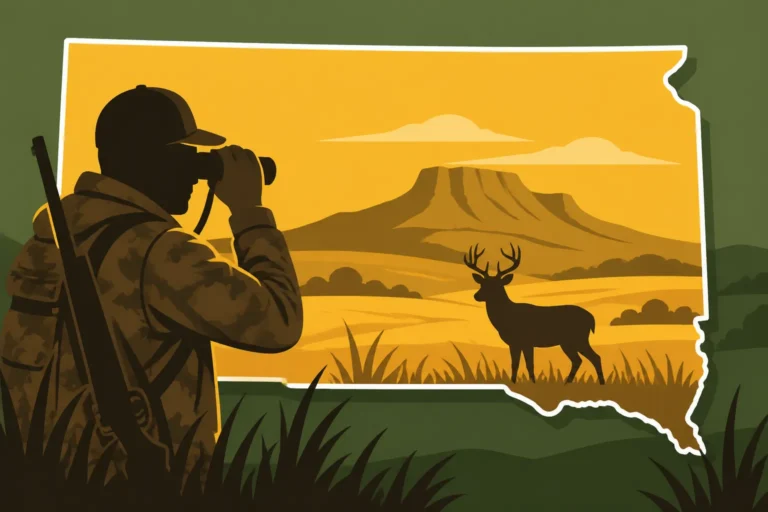
In a landscape where deer can be spotted from miles away, quality optics are your most important tool. Forget crashing through brush hoping to jump a buck; instead, find a high vantage point, settle in, and let your binoculars or spotting scope do the walking. Glassing South Dakota Breaks at First Light is not just a tactic; it's practically a religion for successful prairie deer hunters. Spend ample time scanning every ridge, coulee, and patch of cover, not just for deer, but for subtle clues like flicking ears, a patch of antler, or the outline of a bedded animal.
Mule deer often bed on north-facing slopes to catch the sun on cool days, or in shaded draws during warmer weather. Whitetails might be tucked into the bottom of a brushy coulee, barely visible. The key is to be methodical, scanning slowly and deliberately, pausing to pick apart anything that looks out of place. Investing in a good tripod for your binoculars or spotting scope will reduce fatigue and allow for more stable, prolonged glassing sessions, which are essential when you're trying to identify a buck at long range.
Executing a Successful Spot-and-Stalk
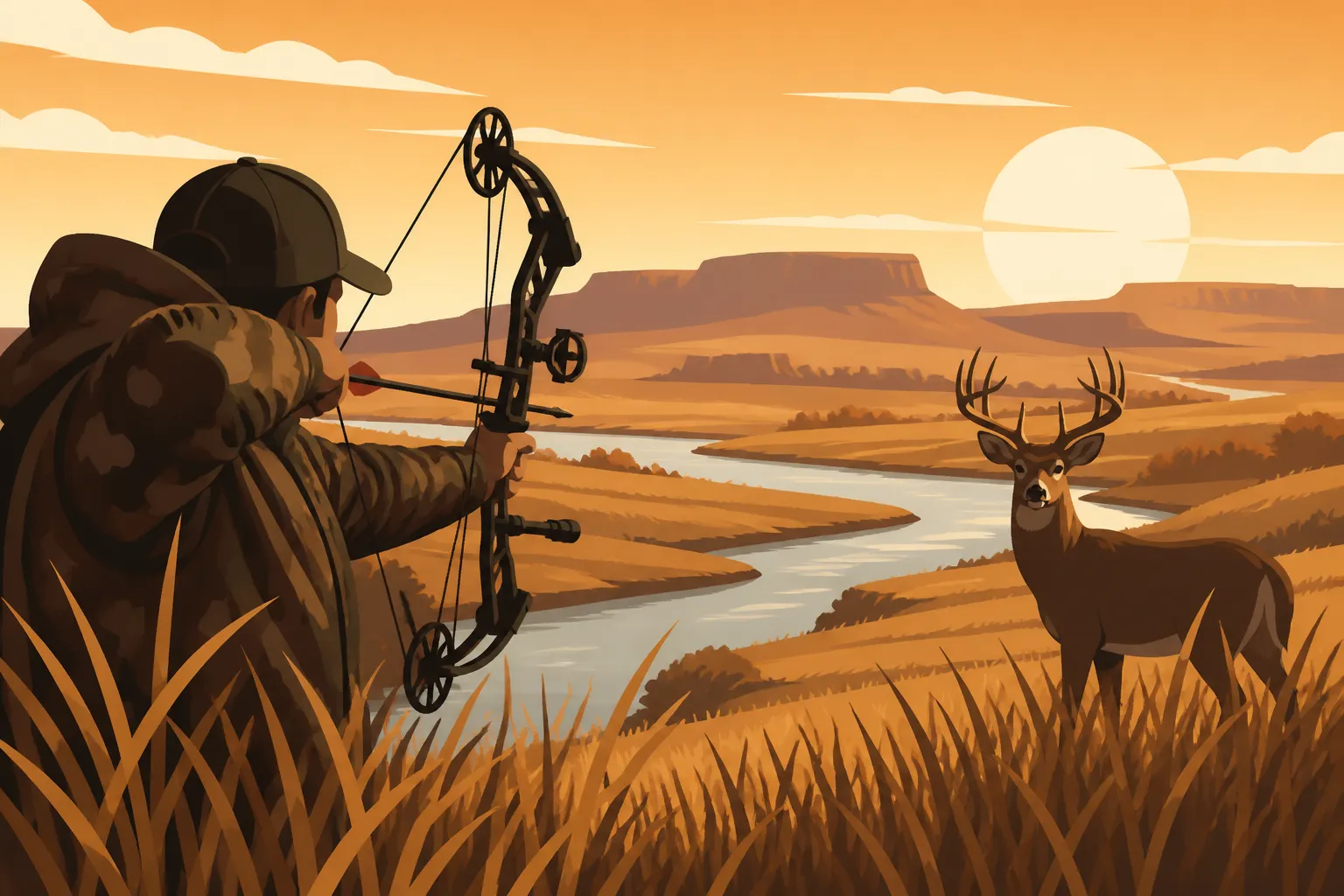
Once you've spotted a buck, the real challenge begins: the spot-and-stalk. This is where the Grand River Grassland truly tests a hunter's skills. Closing the distance on an animal in such open country without being detected requires incredible patience, meticulous planning, and an intimate understanding of the terrain. Stalking a Bedded Mule Deer Buck or a whitetail tucked into a coulee means using every fold, rise, and dip in the land to your advantage.
Before you even take your first step, plan your route carefully. Consider the wind direction; the prairie wind is notorious for shifting, and a sudden change can blow your cover instantly. Wind Direction on a Prairie Stalk is often the single most critical factor. Use the topography to hide your approach, staying low in draws, behind ridges, and out of sight as much as possible. Move slowly, deliberately, and always be ready to freeze if the deer looks your way. Sometimes, a stalk can take hours, requiring you to belly crawl the last few hundred yards. Patience is your greatest ally here, as rushing will almost certainly lead to a busted opportunity.
Preparing for Your Grand River Grassland Deer Hunt
A successful hunt on the Grand River National Grassland isn't just about good hunting tactics; it's also about thorough preparation. The vastness and often remote nature of this country demand that you come prepared for anything, from equipment choices to physical conditioning.
Essential Gear and Equipment
Given the wide-open spaces and the potential for long shots, your rifle setup is incredibly important. Rifle Choice for West River Mule Deer often leans towards flatter-shooting calibers capable of handling distances, as shots past 300 yards are not uncommon. A reliable rifle zeroed precisely, paired with a quality scope with ample magnification, is essential. Rangefinders are non-negotiable for accurately gauging distances on the featureless prairie. Don't forget shooting sticks or a bipod, as stable shooting positions can be hard to come by in rolling terrain.
Beyond your firearm, consider clothing layers suitable for rapidly changing prairie weather – cool mornings, warm afternoons, and biting winds. Good, broken-in boots are a must for covering miles of uneven ground. A comfortable pack for carrying water, snacks, extra layers, and emergency supplies is also critical. Since cell service can be spotty, consider a satellite communication device for emergencies. For navigation, a fully charged GPS unit or a smartphone with offline mapping capabilities (like those offered by onX Hunt) is indispensable for staying found and identifying land boundaries.
Physical Conditioning and Contingency Planning
Hunting the Grand River National Grassland is physically demanding. You'll likely cover many miles on foot, often through uneven terrain, up and down coulees, and sometimes in challenging weather conditions. Don't underestimate the stamina required for repeated spot-and-stalk attempts. Start a fitness regimen well before your hunt that includes walking long distances with a pack, hiking hills, and stretching to prepare your body for the rigors of the hunt.
Finally, always have a contingency plan. The Grand River Grassland can be remote, and help isn't always close by. Carry a well-stocked first-aid kit, extra water and food, and emergency supplies like a fire starter, headlamp, and space blanket. Inform someone of your hunting plans, including your route and expected return time. Be prepared for vehicle issues; a spare tire, jumper cables, and basic tools are always a good idea. Knowing how to Get a Deer Out of a South Dakota Coulee will also be a major consideration if you are lucky enough to harvest an animal far from a road. This often involves quartering the animal and packing it out, so have a plan and appropriate gear for that too. Scouting South Dakota Public Ground Before the Season and E-Scouting Walk-In Areas Before the Season can give you a major advantage, allowing you to identify potential challenges and plan for them long before you set foot on the prairie.
Disclaimer
This article is for general informational purposes only and does not constitute professional advice. Laws, prices and regulations vary by location and change over time. Consult a qualified professional for guidance on your specific situation.