Red Fox and Swift Fox in South Dakota
When you're out exploring the vast landscapes of South Dakota, whether it's for hunting, wildlife photography, or just enjoying nature, you might catch a glimpse of a fox. But what kind of fox was it? Many folks struggle to differentiate between the common red fox and the more elusive swift fox that call our prairies home. This guide will help you understand the distinct characteristics, habitats, and behaviors of both the red fox and the swift fox in South Dakota, ensuring you can identify them confidently and appreciate their unique roles in our ecosystem.
Understanding the Red Fox in South Dakota
The red fox ( Vulpes vulpes) is probably the image that first comes to mind when someone mentions a fox. They're incredibly widespread and adaptable, thriving in a variety of habitats, which makes them a common sight across much of South Dakota. Their intelligence and cunning are legendary, a reputation well-earned from their opportunistic hunting habits and ability to evade detection.
Identifying the Sly Red Fox
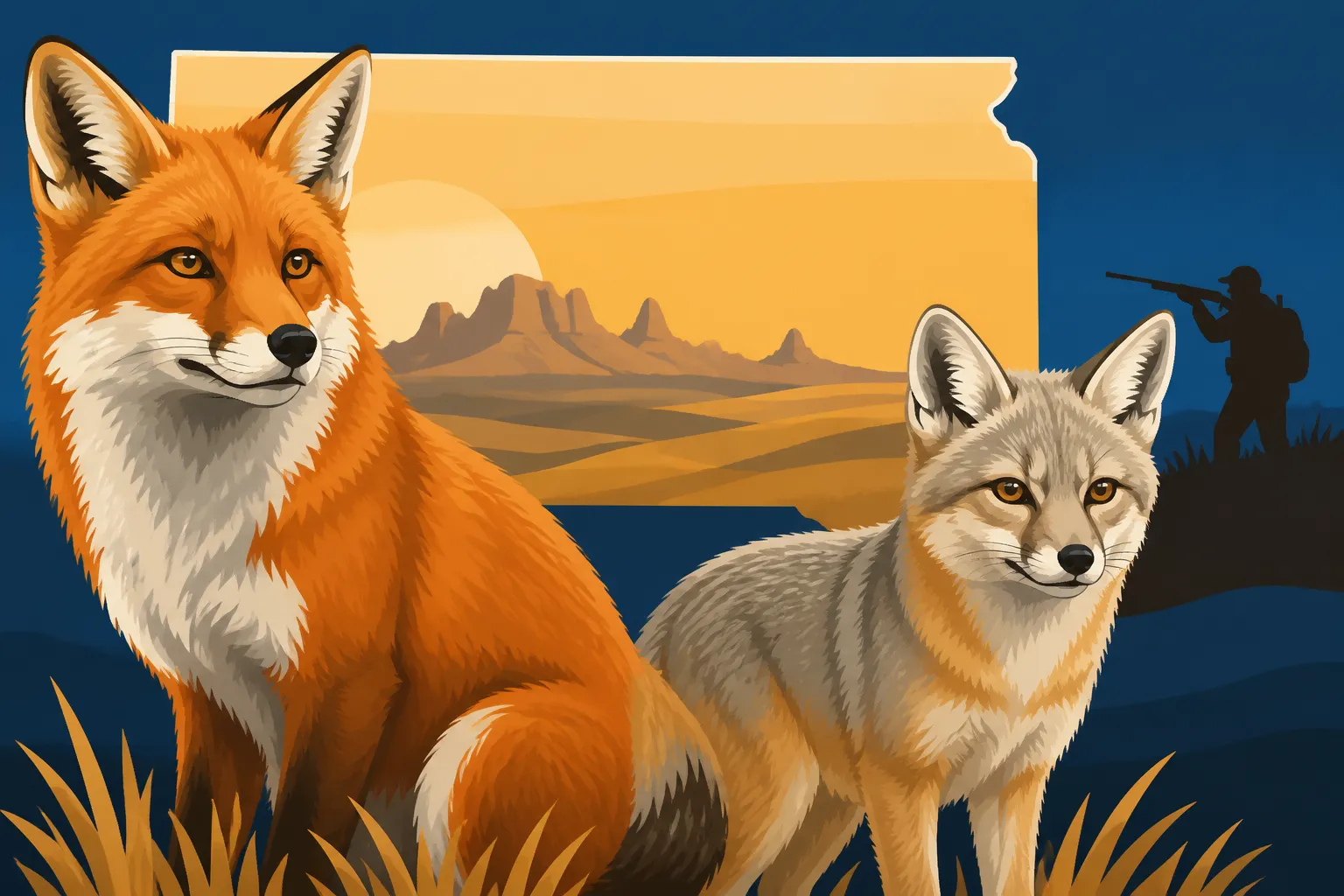
True to their name, red foxes typically display a beautiful reddish-orange coat across their back and flanks. However, it's not always so straightforward. Their coloration can vary quite a bit, ranging from a pale yellowish-red to a deep auburn. The most distinguishing feature, regardless of the overall body color, is almost always the tip of their tail: it's consistently white. This white tail-tip is a key indicator that can help you confirm a red fox, even at a distance or in varying light conditions. Their undersides are usually white or grayish, and their legs, often called "stockings," are typically dark brown or black, fading up towards their body.
Their ears are relatively large and pointed, often tipped with black on the back, and their muzzle is slender and pointed. They have a sleek, agile build, and their tail is long and bushy, often held straight out behind them when they run. They're larger than many people expect for a fox, standing about 14 to 16 inches at the shoulder and weighing between 8 and 15 pounds, though some larger individuals can exceed that. When you see one darting across a field, their bounding gait and that unmistakable white-tipped tail often give them away.
Where Red Foxes Roam in South Dakota
Red foxes are found pretty much everywhere in South Dakota, from the eastern agricultural lands to the western rangelands, and even pushing into urban and suburban areas. They're highly adaptable and can make a living in diverse environments, favoring a mosaic of open fields, woodlands, and brushy areas where they can hunt small prey and find cover. You'll often spot them on the edges of fields, near creek bottoms, or along shelterbelts. They're excellent at finding niches in areas that might be less appealing to other predators, or where human activity is present but not overwhelming. South Dakota Predators and Furbearers covers their broader category.
While they don't necessarily avoid human presence, they are notoriously shy and masters of stealth. They'll use culverts, abandoned buildings, and dense thickets as den sites, especially during pupping season in spring. Their territories can vary greatly in size depending on food availability, but they tend to stick to areas that offer consistent hunting opportunities and safe havens. If you're out hunting pheasants in a patch of CRP, don't be surprised to see a red fox silently stalking the edges, looking for an easy meal.
Red Fox Behavior and Diet
Red foxes are primarily nocturnal or crepuscular, meaning they're most active during twilight hours, but it's not uncommon to see them out and about during the day, especially if they have young to feed or if food is scarce. They are solitary hunters but often live in family groups during the breeding and rearing season. Their diet is incredibly varied, making them incredibly successful predators. They'll eat just about anything they can catch, from small mammals like mice, voles, and rabbits, to ground-nesting birds and their eggs. They are also known to consume insects, fruits, berries, and even carrion.
Their hunting technique is a marvel to watch: they'll stalk their prey with incredible patience, then pounce with an agile leap, often diving headfirst into snow or tall grass to catch rodents. They have excellent hearing and can pinpoint prey beneath cover. If you're trying your hand at Calling Coyotes on South Dakota Grassland, you might accidentally call in a curious red fox, as their calls can sometimes be similar, and they're always interested in a potential meal or rival. Red foxes also cache food, burying excess prey to retrieve later, a smart strategy for leaner times. This behavior highlights their intelligence and resourcefulness, which helps them survive and thrive across South Dakota's varied landscape.
Getting to Know the Swift Fox of the Prairie
In stark contrast to the ubiquitous red fox, the swift fox (Vulpes velox) is a true icon of the American prairie, and a species with a much more tenuous hold on South Dakota's landscape. These small, agile canids are perfectly adapted to the open, short-grass prairie and have faced significant conservation challenges over the past century.
The Elusive Swift Fox: Identification Tips
The swift fox is significantly smaller than the red fox, more akin to a house cat in size. They typically weigh between 4 and 6 pounds, making them the smallest canid in North America. Their coat is a pale, yellowish-tan or buff, which blends seamlessly with the dry grasses of the prairie. Unlike the red fox, their tail does not have a white tip; instead, it's usually black-tipped or black on the top side towards the end. Their ears are quite prominent relative to their head size, and they have a short, pointed muzzle. Dark patches often appear on either side of their muzzle, giving them a somewhat masked appearance.
Their name, "swift fox," is no exaggeration. They are incredibly fast and agile, capable of reaching speeds up to 30 miles per hour over short distances, which is crucial for both catching prey and escaping larger predators on the open prairie. When you see one, its diminutive size, light coloration, and lack of a white tail-tip are the primary indicators that you're looking at one of these special prairie residents. Spotting a swift fox is often a rare and rewarding experience, as they are not nearly as common or as widespread as their red fox cousins.
Swift Fox Habitat and Historical Range
Swift foxes are specialists of the short-grass prairie ecosystems. In South Dakota, their population is primarily concentrated in the southwestern part of the state, in the arid, open rangelands of the West River country. They prefer areas with low, sparse vegetation, which allows them to use their keen eyesight to spot both prey and predators from a distance. Unlike red foxes, swift foxes largely avoid dense brush, woodlands, or heavily cultivated agricultural areas. They rely heavily on prairie dog towns, not only for a food source but also for the extensive network of burrows that prairie dogs create, which swift foxes readily adopt as dens for shelter and raising their young. This dependency on healthy prairie dog populations makes their conservation intertwined with these often-persecuted rodents.
Historically, swift foxes roamed vast expanses of the Great Plains. However, habitat loss due to agricultural conversion, coupled with intensive predator control programs in the early to mid-20th century (which often targeted all canids indiscriminately), led to a dramatic decline in their numbers. They were extirpated from much of their original range, including significant portions of South Dakota. Efforts to reintroduce and manage swift fox populations are ongoing, making any sighting a testament to conservation successes. When you're using tools like GoHunt maps to scout potential hunting areas in West River, paying attention to areas marked as national grasslands or large expanses of unbroken prairie might give you a better chance to observe these unique creatures.
Conservation Status and Threats to Swift Foxes
The swift fox is considered a species of conservation concern throughout its remaining range. While not federally listed as endangered, they are often listed as threatened or imperiled at the state level in many places, including South Dakota. The primary threats they face today are continued habitat fragmentation, a decline in prairie dog populations (their crucial den providers and food source), and collisions with vehicles. They also face predation from larger carnivores such as coyotes, badgers, and even red foxes, which are more adaptable and have expanded into traditional swift fox territories.
Conservation efforts focus on restoring prairie habitat, protecting prairie dog towns, and managing predator populations in swift fox strongholds. Landowners and land managers play a critical role in providing suitable habitat. For anyone keen on understanding more about the delicate balance of prairie ecosystems, learning about the swift fox offers a compelling insight into the challenges faced by many of our native species. Prairie Dogs and Black-Footed Ferrets offers a deeper look into a critical component of the swift fox's ecosystem. Their future relies on continued stewardship and awareness from those who share their fragile prairie home.
Distinguishing Between South Dakota's Fox Species
While both red foxes and swift foxes share the "fox" moniker, they are distinct species with different ecological roles and appearances. Being able to tell them apart not only satisfies curiosity but can also inform your understanding of the local ecosystem, especially if you're involved in predator management or wildlife observation.
Key Visual Differences for Identification
The most straightforward way to distinguish between a red fox and a swift fox is by looking at their size, coat color, and tail.
| Feature | Red Fox | Swift Fox |
|---|---|---|
| Size | Medium (8-15 lbs, up to 16" shoulder height) | Small (4-6 lbs, like a house cat) |
| Body Color | Reddish-orange, variable (pale to auburn) | Pale yellowish-tan or buff |
| Tail Tip | Consistently white | Black or dark on the top/end, no white tip |
| Legs | Black "stockings" | Same color as body or slightly darker |
| Muzzle | Slender, pointed | Short, pointed, often with dark patches |
| Ears | Relatively large, black on back tips | Large relative to head, not typically black |
When you're out in the field, remember these visual cues. A large, rusty-red fox with a striking white tip on its bushy tail is almost certainly a red fox. A much smaller, fawn-colored animal that blends into the dry grass, with a black-tipped tail and a masked face, is likely the much rarer swift fox. Observing these animals requires patience and often good optics, so a good pair of binoculars or a spotting scope can be invaluable.
Behavioral Clues to Tell Them Apart
Beyond their physical appearance, the behavior and preferred habitats of these two foxes offer strong clues to their identity. Red foxes are typically found in more diverse landscapes, including woodlands, agricultural fields, and even suburban fringes. They're more often seen actively hunting during the day in areas with taller cover. Their movements can seem more deliberate, often using cover to their advantage. They are often curious but also extremely wary of humans, disappearing quickly once they know they've been spotted.
Swift foxes, on the other hand, are creatures of the wide-open, short-grass prairie. Their primary activity is often around prairie dog towns, where they seek refuge in burrows. They can be incredibly quick, and their evasive maneuvers in open country are distinct. While also wary, their strategy for escape is usually sheer speed across open ground, rather than slipping into dense cover. If you spot a fox in the Black Hills, or near a cornfield in eastern South Dakota, it's almost certainly a red fox. If you're deep in the Buffalo Gap National Grassland, far from any significant timber, and you see a tiny, pale fox darting across the prairie, you might just have been lucky enough to see a swift fox.
Overlap and Separation in Their Worlds
While both species inhabit South Dakota, their preferred habitats often create a natural separation. Red foxes are more generalist and adaptable, allowing them to exploit a wider array of niches. Swift foxes are highly specialized for the short-grass prairie, which means their range is much more restricted. However, there can be some overlap, especially in transition zones where agricultural fields meet open rangeland, or where red foxes push further into traditional swift fox territory.
This overlap can sometimes lead to competition, with the larger, more aggressive red fox often dominating or displacing swift foxes where their ranges meet. Understanding these ecological dynamics is crucial for conservationists and land managers. For hunters, knowing which species might be present can influence tactics. Calling Coyotes on South Dakota Grassland might also attract red foxes, but a swift fox is a much less likely target for most predator hunters due to its protected status and specialized habitat. Awareness of these species and their habits helps ensure that any predator hunting efforts are focused appropriately.
Encountering and Managing Foxes in South Dakota
Whether you're a hunter, a photographer, or just someone who appreciates wildlife, encountering foxes in South Dakota can be a memorable experience. Responsible practices are key to enjoying these animals while respecting their role in the ecosystem and adhering to regulations.
Hunting and Trapping Opportunities
For those interested in predator hunting, red foxes offer opportunities throughout much of South Dakota. They are classified as furbearers, and regulated hunting and trapping seasons are in place. Hunters often use calling techniques, similar to those used for coyotes, to bring in curious red foxes. Winter Predator Hunting on Snow can be a particularly productive time for fox hunting, as their tracks are easily visible, and their red coats can stand out against a white landscape. Checking the South Dakota Game, Fish and Parks (GFP) regulations is absolutely essential before heading out, as seasons, bag limits, and legal methods can change. South Dakota Predator Hunting Licence Rules are always important to review.
It's critical to note that swift foxes are generally not legal to hunt or trap due to their conservation status. Their populations are carefully monitored, and accidental take is a serious concern. This is another reason why accurate identification is so important. If you're in an area known for swift fox presence, exercising extreme caution and being absolutely sure of your target before taking a shot is not just ethical, but legally required. Using resources like GoHunt's mapping tools can help you identify public hunting lands and understand the landscape, but always cross-reference with current GFP regulations for species-specific rules.
Ethical Wildlife Viewing Practices
If your interest lies in observing and photographing these fascinating animals, ethical wildlife viewing is paramount. Always maintain a respectful distance to avoid disturbing the foxes, especially if you observe a den site with pups. Use binoculars or a telephoto lens to get a closer look without intruding. Avoid feeding wild foxes, as this can habituate them to humans, leading to potential conflicts and health problems for the animals. Remember that a wild animal is always best left wild.
When exploring prairie areas, be mindful of your presence. Drive on established roads and trails, and avoid trampling delicate habitat. Dawn and dusk are often the best times for spotting foxes, as they are most active during these periods. Patience is often rewarded with incredible views of these intelligent and beautiful creatures navigating their world. Consider that Reading Snow for Deer and Predator Sign can also help you find evidence of fox activity, even if you don't see the animal itself.
Coexisting with South Dakota's Fox Populations
For rural residents or landowners, living alongside foxes is a common reality. Red foxes, in particular, can sometimes become a nuisance around poultry or small livestock. Simple preventative measures like secure fencing, night enclosures, and removing attractants (like pet food left outdoors) can often mitigate potential conflicts. Understanding their natural behaviors and diet can help in designing effective deterrents that promote coexistence.
Reporting unusual sightings or signs of disease in any wildlife, including foxes, is important for monitoring population health. South Dakota Wildlife Disease Monitoring programs rely on public input to track issues like rabies or mange. By being informed, respectful, and responsible, we can all contribute to the healthy populations of both red and swift foxes in South Dakota, ensuring they remain a vibrant part of our state's rich natural heritage for generations to come.
Disclaimer
This article is for general informational purposes only and does not constitute professional advice. Laws, prices and regulations vary by location and change over time. Consult a qualified professional for guidance on your specific situation.