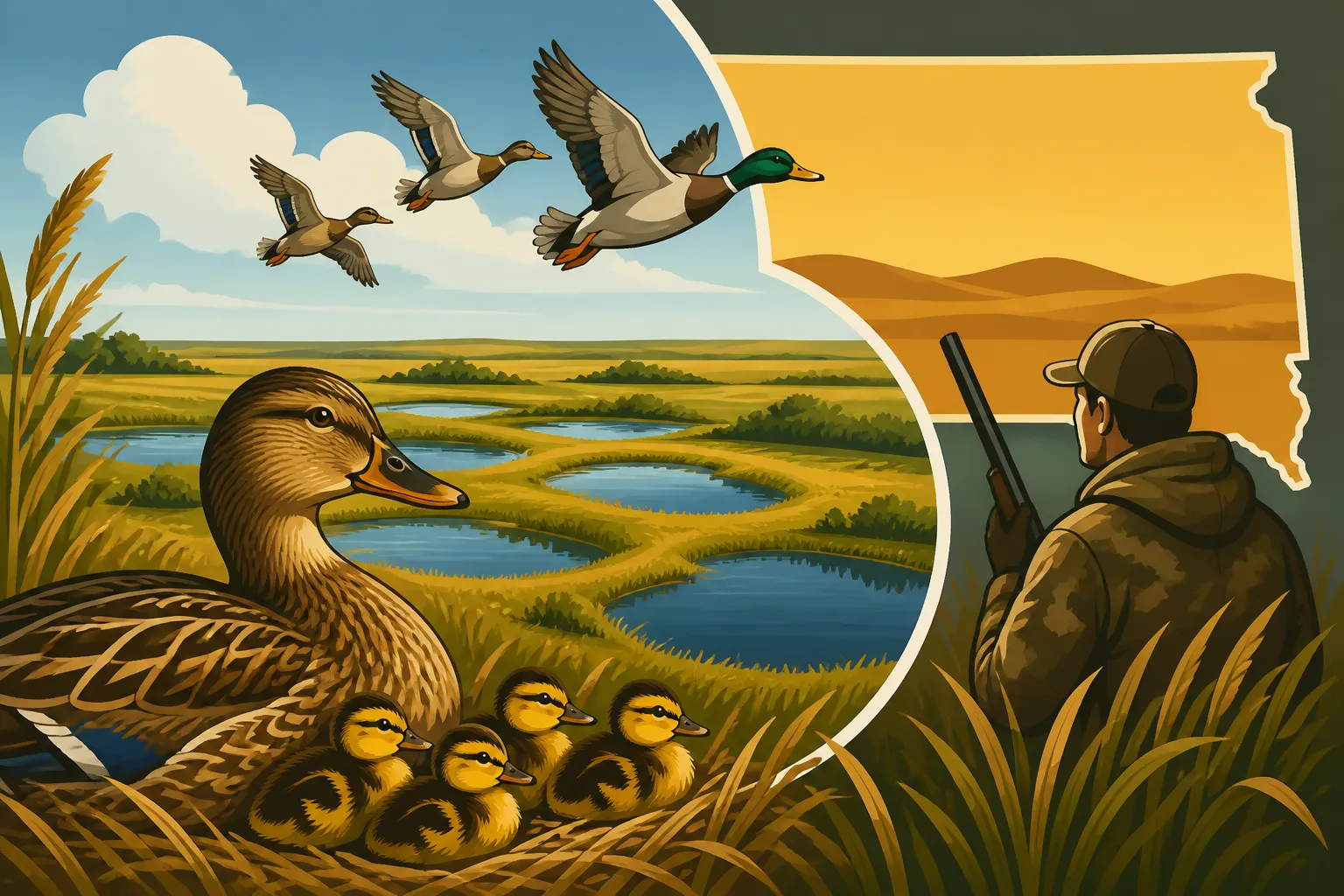
Prairie Pothole Duck Production
Have you ever found yourself scanning the skies over the South Dakota prairie, wondering why some years seem absolutely brimming with ducks, while others leave you scratching your head at seemingly empty potholes? It’s a frustration every waterfowler here knows intimately. The cycles of duck abundance are directly tied to the health and productivity of our cherished prairie potholes. This guide will dive deep into what drives "Prairie Pothole Duck Production," helping you understand the engine behind the Central Flyway and what influences those critical waterfowl numbers.
The Lifeblood of the Flyway: Understanding Prairie Potholes
The term "Prairie Pothole Region" might sound a bit technical, but to anyone who hunts ducks and geese in South Dakota, it conjures images of endless sky, vast grasslands, and those invaluable depressions in the landscape that fill with water. These potholes are not just puddles; they are the literal engine of waterfowl production for much of North America. Without them, our duck populations would be a shadow of what they are today.
What Exactly is a Pothole?
Before we talk about ducks, let's talk about the unique geology that makes South Dakota, and the broader prairie region, so special. Prairie potholes are wetlands that were formed thousands of years ago during the last glacial retreat. As massive glaciers scraped across the landscape, they left behind an uneven, pockmarked terrain. When these depressions filled with meltwater and precipitation, they created the countless shallow wetlands we see today.
These potholes come in a variety of types, each playing a slightly different role in the duck ecosystem. You have ephemeral wetlands, which only hold water for a short period after rain or snowmelt, offering crucial early-season insect hatches. Then there are temporary and seasonal wetlands, which hold water for longer durations, supporting a more diverse array of invertebrate life and providing key nesting and brood-rearing habitat. Finally, semi-permanent and permanent wetlands hold water year-round, acting as refuges during dry spells and providing deeper water habitat. The sheer density and diversity of these potholes are what make the region so biologically rich.
Why Potholes are Duck Factories
So, what makes these geological depressions such incredible duck factories? It's a perfect storm of conditions. First, the shallow water, especially in the temporary and seasonal potholes, warms quickly in the spring, leading to an explosion of invertebrate life. These tiny insects, crustaceans, and larvae are absolutely packed with protein, which is exactly what breeding hens need to lay eggs and what growing ducklings require for rapid development. Think of it as a protein shake for ducks!
Beyond the food, potholes offer critical cover. The surrounding grasslands, often composed of native prairie or managed conservation reserve program (CRP) acres, provide dense nesting cover, protecting hens from predators during incubation. Once ducklings hatch, the emergent vegetation within the potholes themselves, like cattails and sedges, provides concealment from aerial predators and a rich buffet of more invertebrates. This combination of abundant, nutritious food and secure cover is precisely what ducks need to successfully breed and raise their young.
The "Duck Factory" Concept
When wildlife biologists refer to the "Duck Factory," they are speaking directly about the prairie pothole region. This vast area, stretching across parts of South Dakota, North Dakota, Minnesota, and into the Canadian provinces of Manitoba, Saskatchewan, and Alberta, produces the majority of the continent's waterfowl. It's not an exaggeration to say that without the prairie potholes, duck hunting as we know it would not exist.
The health of this region directly correlates with the overall health of North America's duck populations. Years with ample spring moisture and healthy nesting cover in the potholes lead to robust breeding seasons and strong fall flights. Conversely, drought years, or periods of significant habitat loss, can severely impact production, leading to fewer ducks migrating south. Understanding this "factory" is critical for any hunter who wants to truly appreciate the resource and engage in meaningful conservation efforts.
Here's a quick look at how different pothole types contribute:
| Pothole Type | Water Duration | Primary Value for Ducks |
|---|---|---|
| Ephemeral | Very Short (days) | Early insect hatches, initial hydration for migrants |
| Temporary | Short (weeks) | Invertebrate blooms, early nesting, duckling food |
| Seasonal | Moderate (months) | Critical nesting, brood rearing, abundant food |
| Semi-permanent | Long (most of year) | Brood rearing, molting, refuge in dry spells, diverse food |
| Permanent | Year-Round | Stable water, refuge, diverse vegetation, wintering |
Factors Influencing South Dakota Duck Production
While the prairie pothole region is inherently a duck factory, its output isn't constant. There are many variables, both natural and man-made, that significantly impact the number of ducks produced in South Dakota each year. These factors are what lead to those "good years" and "bad years" that hunters discuss around the campfire.
Water, Water Everywhere
The single most crucial factor for duck production is, perhaps unsurprisingly, water. Specifically, the amount and timing of spring precipitation. Ducks are drawn to water. More wetlands holding water in the spring mean more places for breeding pairs to establish territories, more food sources, and ultimately, more successful nesting attempts. When you hear about "wetland conditions" being excellent in the spring, that's a good sign for the upcoming fall flight.
However, it's not just about a lot of water; it's about persistent water. Ephemeral potholes are great for a quick protein boost, but if seasonal wetlands dry up too early, broods can be stranded or forced to travel long distances, increasing their vulnerability to predators and reducing survival rates. Drought can be devastating, concentrating birds into fewer wetlands, which can lead to increased disease transmission and localized over-harvest. Hunters often use tools that integrate satellite imagery to understand water levels, and resources from platforms like GoHunt can help track these patterns over time to predict where the ducks might be concentrated.
Nesting Cover and Brood Rearing
Beyond the water itself, the quality and quantity of nesting cover around those potholes are paramount. Ducks, particularly dabblers like mallards and pintails, prefer to nest in dense, tall grasslands, often within a short walk of a wetland. Areas enrolled in the Conservation Reserve Program (CRP) or native prairie grasslands are absolutely vital. This thick cover shields nests from sharp-eyed aerial predators like hawks and crows, and ground predators like foxes and skunks.
If this critical nesting habitat is lost to agricultural conversion or simply isn't robust enough due to poor land management, hens have fewer safe places to nest. This forces them into less secure areas, leading to higher rates of nest predation and lower hatching success. This is why initiatives that promote healthy grassland ecosystems, like the maintenance of CRP acres, are so important for species like pheasants, too. Losing CRP Loss and South Dakota Bird Numbers can devastate not just pheasants, but also the duck populations that rely on the same type of habitat. Once ducklings hatch, the emergent vegetation within the wetlands themselves provides security and a bug-rich environment for growing broods. Without this, duckling survival plummets.
Predator Impact and Management
It's an uncomfortable truth for some, but predators play a significant role in duck nest and duckling survival. Skunks, raccoons, red foxes, badgers, and even some avian predators like crows can decimate a duck nest if they find it. While predation is a natural part of any ecosystem, unnaturally high predator populations, or a lack of good nesting cover to hide nests, can exacerbate the issue.
Wildlife managers sometimes implement predator control programs in key duck production areas to help boost nesting success. However, the most effective long-term solution remains providing ample, high-quality nesting cover. When a hen can conceal her nest effectively in thick grass, her chances of successfully hatching a clutch increase dramatically, even with predators present. Understanding the complex balance of predator-prey relationships helps us appreciate the intricate web of life on the prairie and the challenges ducks face in their annual breeding cycle.
Tracking the Health of the Prairie Pothole Region
As hunters and conservationists, it’s vital to stay informed about the health of the prairie pothole region. We might see plenty of ducks in our local hunting spots, but that doesn't always tell the whole story. Understanding the broader trends helps us advocate for effective conservation and plan our hunting seasons more realistically.
Annual Surveys and Their Insights
Every spring, a joint effort between the U.S. Fish and Wildlife Service and the Canadian Wildlife Service conducts comprehensive waterfowl breeding population and habitat surveys across the primary breeding grounds, including the prairie pothole region. These surveys estimate the number of breeding ducks and the condition of the wetlands. They look at everything from the number of temporary ponds to the actual counts of breeding pairs of various duck species.
These annual reports are incredibly valuable for understanding the continental duck population. They inform bag limits and season lengths across the flyways. While they provide fantastic insights into overall trends, it's important to remember they are estimates and regional variations can occur. A strong continental forecast doesn't guarantee your specific favorite pothole will be covered in ducks, and vice-versa. However, they give us a crucial barometer for the "duck factory's" performance. Many conservation organizations, along with resources found on platforms like GoHunt, often provide summaries of these annual waterfowl breeding ground surveys, making it easier for hunters to interpret the data.
Local Observations vs. Big Picture Trends
It's easy to get caught up in what we see from our pickup truck windows or during our Decoying Ducks on a South Dakota Prairie Pothole trips. "The ducks are everywhere this year!" or "I barely saw any birds." These local observations are important – they’re our boots-on-the-ground reality. But it’s crucial to balance them with the big picture trends from those broader surveys. A local drought might make your specific area look devoid of ducks, even if the overall region had a banner year, with birds simply concentrated elsewhere.
Conversely, a small pocket of excellent local habitat might hold birds even in a generally poor year. Smart hunters combine these insights. They look at the continental surveys to understand the overall population health and then use their local knowledge, e-scouting tools, and even real-time conditions (like current water levels) to pinpoint where the birds might be concentrated that particular season. This blended approach makes for a more informed and often more successful hunt. Don't forget, understanding South Dakota Duck Season Zones and South Dakota Duck Bag Limits are essential parts of applying this knowledge.
How Hunters Can Support Duck Production
As hunters, we have a direct stake in the health of the prairie pothole region. Our dollars, our advocacy, and our actions can make a real difference. Purchasing a South Dakota Federal Duck Stamp Rules isn't just a formality; it directly funds wetland conservation efforts across the country, much of which benefits the potholes. Participating in South Dakota HIP Registration helps biologists gather crucial harvest data that informs management decisions.
Beyond buying stamps, consider supporting organizations that actively work on wetland and grassland restoration in South Dakota. Getting involved in local conservation projects, even something as simple as advocating for the protection of a local wetland, contributes to the overall health of the duck factory. It’s about being more than just a consumer of the resource; it’s about being a steward. Every bit of healthy prairie and every functional pothole contribute to the incredible tradition of waterfowl hunting in our state and across the continent. So whether you're working South Dakota Walk-In Areas or focusing on Jump Shooting South Dakota Stock Dams, remember the broader picture.
Disclaimer
This article is for general informational purposes only and does not constitute professional advice. Laws, prices and regulations vary by location and change over time. Consult a qualified professional for guidance on your specific situation.