Mule Deer and Whitetail Overlap
Ever found yourself glassing a South Dakota coulee, convinced you're looking for a muley, only to have a sneaky whitetail ghost out of the brush? It's a common dilemma across our diverse landscapes, especially in those transitional zones where two iconic species decide to call the same ground home. Understanding where and how mule deer and whitetail overlap is crucial for successful hunting, helping you fine-tune your approach, whether you're chasing the wide-racked prairie ghost or the cagey timber buck.
Where Their Worlds Collide: Understanding Overlapping Habitats
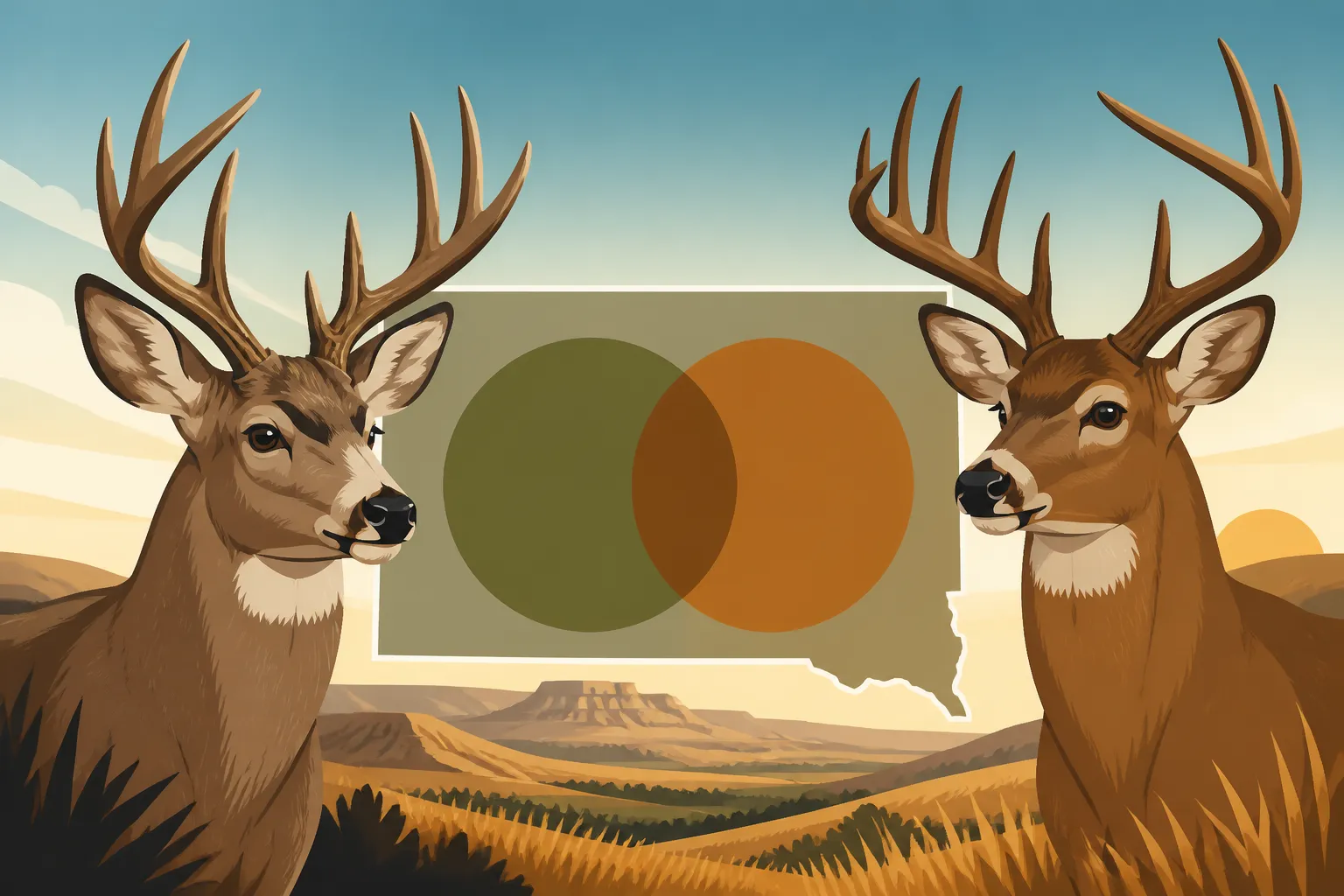
South Dakota is a truly unique state, offering a fascinating blend of ecological zones. You've got the rolling prairies and breaks of West River country, traditionally mule deer strongholds, and the more agrarian, timbered river bottoms and shelterbelts of East River, classic whitetail territory. However, it's in the interstitial spaces, those fascinating transition zones, where the lines blur, and both species regularly share the same postcode.
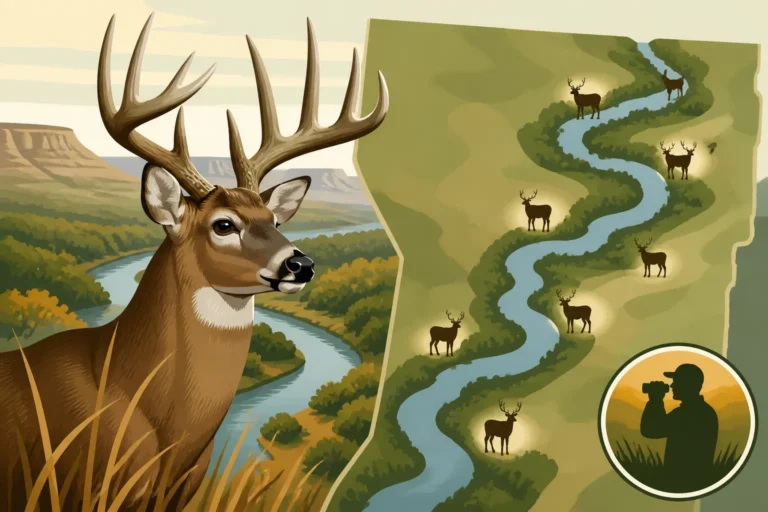
These overlapping habitats aren't just random occurrences; they're often driven by a convergence of resources that appeal to both deer. Think about the winding river systems like the Cheyenne or the White River, or even the tributaries feeding into the Missouri River. Along these corridors, you find a mix of dense riparian timber providing cover, fertile agricultural fields offering abundant food, and broken badlands or coulees that give mule deer the open sightlines they prefer. A whitetail might bed down deep in a plum thicket along a creek, while a mule deer could be bedded just a few hundred yards away on an open, south-facing slope, soaking up the sun. The key is that both species are drawn to specific features within a broader landscape, and sometimes those features are close enough to create shared real estate. When you’re doing your pre-season scouting, utilizing resources like GoHunt to overlay habitat maps and property boundaries can give you a significant advantage in identifying these mixed-species zones. You can really zoom in on those subtle changes in terrain and vegetation that indicate prime dual-species habitat.
Consider also the numerous Game Production Areas and Walk-In Areas scattered across the state. Many of these public lands are managed to provide a mosaic of habitat, often featuring cattail sloughs for pheasants, but also providing dense thermal cover and water sources that attract deer. A large block of unharvested corn next to a deep prairie draw, for instance, offers high-energy food for both, while the draw itself provides bedding and travel routes. It’s not uncommon to find rub lines from both bucks running through the same patch of cover, or to see tracks of both species along the same muddy trail leading to a stock dam. This cohabitation means hunters need to be prepared for either encounter, understanding that their target might not be the only deer using that particular patch of heaven.
Behavioral Blending and Divergence in Shared Spaces
Even when mule deer and whitetail share the same piece of ground, their underlying instincts often dictate different behaviors. Understanding these nuances is paramount for a successful hunt. Whitetails, being masters of concealment, tend to utilize the densest cover available. In a shared river bottom, a whitetail buck is more likely to be found tucked into the thickest part of the timber, using every bit of brush and downed log to remain unseen. They'll often move through hidden channels, staying within the shadows and rarely exposing themselves in wide-open areas during daylight hours. You might find them bedding deep within a Missouri River Timber or in a heavy shelterbelt, preferring to sneak away quietly rather than breaking cover.
Mule deer, on the other hand, are creatures of the open country. While they appreciate cover, they often use the terrain itself for concealment rather than dense vegetation. In a coulee system where whitetails might be in the bottom, a muley could be bedded high on a hillside, using a small juniper or simply the contour of the land to hide, all while keeping a watchful eye on its surroundings. When pushed, a mule deer is more likely to "buck up" and bound away, often stopping to look back from a distant ridge, whereas a whitetail will typically keep running for the nearest impenetrable cover. This difference in evasion strategy is critical. If you jump a deer and it bounds over the ridge with a stiff-legged gait, it's likely a muley, giving you a chance to relocate and potentially stalk it again. If it's a shadowy blur disappearing into the thickest part of the draw, it's almost certainly a whitetail. This behavioral difference is a strong indicator when you're glassing from afar or trying to discern what kind of deer sign you're observing.
Furthermore, their daily patterns can vary. Whitetails often become more nocturnal under pressure, especially on public land or areas with significant human activity. Mule deer can also become wary, but their reliance on open landscapes means they may still be active during daylight in more remote or less pressured areas, often moving at dawn and dusk. Both will respond to agricultural cycles, hitting corn fields and food plots, but the whitetail might prefer to access these fields from dense timber edges, while the mule deer might cross an open pasture to get there, using a slight swale or rise for cover. Knowing the subtle cues for Reading Prairie Coulees for Mule Deer versus identifying prime whitetail bedding areas in timber is key to deciphering their movements.
Strategic Hunting in Dual-Species Territory
Hunting in areas where both mule deer and whitetails coexist requires a flexible and adaptable approach. You can't just apply a "whitetail only" or "mule deer only" strategy and expect consistent success. Instead, you need to be prepared for either species and tailor your tactics to the specific micro-habitat you're in.
One effective strategy is often glassing. Whether you're hunting the open breaks of the West River or the more broken country transitioning into East River, glassing from a high point allows you to survey vast expanses of land. Pay close attention to the edges: where the timber meets the prairie, where a cattail slough borders a crop field, or where a deep coulee cuts through a rolling pasture. Mule deer might be spotted out in the open or on a distant hillside, while whitetails might only reveal themselves as they step out of heavy cover to feed. Investing in good optics and knowing how to Glassing South Dakota Breaks at First Light can pay huge dividends. Once a deer is spotted, you can then assess its species and plan your approach accordingly, whether that means a classic Spot-and-Stalk Antelope on Open Prairie for a muley or a more deliberate, quiet stalk for a whitetail moving towards dense cover.
Another excellent tactic is incorporating still-hunting or slow-walking through the diverse habitat. This is particularly effective in areas with mixed cover. Move slowly and deliberately, taking a few steps then stopping for several minutes to glass, listen, and simply observe. This approach allows you to cover ground effectively while also being stealthy enough to sneak up on a bedded whitetail in a thicket or catch a mule deer feeding along a draw. When moving through linear cover, such as a creek bottom or a shelterbelt, you might push a whitetail from the dense interior, but also keep an eye on the more open edges for a muley that might be skirting the perimeter. Knowing how to Use Terrain to Close on a Mule Deer will be invaluable here, as will understanding typical whitetail escape routes.
For those considering a more static approach, setting up ground blinds or treestands can also work, especially near key transition points like pinch points between a heavy timber block and an agricultural field, or a saddle within a coulee system. These locations are travel corridors for both species. If you're targeting the rut, understanding how Rattling and Grunting During the South Dakota Rut can influence both species' behavior, though mule deer are generally less responsive to aggressive calling than whitetails. Before you head out, tools like GoHunt can help you identify high-probability spots by analyzing topographical features, vegetation types, and historical deer activity in a given area, allowing you to E-Scouting Walk-In Areas Before the Season and refine your strategy.
| Characteristic | Mule Deer (in Overlap Zones) | Whitetail Deer (in Overlap Zones) |
|---|---|---|
| Typical Habitat Use | Open coulees, sagebrush flats, bluffs, river breaks with sparse cover, high ground | River bottoms, dense shelterbelts, creek bottoms, heavy timber, crop edges, low ground |
| Movement & Gait | Often travel along ridge lines, use terrain for concealment, "buck" or bound when alarmed | Often stick to cover, move through draws and timber, slink or run hard for dense cover |
| Primary Escape Strategy | Utilizes open space and speed, often stops to look back from a distance | Utilizes dense cover and stealth, rarely stops until deep in hiding |
| Bedding Preference | Open slopes with a view, under small junipers/pines, within tall grass, often elevated | Thick brush, deep timber, cattail sloughs, dense riparian cover, often low-lying |
| Rut Behavior (Calling) | Less responsive to aggressive calling, more responsive to subtle grunts/decoying | Highly responsive to rattling and grunting, especially younger bucks |
| Body Shape | Stockier, deeper body, larger ears, face often darker | More slender, longer neck, smaller ears, face often lighter |
| Tail Appearance | Narrow, rope-like tail with a black tip, often carried low or flagged in alarm | Broad, flat tail, white underside, often flagged high when alarmed |
Identification and Management Challenges
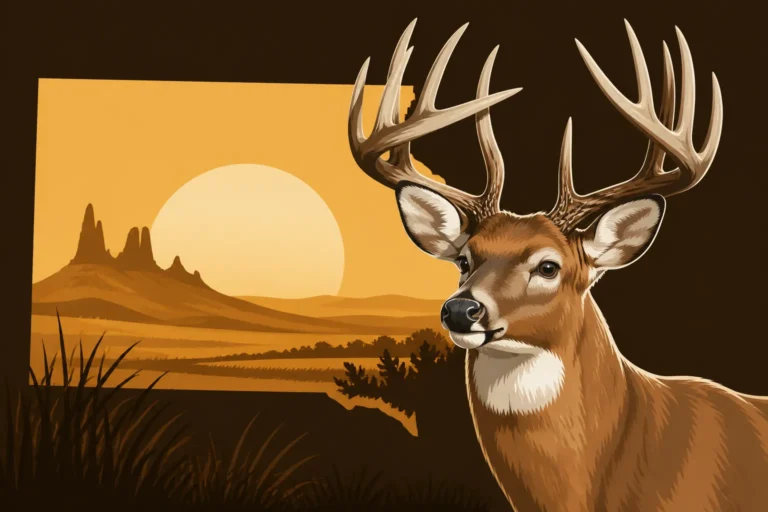
Accurately identifying whether you're looking at a mule deer or a whitetail, especially in low light or at long distances, is a skill that becomes incredibly important in these overlap zones. It's not just about knowing what you want to shoot; it's about adhering to regulations, as some licenses might be species-specific. While mature bucks are usually easier to distinguish by their antlers – mule deer with their bifurcated (forked) antlers and whitetails with tined beams branching from a single main beam – it’s the body characteristics that are often more reliable, especially for does and younger deer, or if the antlers are shed.
The large, prominent ears of the mule deer are a dead giveaway, resembling those of a mule, hence the name. Their faces tend to be darker, and their tails are typically narrow and rope-like, usually white with a distinctive black tip, often held down when walking but can be flagged. Whitetails, conversely, have smaller ears, a more reddish-brown face, and their iconic broad, white flag of a tail is unmistakable when raised. Pay attention to their gait too; the stiff-legged "bounding" of a mule deer is distinct from the smooth, fluid run of a whitetail. These visual cues are essential. If you're unsure, it's always best to hold off and observe longer. Many hunters have made mistakes, leading to tags being filled on the wrong species.
From a management perspective, the overlap of these two species presents ongoing considerations for wildlife agencies like South Dakota Game, Fish and Parks. Understanding population dynamics, disease transmission, and habitat utilization for both species in these shared environments is a complex puzzle. Conditions like drought or severe winters can impact one species more severely than the other, or conversely, drive them closer together in search of limited resources. For example, a harsh winter might force mule deer into denser whitetail cover for thermal protection, altering their typical patterns. Hunters play a vital role in this by providing accurate harvest data, which helps agencies monitor populations and trends. Keeping an eye on publications from GFP or online resources like GoHunt, which often compile relevant biological data and hunting regulations, can help you stay informed about the health of both herds in your chosen South Dakota Deer Licence Types by Region. Ultimately, embracing the challenge of hunting in these unique overlap areas makes you a more versatile and observant hunter, deepening your appreciation for South Dakota's incredible deer diversity.
Disclaimer
This article is for general informational purposes only and does not constitute professional advice. Laws, prices and regulations vary by location and change over time. Consult a qualified professional for guidance on your specific situation.