South Dakota Prairie Grouse Season
Trying to make sense of all the different hunting seasons and regulations in South Dakota, especially for a less common pursuit like prairie grouse, can feel like navigating a maze. It’s frustrating when you just want to know when and where you can chase those fast-flying birds without breaking any rules. This comprehensive guide is here to untangle the specifics of the South Dakota prairie grouse season, covering everything from key dates and bag limits to understanding the birds themselves and the tactics you’ll need to be successful.
Decoding the South Dakota Prairie Grouse Season
The prairie grouse season in South Dakota is a unique opportunity, but it comes with its own set of rules and nuances that hunters absolutely need to understand. Unlike the widespread pheasant season, prairie grouse hunting is often more about solitude and seeking out specialized habitats. It’s crucial to know when you can go afield and what the limits are to ensure a legal and enjoyable hunt.
Annual Season Dates and Zones
The season for prairie grouse, which includes both Sharp-tailed Grouse and Greater Prairie Chickens, typically opens in mid-September and runs through the end of the year, or even into early January of the following year, depending on the specific regulations set forth by the South Dakota Game, Fish and Parks (GFP). It's always subject to change, so consulting the official hunting handbook each year is non-negotiable. For instance, in many recent seasons, the opening day has fallen on the third Saturday of September, coinciding with other upland bird openers.
It’s important to note that while the season generally covers most of the state, certain areas might have specific closures or extended seasons based on local population dynamics or land management practices. These details are usually outlined clearly in the annual hunting proclamation. When planning your hunt, especially if you're exploring new territory, take the time to check the most current information. Tools like the South Dakota Public Hunting Atlas can be incredibly helpful for identifying potential hunting grounds and understanding the boundaries. Many hunters also rely on resources like GoHunt to keep abreast of season changes and regulations.
Daily Bag and Possession Limits
To ensure sustainable populations, the South Dakota GFP sets strict daily bag and possession limits for prairie grouse. Typically, hunters are allowed a daily bag limit of three prairie grouse, which can be any combination of Sharp-tailed Grouse and Greater Prairie Chickens. However, there's often a further breakdown within this limit, for example, a maximum of one Greater Prairie Chicken per day. This distinction is vital because Greater Prairie Chickens generally have smaller populations and more restricted ranges compared to Sharp-tailed Grouse.
The possession limit, which dictates how many birds you can have in your physical possession at any given time (including those stored at home), is usually double or triple the daily bag limit. For a typical three-bird daily limit, the possession limit might be nine birds. These limits are in place to prevent overharvesting and to distribute hunting pressure fairly among participants. Always ensure your cooler or game vest doesn't exceed these limits, especially if you're hunting multiple days or with a group. Keeping track can be a challenge after a successful few days in the field, so a simple log or careful counting is always a good idea.
Legal Shooting Hours
Just like pheasants and other game birds, there are specific legal shooting hours for prairie grouse in South Dakota. Generally, hunting for upland birds, including prairie grouse, begins at 10:00 a.m. Central Time each day. This later start time is largely designed to allow birds to leave their nighttime roosts, feed, and move into cover, dispersing hunters and reducing pressure on morning fly-out patterns. It also offers a safer start, as the sun is usually up, and visibility is much better.
The hunting hours typically extend until sunset. This window provides ample time for hunters to work cover thoroughly. For hunters who are also pursuing other game, such as deer, it's critical to remember that legal shooting hours for big game often begin much earlier, at thirty minutes before sunrise. If you’re planning a mixed-bag hunt, be absolutely certain you’re adhering to the specific shooting hours for each species you are targeting. This is another area where a quick check of the latest South Dakota Hunting Handbook Release can save you from a potential violation.
Spotting the Elusive Prairie Grouse
Hunting prairie grouse in South Dakota is an adventure into the heart of the prairie ecosystem. These birds aren't like pheasants that often cling to dense cover along field edges. They are creatures of vast, open grasslands, and understanding their subtle differences and preferred habitats is key to finding them.
Sharp-tailed Grouse Description and Habitat
Sharp-tailed Grouse are arguably the more common of the two prairie grouse species found in South Dakota. They are medium-sized upland birds, a bit smaller than a pheasant but larger than a partridge. Their plumage is a beautiful mottled brown and white, providing excellent camouflage in the prairie grasses. A distinguishing feature is their pointed tail, which gives them their name, and a small patch of purple skin on either side of their neck, visible during mating displays.
These birds thrive in expansive, relatively undisturbed native grasslands and mixed-grass prairies. You’ll often find them in areas with good grass cover for nesting and escape, interspersed with brushy draws, coulees, and small patches of sagebrush or deciduous trees. They’re less likely to be found in cultivated fields or dense cattail sloughs, preferring the more open, rolling terrain. When considering where to focus your efforts, think big, unbroken tracts of grass, particularly where you might see some subtle changes in elevation or cover. You might even find them in areas traditionally associated with big game, like those where you'd be "Reading Prairie Coulees for Mule Deer," as those draws often provide excellent shelter for all sorts of wildlife.
Greater Prairie Chickens Description and Habitat
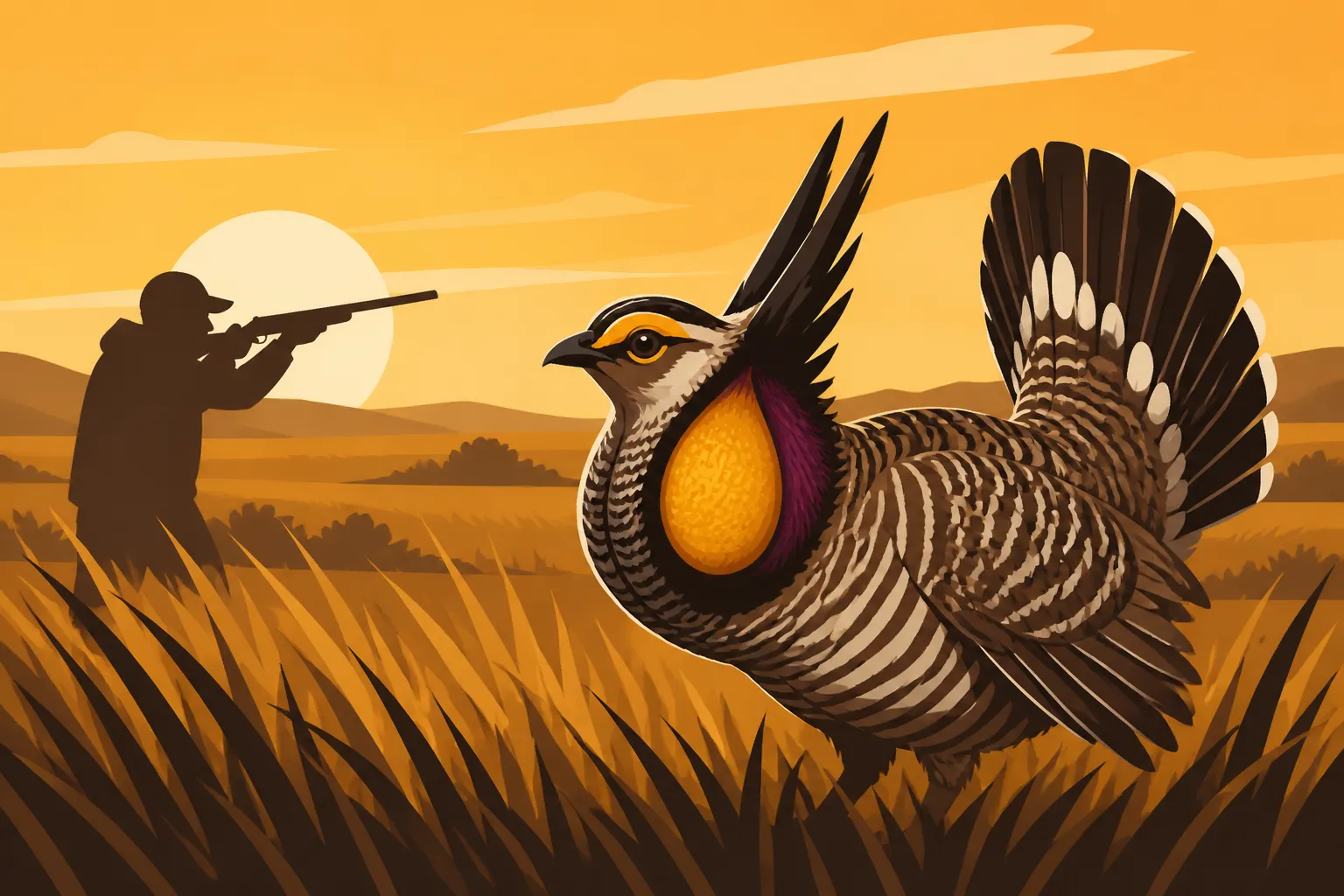
The Greater Prairie Chicken, while sharing the same general season, is a much rarer and more localized bird in South Dakota. Identifying them correctly is crucial, especially given the stricter bag limits often placed on them. They are slightly larger and darker than Sharp-tailed Grouse, with a more barred plumage pattern rather than mottled. Their most distinctive features are the long pinnae feathers on their necks, which can be erected like horns, and the prominent orange air sacs on the sides of their neck, inflated during their famous booming mating dance on leks. They have a more rounded, fan-like tail, unlike the sharp tail of their cousins.
Prairie chickens are true connoisseurs of tallgrass prairie. Their habitat requirements are even more stringent than sharp-tails, favoring vast expanses of pristine, unfragmented native prairie with dense, tall grasses for nesting and cover. In South Dakota, their populations are predominantly found in the south-central and southeastern parts of the state, particularly in counties with significant areas of unplowed native prairie. Finding prairie chickens often means looking for even more remote and untouched grassland areas. They are highly sensitive to habitat fragmentation and agricultural encroachment.
Identifying Grouse in the Field
Being able to tell a Sharp-tailed Grouse from a Greater Prairie Chicken on the wing or when flushed is a critical skill for legal hunting. Here's a quick comparison to help you differentiate:
| Feature | Sharp-tailed Grouse | Greater Prairie Chicken |
|---|---|---|
| Tail | Short, pointed, often appears "pinched" in flight | Short, rounded, fan-like, appears wider in flight |
| Plumage | Mottled brown and white, more "spotted" look | Barred brown and white, more uniform "striped" look |
| Neck Feathers | Less prominent; small purple patches (males) | Long, stiff pinnae feathers on neck; orange air sacs (males) |
| Flight | More direct, powerful wing beats, sometimes glides | Fluttering, short bursts of flight, stiff wings |
| Call | Cooing or cackling | Low "booming" sound (males on lek) or cackles |
| Preferred Habitat | Mixed-grass prairie, brushy draws, CRP | Tallgrass prairie, large unbroken grasslands |
In the heat of the moment, especially if a bird flushes close, it can be tough. If you're unsure, it's always best to err on the side of caution, especially with the more protected prairie chicken. It takes practice and a keen eye to become proficient at field identification, but it’s an essential part of responsible prairie grouse hunting.
Strategizing Your Grouse Hunt on the Prairie
Hunting prairie grouse is a truly immersive experience that connects you deeply with the vast South Dakota landscape. It demands a different approach than chasing pheasants in heavy cover. Here, strategy revolves around understanding the open terrain and the birds’ responses to pressure.
Ideal Prairie Grouse Habitat
As we discussed, prairie grouse are grassland specialists. When you're scouting or on the ground, look for large tracts of native grass or high-quality CRP (Conservation Reserve Program) acres. These fields provide not only critical nesting and brooding cover but also a place for the birds to loaf during the day and roost at night. The birds prefer areas where the grass is waist-high or taller in places, providing concealment from aerial predators and hunters alike.
Don't overlook the subtle topographical features of the prairie. Even gentle slopes, wide draws, or low ridges can concentrate birds, offering them slight protection from wind or a vantage point. Areas where different types of grasses meet, or where there's a transition from grassland to a small patch of sparse brush or a tree line, can also be productive. For hunters relying on public land, many South Dakota Walk-In Areas provide excellent prairie grouse habitat, especially in the central and western parts of the state where large grasslands are more prevalent. It often pays off to do some initial e-scouting Walk-In Areas Before the Season using aerial imagery to identify these prime areas before you even set foot on the ground.
Walk-up Hunting Strategies
The most common and often most effective method for prairie grouse is walk-up hunting, often referred to as "still-hunting" or "jump-shooting." This involves systematically walking through suitable cover, hoping to flush birds within shooting range. Unlike pheasants that might hold tight, prairie grouse can be surprisingly wary, often flushing far out of range, especially if pressured.
The key to successful walk-up hunting is a slow, deliberate pace. Think of it like a leisurely stroll, not a frantic march. Walk in a zigzag pattern or parallel lines, covering as much ground as possible. Pay close attention to subtle changes in terrain or cover, as these are natural holding points for birds. The wind can also play a significant role; try to walk into the wind when possible, as it helps carry your scent away from the birds and can make flushes more predictable. When a bird flushes, be ready! Their flight is fast and often erratic, making for a challenging shot.
Using Dogs for Grouse
Hunting prairie grouse with a well-trained bird dog can greatly increase your success and enjoyment. Both pointing dogs and flushers can be effective, but they require different approaches.
Pointing breeds, like German Shorthaired Pointers or English Setters, are excellent for covering vast amounts of ground and locating birds that might otherwise be missed. When a pointer locks up, it gives the hunter time to move into position for a shot. However, prairie grouse can be notorious for running ahead of a pointing dog, especially later in the season. A dog that honors the point and doesn't push too hard is invaluable.
Flushing dogs, such as Labrador Retrievers or Springer Spaniels, work by systematically pushing cover and forcing birds into the air. With these breeds, the focus is on maintaining a controlled hunt, keeping the dog within gun range, and being ready for a flush at any moment. The wide-open nature of prairie grouse habitat means a dog needs to be under excellent voice or whistle control to avoid chasing birds out of sight. No matter the breed, ensure your dog is conditioned for long walks and has plenty of water, especially during the early season. Keeping a Dog Cool on an Early Opener is crucial for their safety and performance.
Early Versus Late Season Considerations
Prairie grouse behavior changes significantly as the season progresses, largely influenced by weather and hunting pressure.
Early Season (September-October): In the early season, birds are often found in family groups or small coveys. The cover is typically at its thickest, and insects are still abundant, providing a food source. Birds might hold tighter in the dense grass, offering closer flushes. However, warmer temperatures mean you and your dog need to be mindful of heat exhaustion. Hunt during the cooler parts of the day and ensure constant hydration. Hunters often find less pressure in early season compared to the later pheasant opener, making it a great time to experience solitude.
Late Season (November-December): As temperatures drop and snow becomes possible, grouse begin to congregate into larger flocks. They will often seek out thicker thermal cover, such as dense brush patches, plum thickets, or deep draws that offer protection from wind and cold. They can also become much wilder and more prone to flushing at long distances. Successful late-season hunting often involves glassing potential areas from a distance, much like you might "Glassing South Dakota Breaks at First Light" for deer, to spot these larger groups before moving in. The challenging conditions of Late-Season South Dakota Pheasants in Heavy Cover can provide useful insights into how birds adapt to harsh weather, and many of those lessons apply to grouse too. Don't be surprised to find large groups of several dozen birds in a single area.
Navigating Licenses and Regulations for Prairie Grouse
Getting your ducks, or in this case, your grouse, in a row when it comes to licenses and regulations is non-negotiable for any South Dakota hunt. It’s not just about avoiding fines; it’s about respecting the game, the land, and the tradition.
Resident Versus Non-Resident Requirements
Whether you’re a South Dakota resident or traveling from out of state, you’ll need the appropriate licenses to hunt prairie grouse.
Residents: For South Dakota residents, hunting prairie grouse typically requires a Resident Small Game License. This license covers various small game species, including pheasants, grouse, partridge, and rabbits. Additionally, a Habitat Stamp is required for most hunting licenses in South Dakota, contributing funds directly to habitat improvement projects across the state. The cost for these is generally quite reasonable, encouraging participation from local hunters.
Non-Residents: For non-residents, the process is a bit more involved, and the costs are higher, reflecting the immense popularity of hunting in South Dakota. Non-residents will need a Non-Resident Small Game License. This license is often structured into either two non-consecutive five-day periods or one single ten-day period, giving hunters flexibility for their trip. Similar to residents, a Habitat Stamp is also required. It’s worth checking the specific South Dakota Nonresident Small Game Licence Price each year as these can change. Non-resident licenses are generally available over-the-counter or online, but it’s always wise to purchase them well in advance of your trip, especially if you plan to hunt during peak times.
Additional Stamps and Permits
While prairie grouse hunting itself doesn't require a federal duck stamp, if you plan to combine your upland hunt with any waterfowl hunting – which is very common in South Dakota with its abundance of ducks and geese – you will need a Federal Migratory Bird Hunting and Conservation Stamp (Federal Duck Stamp). Even if you only pursue upland birds, ensuring you have the Habitat Stamp is crucial. It’s a vital component of wildlife conservation in the state, directly supporting the lands where these grouse thrive.
Remember, regardless of your residency, all hunters born on or after January 1, 1967, must complete a hunter safety course approved by the South Dakota Game, Fish and Parks or an equivalent course from another state. The South Dakota Hunter Safety Requirements are in place to ensure safe hunting practices for everyone.
Acquiring Your Licenses
The most convenient way to acquire your South Dakota hunting licenses is online through the official South Dakota Game, Fish and Parks website. Their online portal is user-friendly and allows you to purchase licenses, stamps, and even apply for draws for other big game species. You can usually print your licenses at home, making the process seamless.
Alternatively, licenses can be purchased in person at any authorized license agent across the state, including many sporting goods stores, convenience stores, and county courthouses. If you’re traveling to South Dakota for your hunt, it might be easiest to buy your license upon arrival, but buying online beforehand can save you valuable hunting time. Many hunters utilize platforms like GoHunt not just for intel but also for direct links and up-to-date instructions on the licensing process, simplifying the pre-hunt logistics. Always carry your physical license and stamp while afield to avoid any issues with game wardens.
Disclaimer
Please be aware that hunting regulations, season dates, and license requirements can change annually. While this guide provides comprehensive information, it is absolutely critical to consult the official South Dakota Game, Fish and Parks website and the current year's hunting handbook or proclamation before planning and executing any hunting trip. Always prioritize safety, ethical hunting practices, and compliance with all state and federal laws.