How Many West River Deer Units There Are
Figuring out the ins and outs of deer hunting in South Dakota, especially when you start looking at specific regions like West River, can feel like trying to untangle a ball of yarn after a kitten has had its way with it. Many hunters get overwhelmed by the unit designations and what they mean for their hunting opportunities. This guide is here to walk you through the West River deer units, explain how many there are, and help you understand how this system impacts your hunt for South Dakota whitetails and mule deer.
Understanding South Dakota's Deer Unit System
South Dakota's deer hunting landscape is meticulously managed through a system of hunting units. These aren't just arbitrary lines on a map; they are carefully drawn boundaries designed to manage deer populations, hunter pressure, and harvest rates across diverse habitats. For both residents and nonresidents, understanding these units is the absolute bedrock of a successful hunt plan.
Why Units Matter for West River Deer Hunters
When you apply for a deer tag in South Dakota, particularly for firearms seasons, you're not just applying for a "deer tag" – you're applying for a tag valid in a very specific unit or group of units, for a specific weapon type, and often for a specific sex of deer (e.g., any deer, antlerless, or any buck). This granularity is particularly pronounced in the West River region, where habitat and deer species composition vary significantly.
For instance, a tag for Unit 20A might be fantastic for hunting mule deer in the wide-open breaks and sagebrush, but it's entirely different from a tag for Unit 30B, which might encompass more river bottom whitetail habitat. Your unit choice dictates the landscape you'll hunt, the species you're most likely to encounter, the density of other hunters, and ultimately, your chances of success. It's a critical decision that starts long before you ever set foot on the prairie. Without the right unit tag, even if you’re standing in prime deer country, you can’t legally hunt there.
The East River Versus West River Divide
South Dakota is bisected by the mighty Missouri River, and this natural feature forms a crucial management boundary for deer, especially for firearms seasons. The terms "East River" and "West River" are more than just geographical descriptors; they denote fundamentally different hunting experiences and regulatory frameworks.
East River country, generally east of the Missouri, is characterized by its rich agricultural lands, numerous pheasant fields, and river corridors like the James and Big Sioux. Whitetail deer are predominant here, thriving in the cornfields, shelterbelts, and riparian zones. Hunting opportunities are often tied to landowner access, and nonresident tags for East River are highly limited, with resident preference being very strong. For those interested in South Dakota Whitetail Hunting in River Bottoms, this region offers unique challenges and rewards.
West River, on the other hand, stretches from the Missouri River west to the Wyoming border, encompassing a vast expanse of rolling prairie, badlands, breaks, and the forested Black Hills. This is classic mule deer country, though whitetails certainly inhabit the river bottoms and draws. The landscape is wilder, often more rugged, and offers a different kind of challenge. Public access is generally more prevalent through National Grasslands and Walk-In Areas, though private land still dominates. The deer draw system for West River units is also distinct, reflecting the different management objectives and hunter demand for this iconic Western landscape. Understanding these differences is key to deciding where to focus your efforts.
Delving into West River Deer Units
So, you're ready to explore the vast hunting grounds west of the Missouri? That's fantastic! But before you start dreaming of big muley bucks, it's crucial to understand the intricate system of deer units.
The Number of West River Deer Units
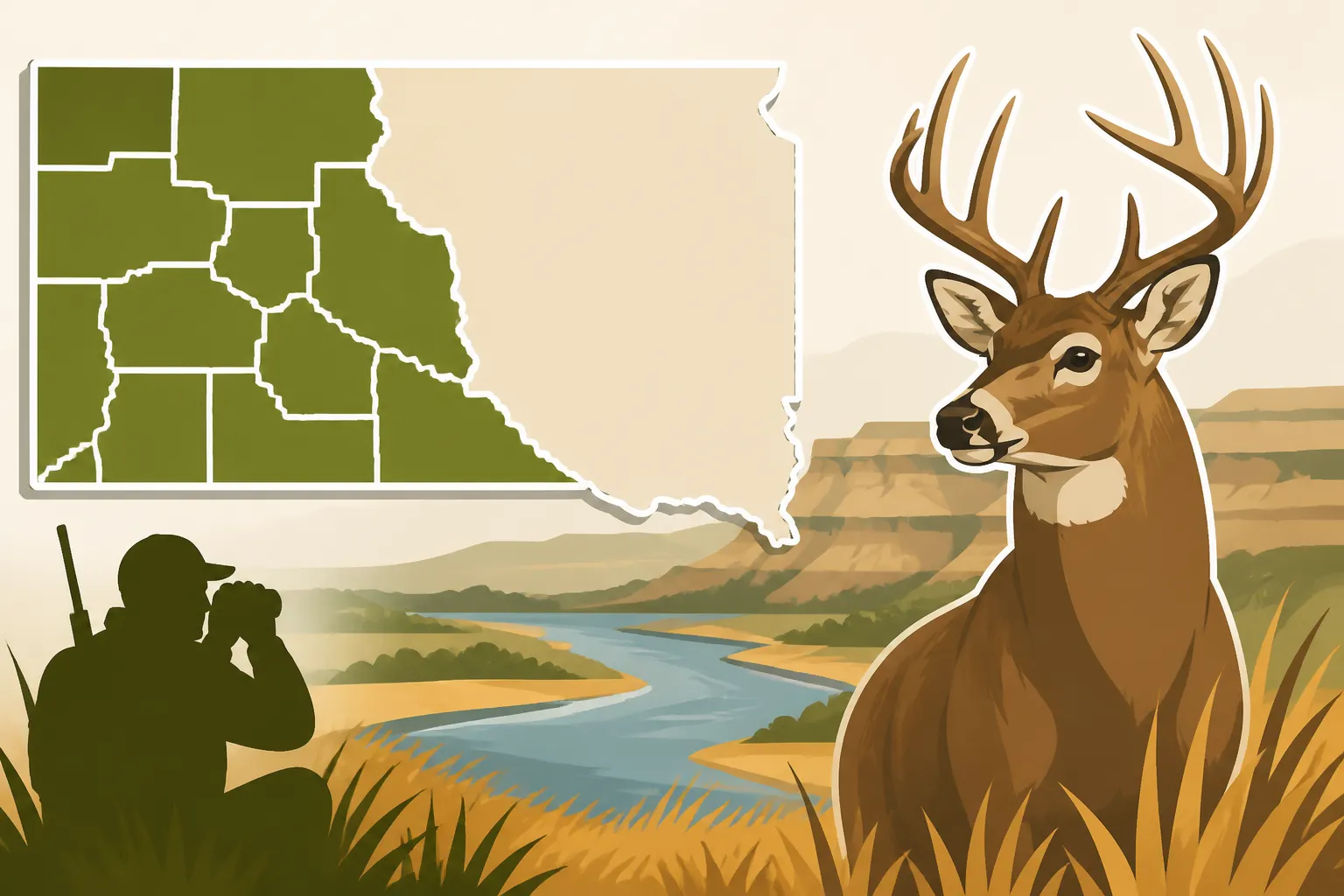
When hunters ask "How many West River deer units are there?", it's important to clarify that it's not a single, fixed number, but rather a dynamic system of specific management areas that can shift slightly from year to year. For the firearms rifle deer season, which is often what most hunters are referring to, South Dakota's West River region is divided into dozens of distinct units.
To be more precise, the South Dakota Game, Fish and Parks (GFP) typically establishes over 40 to 50 individual West River rifle deer units each year. Each of these units, like 20A, 30B, 40A, 50B, and so on, has its own specific boundaries, often following county lines, major roads, or geographical features. These units are designed to allow for very granular management of deer populations. For example, some units might have tags specifically for "Any Deer," while others might be limited to "Any Antlerless" or "Any Buck." Some units might be predominantly mule deer territory, while others are geared more towards whitetails or a mix of both.
It's vital to consult the current year's South Dakota Hunting and Trapping Handbook, published annually by the GFP, for the exact number, boundaries, and specific regulations for each unit. This document is your definitive guide, as unit numbers and regulations can be tweaked based on population surveys, winter severity, and previous harvest data. While the overall structure remains consistent, the exact breakdown can see minor adjustments.
For other weapon types, such as archery and muzzleloader, the unit structure can be different. Archery deer units are often much larger, sometimes encompassing several rifle units, or even being statewide for certain tags. Muzzleloader units also typically cover larger areas than rifle units. This highlights why specificity is so important when discussing "West River deer units" – the weapon you plan to use dramatically changes which "units" you're looking at. If you're considering Rifle Choice for West River Mule Deer, the specific unit you draw will heavily influence your gear choice.
Characteristics of West River Deer Country
Hunting the West River region is an experience unlike any other. The landscape itself dictates much about the deer, their behavior, and the hunting tactics you'll employ.
Terrain and Habitat: Forget dense forests, unless you're heading into the Black Hills which is an entirely different beast. West River is characterized by vast, rolling grasslands, punctuated by steep, eroded breaks, cedar-lined draws, and pockets of badlands. You'll find mixed-grass prairie stretching for miles, often interrupted by intermittent creeks or drainages that provide critical cover and water. The terrain can be surprisingly rugged, with deep coulees and canyons that offer thermal protection and hiding spots for deer. Areas like the Buffalo Gap National Grassland or Fort Pierre National Grassland exemplify this classic West River landscape.
Deer Species: This is where West River truly shines for many hunters. While whitetail deer are certainly present, especially along major river systems like the Cheyenne River or the White River, the West River is renowned for its Mule Deer. These magnificent deer thrive in the open, broken country, using the contours of the land to their advantage. You'll often find them bedding on hillsides with good visibility or tucked into the shaded bottoms of draws. Whitetails here tend to stick to the heavier cover of creek bottoms, shelterbelts, and agricultural fringes. Many units offer both species, and depending on your tag and the specific habitat, you might have an opportunity for either. Hunters keen on Mule Deer on the West River Breaks will find plenty of opportunities to test their skills.
Hunting Style: The open nature of West River country lends itself well to glassing. Spot-and-stalk is a hugely effective method here, especially for mule deer. Hunters spend hours patiently glassing vast expanses from high points, looking for movement or the tell-tale silhouette of a bedded deer. Once a target is spotted, a careful stalk using the terrain to conceal your approach begins. This often involves long walks and strategic positioning. For those who enjoy the challenge of Spotting Bedded Bucks in Sage, West River is your playground.
The sheer scale of the landscape means you'll cover a lot of ground, often on foot, but sometimes with strategic use of vehicles on established roads to access different glassing points. The weather can also be a major factor, with strong winds, hot sun, or sudden cold fronts common, adding another layer of challenge to an already demanding hunt.
Navigating the West River Deer Draw
Successfully hunting West River deer often hinges on drawing the right tag. This is where the application process becomes paramount, especially for nonresidents.
Nonresident Challenges and Draw Odds
Let's be blunt: drawing a coveted West River deer tag as a nonresident in South Dakota can be tough. The state prioritizes its residents, which is common practice across many Western states. Nonresidents compete for a limited number of tags, and the demand far outstrips the supply for many popular units.
The draw system in South Dakota employs a hybrid system of preference points and bonus points for big game. While preference points give you a better chance in the draw by adding to your application weight, they do not guarantee a tag. Every year you apply and don't draw, you typically accrue a preference point (for deer, you actually cube your bonus points, which is a significant factor).
For nonresidents, it's wise to research historical draw odds for specific West River units before applying. Resources like GoHunt provide invaluable data on draw odds, points needed, and harvest success rates for various units. Utilizing such platforms can help you make informed decisions, whether you're trying to figure out How Many Points to Draw West River Deer or simply looking for a unit with slightly better odds. Without a tool like GoHunt, understanding the labyrinthine draw results can be a full-time job.
Many nonresidents find themselves building points for several years before drawing a desirable West River tag, especially for "Any Deer" or "Any Buck" rifle tags in prime mule deer units. Therefore, patience and a strategic application approach are key. It's also worth noting that antlerless tags or tags for less popular units often have better odds, offering a different type of hunting experience that might be more accessible.
Resident Advantages and Application Strategies
For South Dakota residents, the picture is considerably brighter. Residents have a much higher allocation of tags and, as a result, significantly better draw odds for most West River deer units. This is a huge advantage, allowing residents more flexibility in their unit choices and a higher likelihood of drawing a tag in their preferred area.
Residents still need to understand the unit system and apply strategically, but the pressure is much lower. They can often draw a good rifle tag in their desired West River unit much sooner than a nonresident, sometimes even in their first few years of applying. The cubed bonus point system also benefits residents over time, increasing their chances in subsequent draws.
Resident application strategies might involve:
- Targeting specific units for trophy potential: With better odds, residents can focus on units known for producing larger bucks.
- Applying for multiple species: Residents often have more flexibility to pursue both whitetail and mule deer opportunities in the same season, though separate tags are still required.
- Utilizing second choices effectively: Even if they don't draw their first choice, residents often have a strong chance of drawing a solid second-choice unit.
Regardless of residency, a thorough review of the GFP's annual hunting regulations is non-negotiable. Understanding application deadlines, unit changes, and point system specifics will be the difference between a successful draw and waiting another year. For those wanting to scout their chosen unit, remember that E-Scouting Walk-In Areas Before the Season can provide a significant advantage.
West River Deer Units at a Glance
Here’s a simplified look at the characteristics you might find in different types of West River deer units. Remember, these are generalizations, and specific unit regulations and conditions will vary.
| Unit Type/Characteristic | Dominant Species | Typical Habitat | Hunting Style | Nonresident Draw Difficulty |
|---|---|---|---|---|
| Open Prairie/Breaks | Mule Deer | Grasslands, sage, eroded draws, badlands | Glassing, Spot-and-stalk | High for "Any Buck" |
| River Bottoms/Timber | Whitetail Deer | Riparian zones, shelterbelts, dense timber along water | Stand hunting, still hunting, drives | Moderate to High |
| Mixed Habitat (e.g., Cropland/Prairie fringes) | Whitetail & Mule Deer | Farmland, grass, small woodlots, creek beds | Mix of stand and spot-and-stalk | Moderate |
| Black Hills Units | Whitetail & Mule Deer | Ponderosa pine forests, steep ridges, canyons | Still hunting, tracking, stand hunting | High, specialized tags |
Ultimately, understanding the nuances of the West River deer unit system is an ongoing process that requires diligent research and an appreciation for the unique characteristics of this part of South Dakota. Whether you're a seasoned nonresident building points or a resident exploring new areas, the rewards of hunting these diverse units are well worth the effort.
Disclaimer
The information provided in this guide is for general informational purposes only and is not intended as legal advice. Hunting regulations, seasons, and unit boundaries in South Dakota are subject to change annually. Always consult the most current South Dakota Game, Fish and Parks (GFP) hunting regulations and official resources before planning any hunt or applying for licenses. It is the hunter's responsibility to know and follow all applicable laws and regulations.