Finding Water in Dry West River Country
Oh, the West River country in South Dakota. It's a land of incredible beauty and opportunity, but let's be honest, when it gets dry out there, it can feel like the land itself is conspiring against you. That burning sun, the parched earth, the wind whipping dust – it doesn't just make us thirsty; it dictates everything about where big game, especially mule deer and pronghorn, are going to be. If you've ever spent days glassing seemingly empty draws, wondering where the animals have vanished to, it's highly likely they're tied to the lifeblood of water. This guide is all about helping you unlock those crucial water sources, even when the prairie seems bone-dry, giving you a real edge in your hunting strategy.
The Undeniable Power of Water in Arid Landscapes
When the West River region bakes under a relentless sun, water doesn't just become important; it becomes the single most critical factor for wildlife survival and, by extension, for your hunting success. Animals, just like us, need to hydrate regularly, sometimes daily, and when every blade of grass is crispy and every temporary puddle has long since evaporated, their options shrink dramatically. They must find water, and they will travel considerable distances to get it.
Think about it from an animal's perspective. In lush years, moisture is abundant, scattered in numerous places. Deer and antelope can browse on green forage that provides a good amount of water content, and they might only need to visit a dedicated water source every few days. But in a drought? Every bit of moisture is sucked out of the vegetation. Their bodies work harder to stay cool, digest dry forage, and simply function. This ramps up their water demand significantly. What this means for you, the hunter, is that game movement becomes incredibly predictable, often revolving around the nearest reliable water source. Understanding this fundamental truth is your first step to success. If you've been wondering why those animals seem to disappear, often they're simply concentrated around these vital resources.
Why Drought Conditions Change Game Behavior
Dry spells don't just reduce water availability; they fundamentally alter how deer and antelope live their lives on the prairie. Their daily routines shift dramatically. Instead of leisurely grazing throughout the day, they might become more nocturnal, moving during the cooler hours to conserve moisture and avoid the direct heat. This means you'll often find them bedding down closer to water sources during the day, making early morning and late evening hunts around these areas incredibly productive.
Furthermore, competition for water intensifies. Larger herds of antelope or groups of mule deer bucks might congregate around the few remaining reliable spots, creating potential for multiple animals to be in the same vicinity. This also means that these areas will likely show more visible sign – tracks, scat, and rubbed vegetation – indicating consistent use. When the landscape is otherwise barren, these small oases become magnets, drawing animals in from miles around. Ignoring these patterns during dry years is like trying to find a needle in a haystack; focusing on them gives you a clear target.
The Impact of Hydration on Animal Health and Movement
Beyond simply surviving, adequate hydration impacts an animal's overall health, energy levels, and even their ability to evade predators. A dehydrated animal is a sluggish animal, more prone to stress and less able to sustain the bursts of speed needed to escape danger. For a hunter, this translates to different movement patterns. They might move slower, stick to denser cover on their way to water, or appear less alert. You'll often see them taking the path of least resistance, following draws and coulees that lead directly to a water source. This predictability can be a huge asset.
Also, consider the quality of forage. In dry years, the nutritional value of plants can diminish. Animals might need to consume more forage to get the same nutrients, which in turn can increase their need for water for digestion. So, while you might think of water as purely for drinking, it's intricately linked to their diet and overall metabolic processes. If you can locate those few green shoots or areas that hold a bit more moisture, often adjacent to a water source, you'll be pinpointing prime feeding and bedding locations. This is why when you're glassing South Dakota breaks at first light, you should always be looking for that subtle green tint near a low spot.
Unearthing Natural Water Sources
South Dakota's West River country, particularly the expansive badlands and prairie, isn't known for an abundance of lush rivers and lakes. However, natural water does exist, even in the driest years, if you know where to look. These sources are often subtle, tucked away in the folds of the land, and require a keen eye and a bit of detective work to locate. They're typically dependent on precipitation, but some are fed by deeper geological processes, making them more resilient.
Identifying these spots often comes down to understanding the topography and geology of the area. Looking for depressions, changes in vegetation, or specific rock formations can lead you to a hidden spring or a seep that provides just enough moisture to sustain game. These aren't always gushing streams; sometimes, it's merely a damp patch of earth that animals know they can paw at to get a drink.
Reading the Landscape for Ephemeral and Permanent Water
When you're out there, try to differentiate between water sources that might only appear after a good rain (ephemeral) and those that have a more consistent, long-term supply (permanent). Ephemeral water sources, like temporary puddles in low spots or rain-filled potholes, are great for a short while, but they're unreliable. In a true drought, they'll be gone quickly. Focus your efforts on finding the permanent ones.
Permanent natural sources often manifest as springs or seeps. These are points where groundwater emerges onto the surface. You'll typically find them in draws, canyons, or at the base of hills where different geological layers meet. Look for areas with noticeably greener vegetation than the surrounding dry prairie. Willows, cattails, and taller, lusher grasses are dead giveaways. Sometimes, you'll even see a slight sheen on the ground or hear the subtle drip of water if you're close enough. Identifying these can be a game-changer, as these spots will concentrate wildlife during dry periods. Tools like GoHunt can be invaluable here, as their satellite imagery can sometimes reveal subtle changes in vegetation or topography that hint at these hidden water supplies, allowing you to scout a South Dakota unit from home before you ever set foot on the prairie.
Following Drainages and Coulees for Seeps and Springs
The natural contour of the land is your best map when it comes to finding water. Every ridge has an associated draw, and every draw leads to a larger coulee or drainage. These low-lying areas act like natural funnels for any precipitation, directing it to the lowest points. Even if the surface appears dry, the soil in these drainages often retains moisture longer, and underground water tables might be closer to the surface.
Focus on the deepest, most sheltered sections of these drainages. Look for bends in the coulee, areas where it widens out, or where rock outcrops might create a natural barrier, forcing groundwater to surface. Often, a tiny seep can be enough to attract animals. I've often seen mule deer in South Dakota's Missouri River timber concentrated in such spots. The key is to walk these drainages slowly, paying close attention to every detail. You might also notice a distinct path worn by animals, leading directly to a water source. Sometimes, the only water available is a puddle in a rocky crevice that seems insignificant to us, but to a thirsty deer or antelope, it's a lifeline. This ties directly into understanding which coulees hold bucks in dry years, as these are precisely the places they'll seek refuge and hydration.
Tracking Down Man-Made Water Sources
While natural water is a bonus, the reality of West River South Dakota is that man-made water sources are often the most abundant and reliable, particularly during dry spells. Ranching is a dominant force in this landscape, and ranchers understand the critical need for water for their livestock. This has resulted in a network of stock ponds, dams, and water tanks that, while intended for cattle, become irresistible magnets for all kinds of wildlife.
These aren't always marked clearly on every map, but with a little research and an understanding of how ranching operations work, you can usually pinpoint these crucial locations. They represent concentrated points of activity, turning vast, otherwise featureless prairies into predictable hunting grounds. Ignoring these human-influenced water points would be a huge mistake for any hunter in dry conditions.
The Lifeline of Stock Ponds and Dams
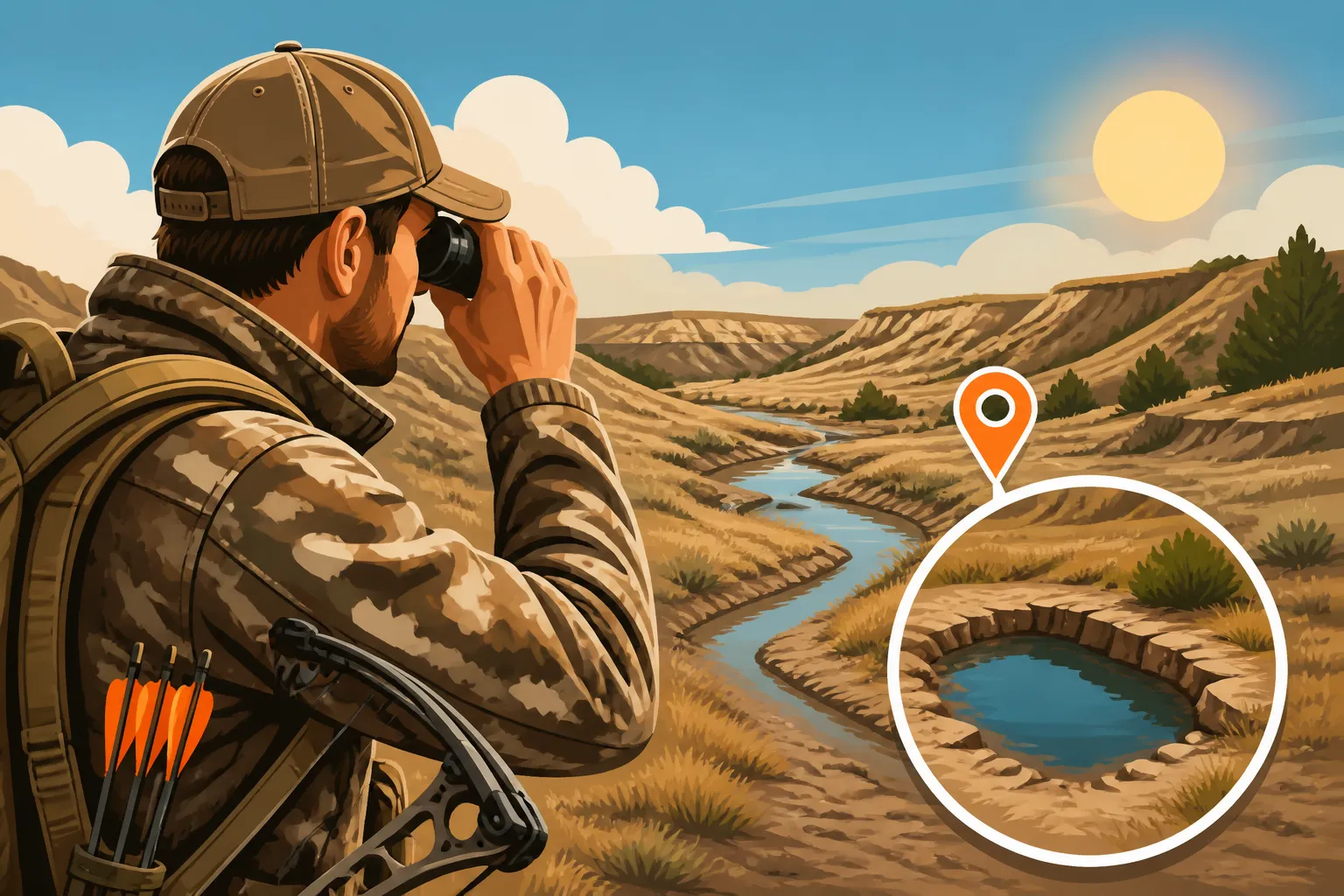
Stock ponds, sometimes called dugouts or simply tanks, are arguably the most important man-made water sources for wildlife in West River country. These are depressions dug into the earth or small earthen dams built across drainages to capture and hold rainwater and runoff. They vary greatly in size, from small puddles that only last a few weeks to expansive ponds that hold water year-round. In dry conditions, the larger, deeper ponds are the ones that retain water the longest and become critical gathering spots.
When scouting maps, look for small, often irregularly shaped blue features, especially in draws or along fencelines. GoHunt mapping applications with satellite imagery are incredibly useful here; you can often zoom in and see the actual body of water and any associated livestock trails leading to it. These trails are a goldmine of information, showing you exactly where animals are accessing the water. Many Game Production Areas and Walk-In Areas will have these, and understanding hunting pressure patterns on Walk-In Areas means knowing these water sources will see traffic. When a pond begins to shrink, it often concentrates game even further, as the available water becomes even more limited.
Windmills and Watering Tanks: Oasis in the Grasslands
Beyond stock ponds, windmills and solar-powered pumps that draw water from underground wells into watering tanks are absolutely essential in many parts of the West River. These systems provide a consistent, clean water supply for livestock, and by extension, for wildlife. Unlike ponds, which can dry up, these tanks are fed by wells and are usually reliable year-round.
Finding these can be a bit trickier from a map, as the tanks themselves are small, and the windmills might not always be visible on satellite imagery unless they're particularly prominent. However, you can often infer their presence by looking for specific patterns:
- Converging trails: Multiple faint cattle trails converging on a single point in the middle of nowhere often indicate a water tank.
- Fenced enclosures: Tanks are sometimes located within small fenced areas to protect them from livestock damage, which can be visible on high-resolution satellite maps.
- Small structures: Look for tiny squares or rectangles that might represent a pump house or a storage shed associated with the well.
These spots are absolute hotspots for pronghorn and mule deer, particularly during the middle of the day when they need a drink but are avoiding extensive travel. When spot-and-stalk antelope hunting in South Dakota, focusing your glassing efforts around these structures can pay dividends. You might just catch them heading in for a quick drink.
| Water Source Type | Reliability in Drought | How to Spot on Map/Ground | Common Game Attraction | Notes |
|---|---|---|---|---|
| Ephemeral Puddles | Very Low | Low spots, after rain; quickly dries | Opportunistic, short-term | Best immediately after a rain event, quickly gone. |
| Natural Seeps/Springs | Moderate to High | Green vegetation, wet ground, specific draws/coulees | Mule Deer, Whitetail, limited Pronghorn | Requires keen eye and knowledge of topography. |
| Rivers (e.g., Cheyenne) | High (main channel) | Large blue lines on maps; noticeable riparian zones | Mule Deer, Whitetail, Waterfowl | Access can be limited by private land. |
| Stock Ponds/Dams | Moderate to High (size dependent) | Small blue dots, irregular shapes, trails on satellite | Mule Deer, Pronghorn, Waterfowl, sometimes Pheasants | Crucial; larger ponds are more dependable. |
| Windmills/Watering Tanks | Very High | Converging trails, small structures, often near fences | Pronghorn, Mule Deer | Consistent and reliable, often less obvious to locate. |
Strategic Hunting Near Water in Dry Conditions
Once you've done your homework and identified potential water sources, the real work begins. It's not enough to just know where the water is; you need a thoughtful strategy for how to approach, hunt, and capitalize on these critical locations without blowing out the animals you're pursuing. This means careful scouting, mindful approaches, and understanding the best times to be in the area.
In dry West River country, the animals are on high alert, and any mistake around a water source can send them fleeing for miles. Patience and stealth become your most valuable assets. Remember, everyone knows water is important, but not everyone knows how to hunt it effectively.
E-Scouting and Ground-Truthing Water Points
Before you even leave your living room, leverage modern technology. Platforms like GoHunt offer incredible satellite imagery, topographic maps, and public land layers that can help you identify potential water sources. Look for those tell-tale blue spots (ponds), green patches (springs), or structures (windmills). Plot these points on your digital map. Also, look for faint trails that spiderweb out from these water points – these are game trails, and they’ll show you preferred access routes for animals. You can even use these tools to identify potential spots for treestand setups on narrow river timber or ground blinds if you plan to sit and wait.
However, e-scouting is only half the battle. You absolutely must ground-truth these locations. Drive or walk into the area (legally, of course) a few weeks before the season, or at least a few days prior if time is tight. Check the water levels. Is the pond still full, or is it a muddy depression? Is the seep still damp, or completely dry? Look for fresh sign: tracks, droppings, rubs. Note the prevailing wind direction and potential access routes that keep you hidden. This pre-season scouting is crucial, as conditions can change rapidly in dry climates.
Planning Your Approach and Setup
Approaching a water source without alerting game is paramount. In open West River country, this means utilizing every bit of available cover and paying obsessive attention to the wind. Animals will almost always approach water from downwind to catch any scent of danger. So, plan your approach to stay crosswind or downwind of where you expect the animals to be coming from or going to.
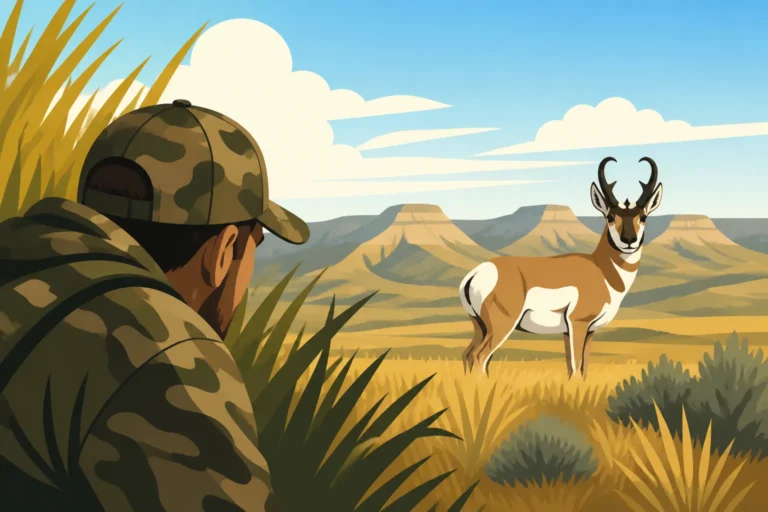
Consider setting up a ground blind if you're targeting a well-used stock pond or watering tank. Natural vegetation, a hay bale, or a pop-up blind can offer the concealment you need. For mule deer, you might be stalking, so use the terrain to close on a mule deer. Stay low, use draws and hills to break up your silhouette, and move slowly. Remember that animals, especially pronghorn, have incredible eyesight. If you're trying to spot-and-stalk antelope on open prairie near water, you'll need every bit of terrain advantage you can get. The goal is to be in position, concealed, before the animals arrive, or to intercept them subtly on their journey to or from the water.
Timing Your Hunt: Dawn, Dusk, and Midday Thirst
The timing of your hunt around water sources is just as critical as your location. In dry, hot conditions, animals will often concentrate their movement to and from water during the cooler hours of dawn and dusk. This is when they're most active, feeding and seeking hydration. Setting up an hour before legal shooting light and staying until an hour after is often your best bet.
However, don't completely discount midday, especially for pronghorn. Antelope are incredibly susceptible to heat and dehydration and might make quick, opportunistic trips to water sources during the hottest parts of the day. A long glassing session from a vantage point overlooking a key waterhole at midday could surprise you. Mule deer, while often moving less in the heat, might also come to water midday if their bedding area is close or they're particularly thirsty. Knowing where roosters sit at midday, for instance, isn't just for pheasants; it applies to all game. The key is to observe and adapt. If you're seeing fresh tracks at midday, that's your cue.
Ultimately, finding water in dry West River country isn't about luck; it's about understanding the land, the animals, and applying smart, persistent scouting strategies. Do your homework, hit the ground running, and those dry conditions might just turn into your biggest hunting advantage.
Disclaimer
Hunting is an activity that carries inherent risks. Always prioritize safety, follow all local, state, and federal regulations, and obtain the necessary licenses and permits. This guide is for informational purposes only and does not constitute professional advice. Always be aware of your surroundings, respect private property, and practice ethical hunting principles.