Cheyenne River Breaks Access
Trying to hunt the legendary Cheyenne River Breaks in South Dakota often feels like staring at a treasure map with half the directions missing. This vast, rugged country is famous for its incredible deer hunting, but actually getting to those elusive pockets of public land or gaining permission on private parcels can be a real head-scratcher. This guide is here to untangle the complexities of accessing the Cheyenne River Breaks, offering practical advice and insight into how to successfully navigate this challenging but rewarding landscape.
Understanding the Cheyenne River Breaks Landscape
The Cheyenne River Breaks are a unique and often unforgiving landscape that carves its way across West River South Dakota. It's a place of wild beauty and stark contrasts, offering some truly exceptional hunting opportunities if you know how to approach it.
Geographic Overview and Terrain Challenges
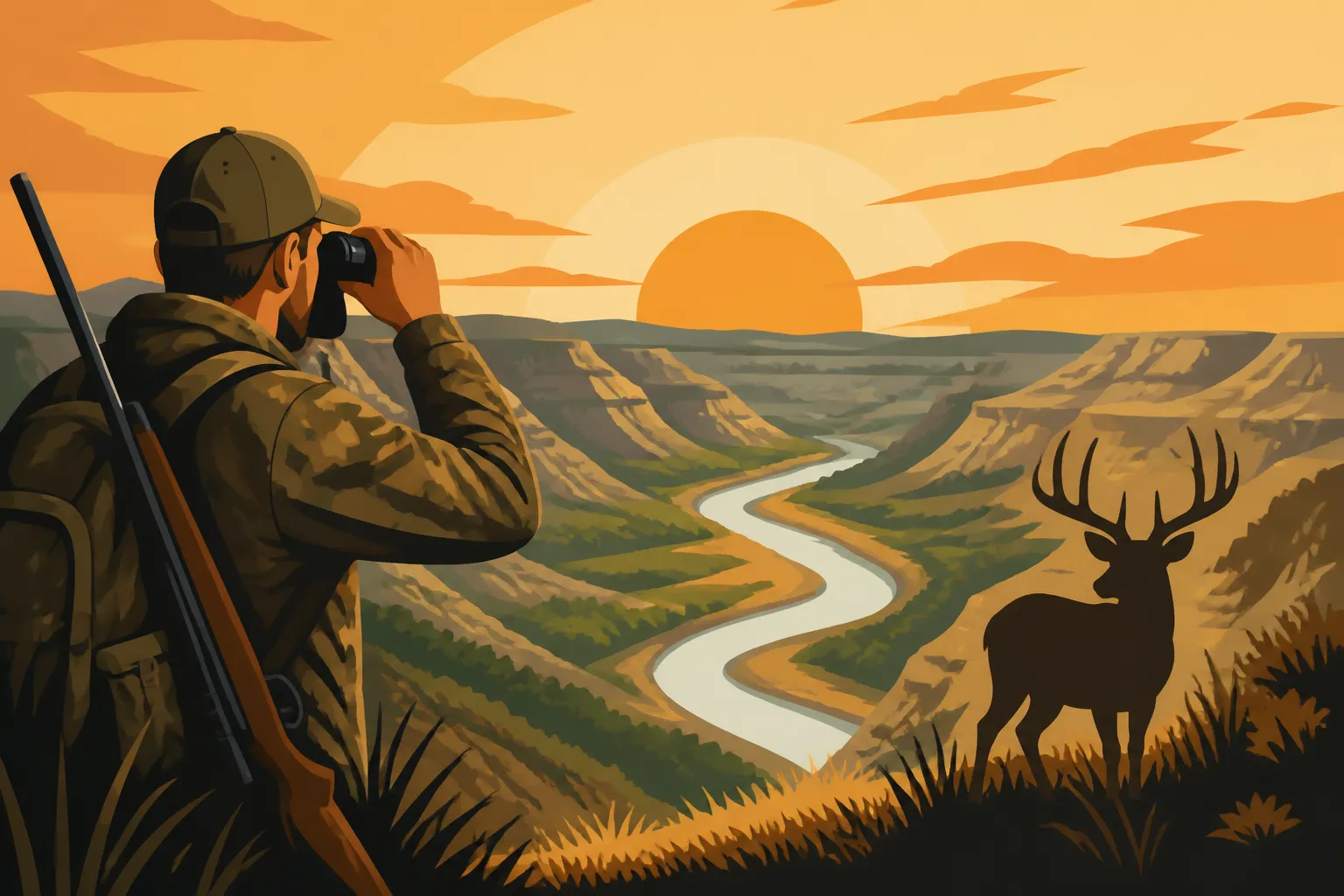
Imagine a landscape sculpted by time, wind, and water – that's the Cheyenne River Breaks. This area is characterized by deeply eroded badlands, steep-sided draws, and vast, winding coulees that feed into the Cheyenne River itself. The river, often a muddy ribbon, snakes its way through this broken country, creating fertile bottoms that stand in stark contrast to the arid uplands. Access is severely limited by the terrain; even established two-track roads can quickly become impassable with a bit of rain or snow. There are very few major highways or paved roads that traverse the heart of the Breaks, meaning that getting deep into the most promising hunting areas often requires significant off-road travel and a sturdy vehicle. It’s a place where you quickly learn the true meaning of "remote," and cell service is often a distant dream, adding another layer to the challenge of navigation and safety.
The sheer scale of the landscape can be overwhelming. One minute you're on a relatively flat prairie plateau, and the next you're peering into a canyon system hundreds of feet deep, riddled with hidden pockets of cover. This broken topography makes spotting game from a distance difficult in many areas, often forcing hunters to get boots on the ground and physically work the terrain. The elevation changes, while not mountainous like the Black Hills, are abrupt and frequent, making for physically demanding hunts. You'll find yourself constantly climbing and descending, navigating washes and negotiating thorny brush. It’s not for the faint of heart, but for those willing to put in the effort, the rewards can be truly unforgettable.
Key Game Species Drawn to the Breaks
The rugged, diverse habitat of the Cheyenne River Breaks makes it a natural magnet for certain big game species, primarily deer. This is prime real estate for both mule deer and white-tailed deer, often found coexisting in the same general areas but favoring slightly different micro-habitats within the breaks. The deep draws, cedar thickets, and river bottom timber offer invaluable cover from the elements and predators, as well as crucial browse and forage.
Mule deer tend to prefer the more open, broken badlands, the sagebrush flats, and the higher plateaus that transition into the coulees. They are masters of using the contours of the land to disappear, even in seemingly sparse cover. Whitetails, on the other hand, often stick closer to the river bottoms and the denser pockets of timber and brush along the water courses. The thick willows, cottonwoods, and other riparian vegetation provide them with excellent security cover and a consistent food source. While deer are the main draw, you'll also find scattered populations of pronghorn antelope on the flatter, more open fringes of the breaks, often utilizing the same water sources as the deer during dry periods. This incredible mix of game, thriving in such challenging terrain, is precisely why so many hunters are drawn to the mystique of the Cheyenne River Breaks.
Identifying Public Access Opportunities
While much of the Cheyenne River Breaks is private, there are crucial public land opportunities available to hunters. Knowing where to look and how to access these areas is key to a successful hunt.
National Grasslands Access: Buffalo Gap and Fort Pierre
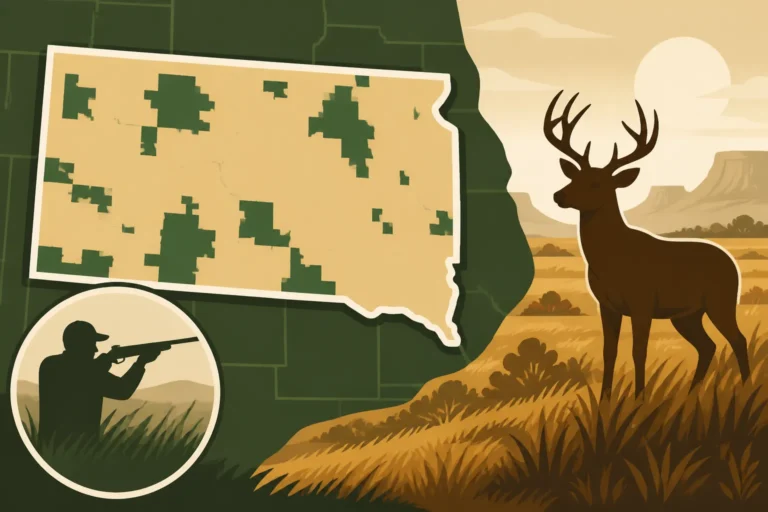
The two primary national grasslands, Buffalo Gap and Fort Pierre, offer significant public hunting opportunities in and around the Cheyenne River Breaks. The Buffalo Gap National Grassland, in particular, has fingers and larger blocks that intertwine with the broken country, providing vast expanses open to hunting. These lands are managed by the U.S. Forest Service and are generally open to public hunting without additional fees beyond your state licenses. Buffalo Gap National Grassland Hunting can be incredibly productive, but it demands diligent scouting and mapping.
Navigating these grasslands requires a keen eye on land boundaries, as private parcels are often intermingled. Two-track roads crisscross the landscape, but many are poorly maintained and can become impassable, especially during wet conditions. Dispersed camping is often permitted, allowing hunters to stay close to their hunting areas, but always check local regulations for fire restrictions and specific camping rules. Mapping tools like onX Hunt are absolutely indispensable here, acting as your digital compass and property line guide. They allow you to clearly see public land boundaries, track your real-time location, and plan your access routes efficiently, ensuring you stay on legal ground. Similarly, GoHunt can provide valuable insights into tag opportunities and success rates in specific units that overlap with these grasslands, helping you choose your hunting area wisely.
State and Federal Programs: WIAs and GPAs
While the core of the Cheyenne River Breaks might feel like a vast private expanse, South Dakota's Walk-In Area (WIA) and Game Production Area (GPA) programs can occasionally offer scattered public access points. WIAs are tracts of private land leased by the state for public hunting, marked by distinctive yellow signs. While less prevalent in the deeply broken country compared to the pheasant-rich eastern half of the state, checking the South Dakota Public Hunting Atlas for WIAs near the Breaks can sometimes yield a pleasant surprise. These areas typically allow foot traffic only, which can be an advantage for those willing to walk deep into less pressured spots.
Game Production Areas, on the other hand, are lands owned and managed by the South Dakota Game, Fish and Parks (GFP) specifically for wildlife habitat and public hunting. These are often larger parcels than WIAs and can provide more consistent public access. Look for GPAs that might border the fringes of the breaks or encompass smaller drainage systems within. Always cross-reference your findings with the most current GFP public hunting maps, either online or through mobile apps. Remember, these areas, especially GPAs, can receive significant hunting pressure, so early scouting and venturing off the beaten path are often necessary to find solitude and undisturbed game. Understanding South Dakota Game Production Areas and their rules is crucial before heading out.
Missouri River Access Points
While the Cheyenne River Breaks are a distinct geographical feature, the Cheyenne River itself eventually flows into the mighty Missouri River. This confluence, and the Corps of Engineers land that often borders the Missouri River's reservoirs, can sometimes provide indirect access to areas influenced by the breaks. The Missouri River corridor, with its extensive timber and draws, acts as a natural travel route and sanctuary for deer. Accessing public lands along the Missouri River, such as areas managed by the U.S. Army Corps of Engineers, could allow you to hunt the river breaks that directly feed into these larger waterways.
These areas might not be the "heart" of the Cheyenne River Breaks, but they offer excellent habitat and can be less challenging to access, potentially providing a gateway to more rugged country further inland. Hunters utilizing boat access on the Missouri River can sometimes reach isolated stretches of public land or unpressured areas where the river breaks meet the larger river system. Familiarize yourself with the regulations for Corps of Engineers land, as rules can vary regarding camping, vehicle use, and hunting methods. This approach offers a different perspective and a potential entry point into the wider Cheyenne River hunting experience.
Navigating the Private Land Maze
The harsh reality of hunting the Cheyenne River Breaks for many is that the majority of this prime habitat is locked up in private ownership. This can be incredibly frustrating when you see vast, unpressured areas holding incredible potential, yet feel like there's an invisible barrier.
The Dominance of Private Ownership
Let's not sugarcoat it: the vast majority of the Cheyenne River Breaks, especially the most rugged and inaccessible portions, are privately owned ranchland. This landscape has been ranched for generations, and landowners often rely on the land for their livelihood. Seeing those "No Trespassing" signs or finding vast areas marked as private on your mapping app can be disheartening, especially if you've traveled a long distance hoping to explore. It's a fundamental truth of hunting in West River South Dakota that much of the best habitat for mule deer and whitetails resides on these private parcels.
This dominance of private land creates unique challenges for hunters. Unlike states with vast national forests or BLM lands, a significant portion of South Dakota's prime hunting ground requires permission. It means that simply showing up and expecting to find open hunting is often a recipe for disappointment. The frustration of seeing a majestic mule deer buck disappear over a ridge onto private land, just out of reach, is a common experience for hunters in this region. Understanding this reality is the first step in formulating a realistic access strategy.
Building Relationships with Landowners
Given the private land dominance, building relationships with landowners becomes an invaluable skill, almost a necessity, for consistent access in the Cheyenne River Breaks. This isn't a quick fix; it's a long game that requires respect, persistence, and a genuine willingness to be a good steward. Don't just show up on opening morning expecting permission. Start early, months before the season if possible. Introduce yourself, explain your intentions clearly, and be polite. Many ranchers are busy, so timing your visit respectfully is important.
Offer to help with chores, even if it's just mending a fence or helping to move cattle. This demonstrates that you're not just there to take, but to contribute. Emphasize that you will respect their property, close gates, avoid driving on wet fields, and leave no trash behind. Offer to share your harvest, or even provide a small gift as a thank you. Remember, a landowner allowing you access is doing you a favor, and treating it as such can open doors for future seasons. It can be challenging to find contact information for remote landowners, but local cafes, co-ops, or even a local chamber of commerce might be able to point you in the right direction. It's about demonstrating value and trust, creating a win-win situation. For more tips on this, refer to Asking a South Dakota Landowner for Permission.
Outfitted Hunts and Lease Opportunities
For many hunters, particularly non-residents or those with limited time, booking an outfitted hunt or securing a hunting lease might be the most reliable, albeit more costly, way to access the heart of the Cheyenne River Breaks. Outfitters in this region often have exclusive access to vast tracts of private ranchland, sometimes encompassing thousands of acres of prime deer habitat that would otherwise be completely inaccessible. They've spent years cultivating relationships with landowners and have the local knowledge, equipment, and guides to navigate the challenging terrain and put hunters on game.
While the price tag for a guided hunt can be substantial, it often includes lodging, meals, transportation in the field, and a high likelihood of a successful hunt. These operations often manage their deer herds meticulously, ensuring a quality hunting experience. Lease opportunities, while less common for individual hunters in this remote country compared to, say, pheasant hunting, do exist. They typically involve a multi-year agreement and a significant financial commitment, but they provide exclusive access and the freedom to hunt on your own schedule within the leased boundaries. If you're considering a guided experience, check out Booking a South Dakota Deer or Antelope Hunt for more information on what to expect and how to choose the right outfitter for your needs.
Practical Strategies for Successful Access
Once you've identified potential hunting grounds, the real work begins. Accessing the Cheyenne River Breaks isn't just about knowing where to go; it's about being prepared, both physically and with the right tools.
Mapping Technology for Remote Areas
In a landscape as vast, rugged, and interspersed with private land as the Cheyenne River Breaks, relying solely on paper maps or outdated information is a recipe for disaster. This is where modern mapping technology shines and becomes an absolute non-negotiable part of your hunting kit. Applications like onX Hunt are truly indispensable. They provide detailed satellite imagery, topographic maps, and crucially, property ownership overlays that show public, private, and state lands in real-time. You can pinpoint your exact location, differentiate between a national grassland and a private ranch, and even identify potential access roads or trails that might not be marked on conventional maps.
Using these tools, you can e-scout from home, identifying draws, water sources, and bedding areas on public land before you even set foot in the field. Once there, they allow you to confidently navigate, avoid accidental trespassing, and mark game sightings or important waypoints. GoHunt is another excellent resource, often providing draw odds, unit information, and detailed articles that can help you strategize which specific areas within the Breaks might offer the best opportunities. Investing in a premium subscription to these apps is not just a convenience; it's a safety measure and a critical component of maximizing your hunting success in such complex terrain. They allow you to be precise in your movements, ensuring you stay legal and efficient.
Physical Preparedness and Vehicle Considerations
The Cheyenne River Breaks are not for casual strollers. Hunting here demands a significant level of physical fitness and the right kind of vehicle. The terrain is brutal: steep climbs, deep washes, thick brush, and uneven ground are the norm. You'll be walking miles over challenging terrain, often off-trail, so conditioning your body for such an endeavor is crucial. Regular hiking, especially with a weighted pack, will pay dividends when you're trying to pack out a mule deer from the bottom of a deep coulee.
Your vehicle is equally important. A high-clearance 4×4 truck or SUV is essential. The two-track roads can quickly turn into mud pits after rain, and crossing washes or navigating rocky sections requires robust suspension and good tires. Always carry extra fuel, a spare tire, tire repair kits, a shovel, recovery straps, and potentially even a winch. Getting stuck miles from pavement, with no cell service, is a dangerous situation. Be mindful of weather forecasts; a sunny morning can turn into a muddy nightmare by afternoon. Plan your routes carefully, keeping in mind that the easiest line on a map might be an impassable bog in reality. This is truly where the wild begins, and coming prepared is paramount.
Scouting and Local Knowledge
Even with the best maps, nothing beats good old-fashioned scouting and local knowledge. E-scouting from home using tools like onX Hunt to analyze aerial imagery is a great start, helping you identify potential access points, water sources, and habitat features. However, a pre-season trip to physically scout the areas you intend to hunt is invaluable. Drive the two-tracks, walk into the draws, and get a feel for the terrain. Look for fresh sign, identify pinch points, and understand how the wind interacts with the topography. This reconnaissance will give you a significant advantage and help you avoid wasted time during the actual hunt. Scouting South Dakota Public Ground Before the Season is critical for this type of country.
Beyond personal scouting, don't underestimate the power of local knowledge. Chat with locals at gas stations, diners, or small-town stores. Ranchers, even if they don't grant permission, might offer insights into local game movements or specific challenging access routes. They live and work in this country daily and often have a wealth of information about the land and its wildlife. Be respectful, listen more than you talk, and appreciate any wisdom they share. This combination of diligent e-scouting, boots-on-the-ground reconnaissance, and tapping into local wisdom will vastly improve your chances of successfully accessing and hunting the Cheyenne River Breaks.
| Access Type | Description | Pros | Cons | Key Considerations |
|---|---|---|---|---|
| National Grasslands | Federally managed lands (e.g., Buffalo Gap) within or adjacent to the Breaks | Vast, open to public, generally good game populations | Interspersed with private land, remote, limited vehicle access | Essential to use mapping apps (onX Hunt) to identify boundaries and legal routes |
| WIAs / GPAs | State-leased private land (WIA) or state-owned land (GPA) | Clearly marked public access, often well-managed | Sparse in deep Breaks country, can be smaller parcels, higher pressure | Check South Dakota Public Hunting Atlas frequently; foot access often required |
| Missouri River Access | Corps of Engineers land along the confluence and downstream | Larger river corridors, boat access possible | Indirect access to core Breaks, rules can vary for COE land | Good for combo hunts, understanding specific COE regs is important |
| Private Land (Permission) | Ranchland where explicit permission has been granted | Access to prime, often unpressured habitat | Difficult to obtain, requires building relationships, ongoing effort | Start early, build trust, be respectful, offer help, leave no trace |
| Private Land (Outfitted) | Booked hunts through a professional guide service | Guaranteed access, local knowledge, higher success | Significant cost, less DIY freedom, tied to outfitter's schedule | Research outfitter reputation, understand contract details, plan far ahead |
Disclaimer
This article is for general informational purposes only and does not constitute professional advice. Laws, prices and regulations vary by location and change over time. Consult a qualified professional for guidance on your specific situation.