School Trust Land Hunting Access
One of the biggest headaches for hunters heading to South Dakota, especially if you're traveling from out of state, is figuring out where you can legally hunt. It's not always as simple as seeing a patch of green on a map. Many hunters overlook or misunderstand the access rules for School Trust Lands, which can be a valuable, yet sometimes tricky, resource. This guide will help you unravel the mysteries of South Dakota's School Trust Lands, empowering you to effectively locate and hunt these often-underutilized areas.
Understanding South Dakota's School Trust Lands
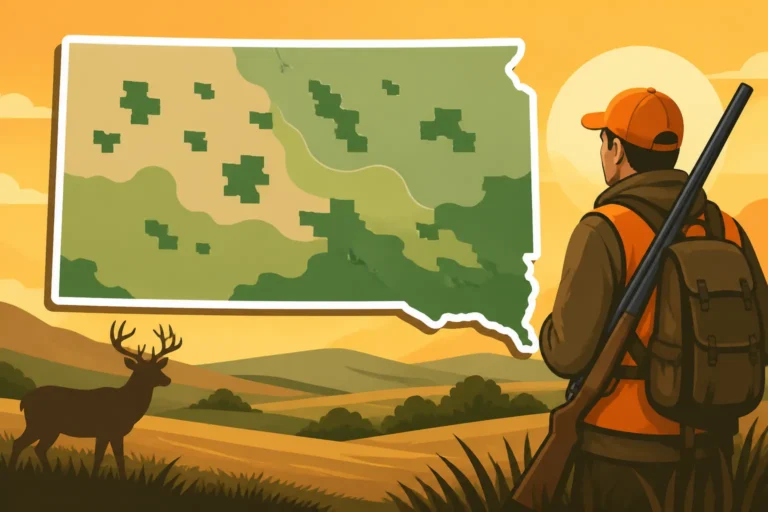
When you look at a land ownership map of South Dakota, you'll see various designations for public ground. Among them are "School Trust Lands," which often pop up as scattered sections, typically in a checkerboard pattern, across the prairie. It's easy to assume these are just like any other public hunting land, but there's a unique history and purpose behind them that directly impacts how hunters can use them.
The Historical Purpose of School Trust Lands
The concept of School Trust Lands dates back to when South Dakota became a state. The federal government set aside certain sections of land in each township – often sections 16 and 36, though not exclusively – with the express purpose that any revenue generated from these lands would fund public education. Think of it as an endowment for schools. These lands are managed by the Commissioner of School and Public Lands (CSPL), whose primary duty is to maximize financial returns for the state's educational system. This fundamental difference in purpose is what sets School Trust Lands apart from, say, a Game Production Area (GPA), which is managed primarily for wildlife and public recreation.
Because the goal is revenue, these lands are frequently leased out for agriculture, grazing, or mineral extraction. This means that while they are publicly owned, they are often actively managed by private individuals or entities under a lease agreement. This leasing arrangement can sometimes create situations where the land looks public on a map, but the practical access for hunting can feel a bit ambiguous if you don't know the rules. It's a common source of confusion and frustration for hunters who might drive miles only to find a locked gate or active ranching operations.
How School Trust Lands Differ from Other Public Lands
It's crucial to distinguish School Trust Lands from other well-known public hunting opportunities in South Dakota, such as Walk-In Areas (WIAs) or Game Production Areas (GPAs). Game Production Areas are purchased or managed directly by South Dakota Game, Fish and Parks (GFP) specifically for wildlife habitat and public recreation. Their primary purpose aligns with hunting, fishing, and other outdoor pursuits. South Dakota Game Production Areas delves deeper into these areas. Walk-In Areas, on the other hand, are private lands enrolled in a program where the state pays landowners to open their property for public access during hunting seasons, often identified by distinctive yellow signs. You can learn more about these in How South Dakota Walk-In Areas Work.
School Trust Lands are a different beast entirely. While they are state-owned, they are not managed by GFP, nor are they typically marked with the yellow WIA signs. Their management is economic first, public access second. This means hunters must respect any ongoing agricultural operations, fences, or existing leases. Sometimes, a School Trust parcel might be completely landlocked by private property, creating a significant access challenge that isn't always apparent from a map alone. Understanding this distinction is key to setting proper expectations and planning your hunt.
Rules and Regulations for Hunting School Trust Lands
Navigating the rules for hunting on School Trust Lands can feel a bit like reading fine print. They're publicly owned, yes, but not always with the same open access as other public hunting grounds. It’s imperative to know the specifics to avoid unintentional trespass or other legal issues.
Access Requirements and Restrictions
For the most part, School Trust Lands that are not leased for grazing or agriculture are generally open to public access for hunting, fishing, and trapping, provided there isn't signage explicitly prohibiting such activities. However, the wrinkle often comes with lands that are leased. Many School Trust Lands are indeed leased out to ranchers or farmers for agricultural purposes. In these cases, public access for hunting is still allowed, but hunters must ensure they do not interfere with the lessee's operations. This means respecting gates, fences, and crops. You cannot damage property, leave gates open, or drive across planted fields. It’s a privilege, not an absolute right, and it comes with responsibilities.
A common scenario involves leased lands where livestock are present. While you generally have the right to be there, if you spook cattle or interfere with ranching activities, you could be asked to leave by the lessee. It's a delicate balance. Furthermore, driving on School Trust Lands is generally prohibited unless there's an established public road that crosses the parcel. Foot traffic is almost always the rule once you leave a designated public right-of-way. This can be a major consideration when planning how to access and hunt certain tracts, especially large ones. Driving on a South Dakota Walk-In Area covers similar considerations for other public areas.
Hunting Ethics and Responsibilities
Hunting on School Trust Lands requires a heightened sense of ethical responsibility. Since these lands often abut or are surrounded by private property, respecting boundaries is paramount. You absolutely need to know exactly where you are at all times. A good GPS unit with land ownership overlays, like those offered by onX Hunt, is indispensable here. Crossing private land, even unintentionally, to access a School Trust parcel is trespassing. Many a hunter has found themselves in a bind because they didn't verify their access route. Finding Property Lines in South Dakota goes into more detail about this.
Beyond avoiding trespass, consider the impact of your presence. If you're hunting pheasants on a School Trust parcel that's part of a larger agricultural operation, be mindful of where birds might flush. Shooting towards farm buildings or livestock is never acceptable and could lead to serious consequences. Pack out all your trash, close all gates, and leave the land as you found it. Remember, the continued public access to these lands often relies on hunters demonstrating responsible behavior. If lessees consistently have issues with hunters, it could lead to stricter regulations or reduced access in the future.
Finding and Identifying School Trust Lands
Identifying School Trust Lands and understanding their access points is often the biggest hurdle for hunters. While the idea of publicly owned land sounds great, finding the specific parcels and knowing how to get to them legally can be a real scavenger hunt.
Utilizing Online Resources and Mapping Tools
The South Dakota Department of Game, Fish and Parks (SDGFP) offers an invaluable online Public Hunting Atlas. This atlas is your first and best resource. It color-codes different types of public lands, including School Trust Lands, and provides crucial information about access points and boundaries. It's updated regularly, so always check the most current version. You can usually find a link to the atlas directly on the SDGFP website.
Beyond the official atlas, third-party mapping applications have revolutionized how hunters locate and access land. Tools like onX Hunt are incredibly powerful for identifying School Trust Lands, often displaying them with a distinct color code. These apps allow you to overlay property ownership information directly onto a satellite map, showing you parcel boundaries, landowner names (sometimes), and critical access roads. This is especially useful for finding those isolated sections that might not be obvious. Similarly, platforms like GoHunt often integrate robust mapping features that can help delineate these public lands, offering another layer of data for planning your route and confirming legal access.
Interpreting Maps and Navigating Access Challenges
When you're looking at a map, whether it's the SDGFP atlas or a mapping app, School Trust Lands will typically be clearly marked. The challenge then becomes determining how to get to them. Many School Trust parcels are landlocked, meaning they are entirely surrounded by private property with no public road or easement leading to them. In South Dakota, you cannot cross private land to access public land without permission from the private landowner. This is a critical point that many new hunters miss. So, even if the map shows a School Trust parcel, if there's no public road, section line, or other designated access, you might need to seek landowner permission to cross private ground, or find another spot.
When you do find a parcel with public road access, pay close attention to the road type. A dotted line on a map might indicate a two-track trail or minimum maintenance road, which can become impassable in wet weather. Always scout these access points, either physically or using aerial imagery, before committing to a long drive. Look for clear indications of public access, such as designated parking areas or signs, although School Trust Lands often lack these specific amenities compared to GPAs. Understanding Reading Aerial Imagery for Cattail Cover can also help you scout the habitat potential of these areas remotely.
| Public Land Type | Primary Management Goal | Typical Signage | Driving Access (General) | Foot Traffic (General) | Common Game Species |
|---|---|---|---|---|---|
| School Trust Land | Revenue for Education | Minimal/None | Limited to Public Roads | Yes, respect lessee rights | Deer, Pheasant, Grouse, Coyote |
| Walk-In Area (WIA) | Public Hunting Access | Yellow WIA signs | No, foot traffic only | Yes | Pheasant, Deer, Grouse |
| Game Production Area (GPA) | Wildlife & Public Recreation | GFP signs/boundary markers | Limited to designated roads | Yes | Deer, Pheasant, Waterfowl, Grouse |
| National Grassland | Multiple Use (Grazing, Rec) | USFS signs | Yes, on designated routes | Yes | Deer, Antelope, Grouse, Coyote |
Tips for Hunting School Trust Lands Effectively
Once you've done your homework and pinpointed some accessible School Trust Lands, it's time to think about how to actually hunt them. These areas can be incredibly productive, but they often require a slightly different approach than more heavily managed public hunting grounds.
Scouting for Habitat and Game Sign
Because School Trust Lands are managed for revenue, their habitat can vary wildly. Some parcels might be prime grasslands, ideal for pheasants, grouse, or even deer. Others might be recently tilled fields, or heavily grazed pastures with limited cover. Your scouting, both online and in person, is critical. Use tools like onX Hunt to analyze satellite imagery for cover types, water sources, and potential travel corridors. Look for sloughs, cattails, tree rows, and even un-grazed grass patches that could hold birds or deer. Don't assume all School Trust Land is equal; some parcels will be much better than others.
When you get on the ground, look for recent game sign. Deer rubs, tracks, droppings, and well-used trails will tell you if bucks are frequenting the area. For pheasants and grouse, look for dusting bowls, droppings, and areas with good thermal cover. The species you're pursuing will dictate what kind of sign you're looking for, but always remember that game animals are creatures of habit. If a School Trust parcel offers water, food, and cover, they will use it. Also consider nearby private land; if a School Trust section is adjacent to a large block of private corn, it might serve as an excellent bedding or escape cover for deer and pheasants.
Managing Hunting Pressure and Hunter Encounters
One of the big advantages of hunting School Trust Lands is that they often receive less hunting pressure than more heavily advertised public grounds. Because they're harder to find and access, many hunters overlook them. This doesn't mean you'll have them all to yourself, especially during pheasant season, but it does mean you might find more undisturbed game. However, a parcel that looks small on a map might also be too small to absorb much pressure. If you're walking a half-section of School Trust Land and another hunting party shows up, consider moving to another spot. Over-pressuring a small parcel can quickly push game out of the area for days. Hunting Pressure Patterns on Walk-In Areas can offer insights into how game react to human presence.
When you do encounter other hunters on School Trust Land, common courtesy goes a long way. A friendly wave, a quick chat about where you're heading, and a commitment to safe hunting practices ensure everyone has a positive experience. Remember your blaze orange rules, especially during pheasant season. Blaze Orange Rules on a Bird Hunt outlines the specifics. If the area is popular, consider hunting during weekdays or later in the season when crowds tend to thin out. Sometimes those smaller, harder-to-reach parcels are exactly where you'll find quality hunting later in the year, after the early season rush on other areas.
Disclaimer
This article is for general informational purposes only and does not constitute professional advice. Laws, prices and regulations vary by location and change over time. Consult a qualified professional for guidance on your specific situation.